


You carry a water bottle everywhere.
You hit your daily water goal. You refill your Stanley Cup three times. Your pee is nice and clear.
So why do you still wake up puffy? Why do you crash every afternoon? Why does your skin still feel dull, your workouts leave you drained, and your energy disappears long before the day is over?
➡️ You’re Probably Not Dehydrated. You Might Just Be Under-Mineralised.
Because hydration isn’t just about water.
It is about what allows water to actually hydrate your cells. And that missing piece is often electrolytes.
What Are Electrolytes?
Electrolytes are essential minerals that carry an electrical charge when dissolved in water.
That sounds technical, but their job is surprisingly simple.
View as text
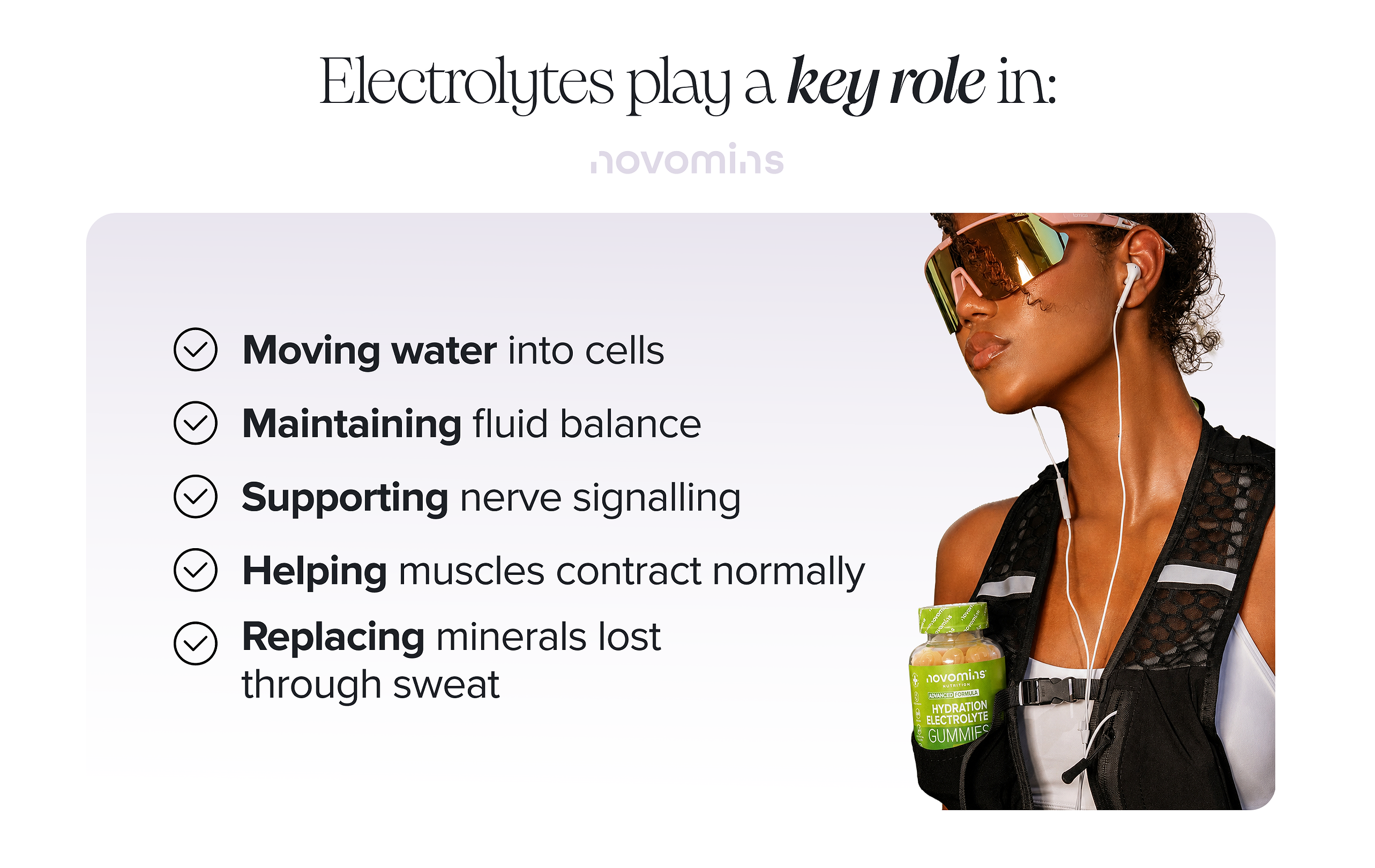
Electrolytes play a key role in:
- Moving water into cells
- Maintaining fluid balance
- Supporting nerve signalling
- Helping muscles contract normally
- Replacing minerals lost through sweat
View as text
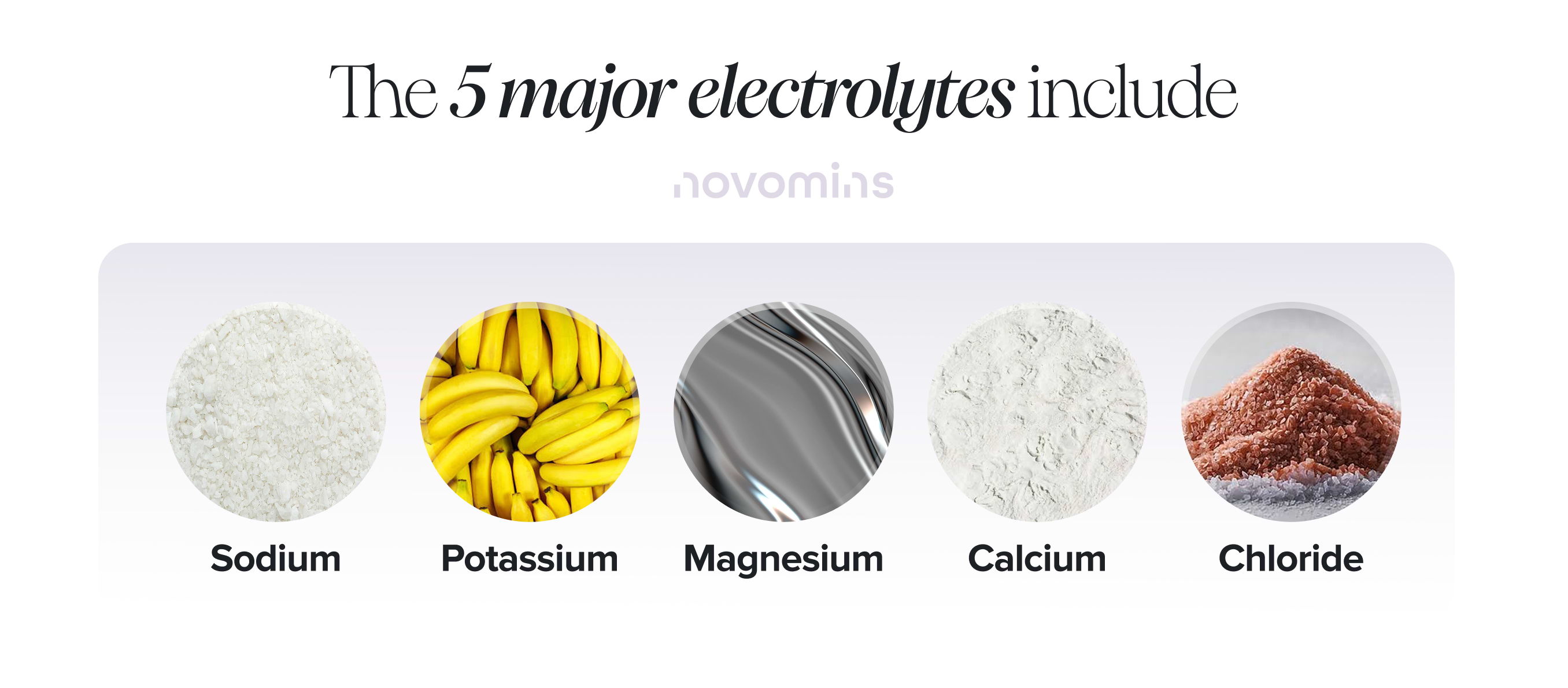
The 5 major electrolytes include
- Sodium
- Potassium
- Magnesium
- Calcium
- Chloride
Without enough of these minerals, drinking more water doesn’t necessarily lead to a better hydration status.
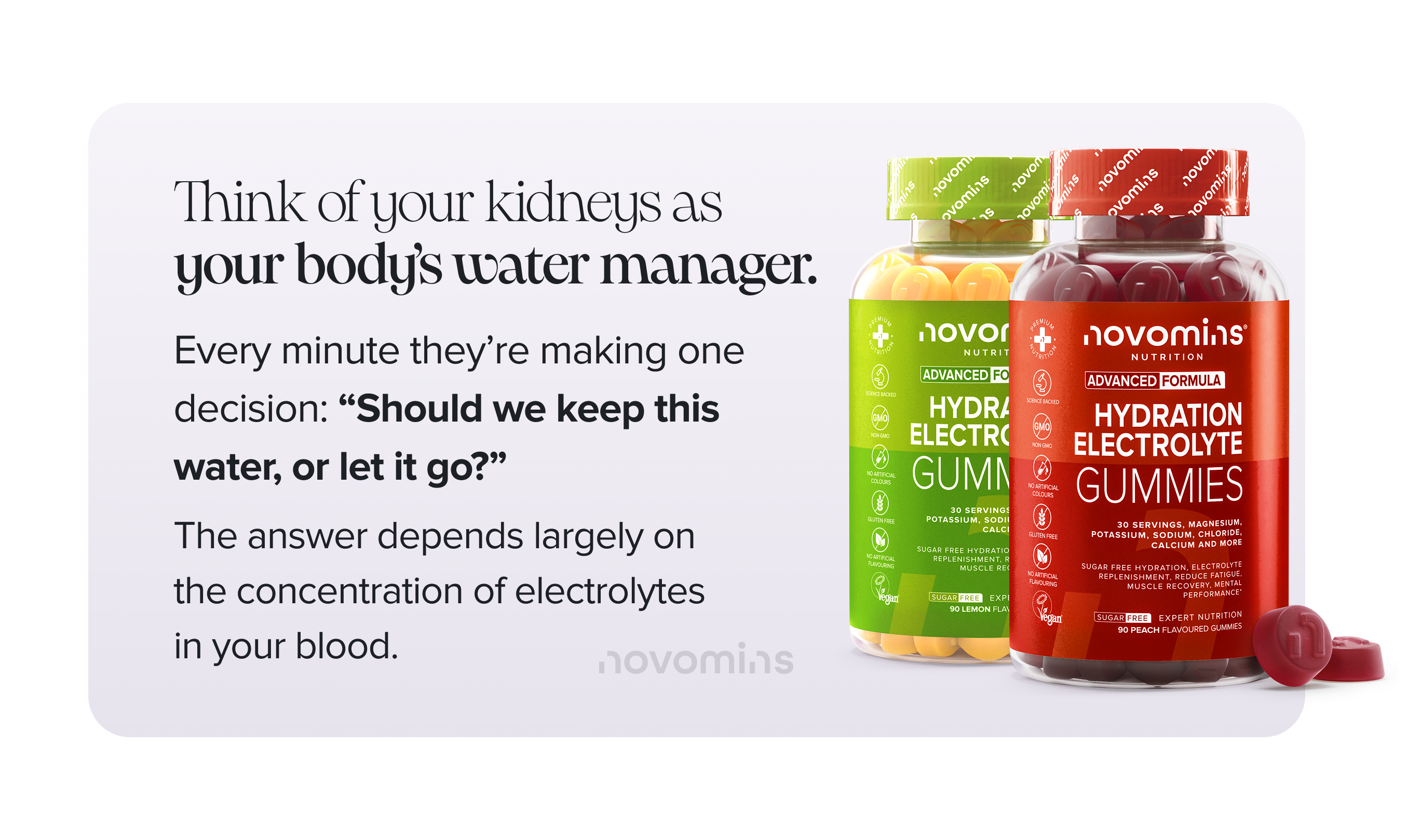
How the Kidneys Control Hydration
The kidneys are the body’s hydration control centre.
Every day, they filter around 180 litres of fluid from the blood. Fortunately, almost all of that water is reabsorbed, leaving only a small amount to become urine.
To decide how much water to keep, the kidneys rely on two things:
- Electrolytes, like sodium, potassium, magnesium, calcium & chloride.
- Antidiuretic hormone (ADH), the hormone that tells the kidneys when to conserve water.
When electrolyte levels are balanced, the kidneys can regulate fluid efficiently. When they’re not, hydration becomes much harder to manage.
When the body begins losing too much water through sweating, illness or simply not drinking enough, the brain releases antidiuretic hormone (ADH).
ADH tells the kidneys: “Hold on to more water.”
The kidneys respond by reabsorbing more water back into the bloodstream instead of sending it to the bladder.
As a result:
- Urination decreases.
- Urine becomes darker.
- The body conserves water until it receives more fluids.
This is why urine colour can tell you so much about your hydration status.
Why Water Alone Isn’t Always Enough
For years we’ve been told to simply drink more water. While water is essential, it only tells half the story.
View as text
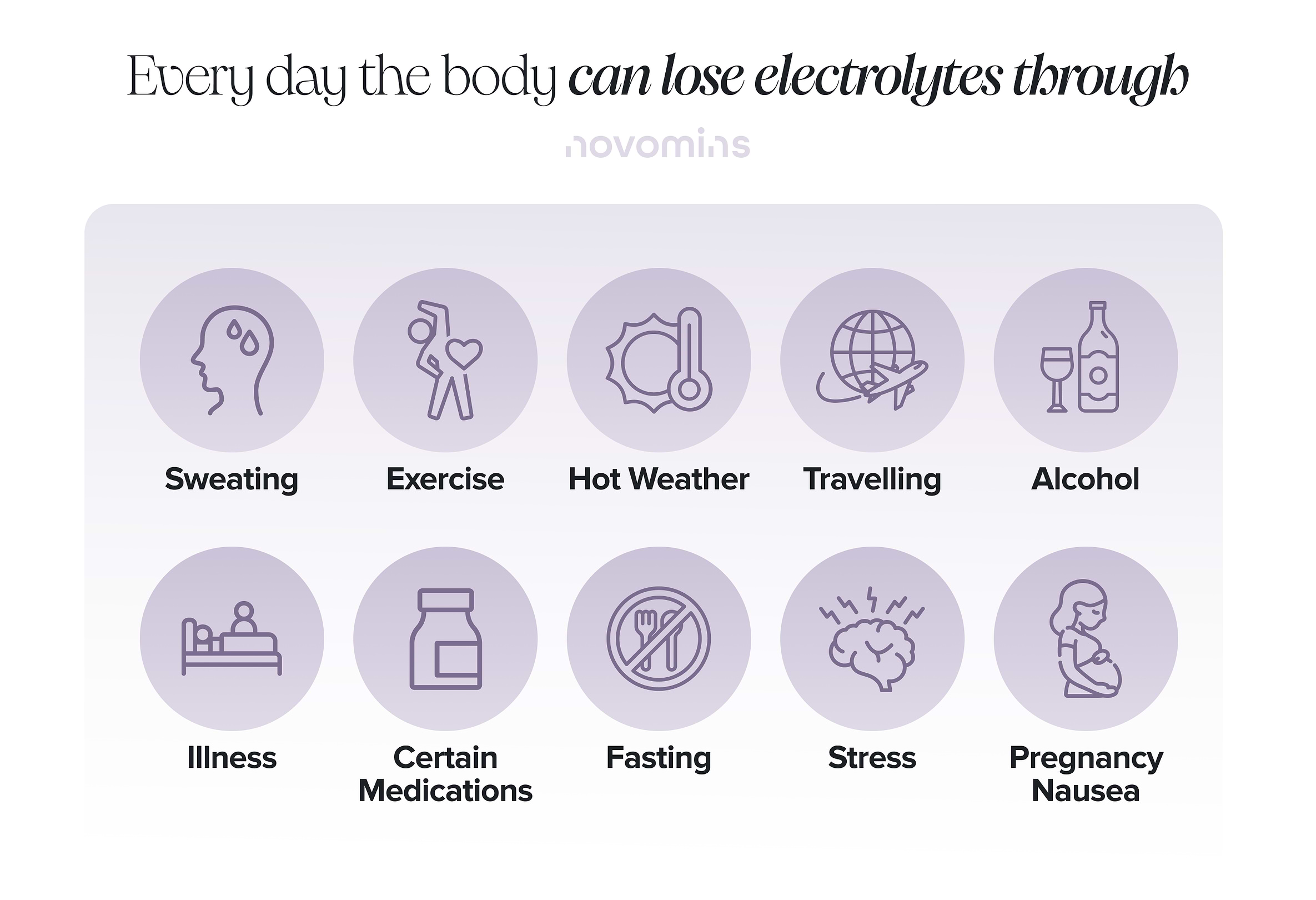
Every day the body can lose electrolytes through
- Sweating
- Exercise
- Hot Weather
- Travelling
- Alcohol
- Illness
- Certain Medications
- Fasting
- Stress
- Pregnancy Nausea
Replacing only water without replacing the minerals lost alongside it can make it harder for the body to maintain normal fluid balance.
Hydration isn’t simply about how much water you drink. It’s about how effectively your body can use it.
Signs You Might Need Electrolytes
Many everyday symptoms people blame on “not drinking enough” may actually have another explanation.
You may benefit from paying closer attention to your electrolyte intake if you regularly experience:

View as text
Signs You Need Electrolytes
- Afternoon energy crashes
- Feeling sluggish after workouts
- Puffy mornings
- Muscle cramps
- Headaches
- Dry-looking skin
- Heavy sweating
- Frequent travel
Why Electrolytes And Water Work Together
Water and electrolytes aren’t competitors. They’re partners.
Water provides the fluid the body needs. Electrolytes help the kidneys regulate where that fluid goes, how much is retained, and how effectively the cells can use it.
View as text
Without enough water, electrolytes can't do their job. Without enough electrolytes, water can't do its job efficiently either.
Real hydration requires both.
The 30-Second Hydration Test
One of the easiest ways to check your hydration status is by looking in the toilet.
Despite what social media might tell you, crystal clear urine isn’t always the goal.
Your urine colour offers valuable clues about your hydration status, but it can also tell you when it’s time to think beyond simply drinking more water.
View as text
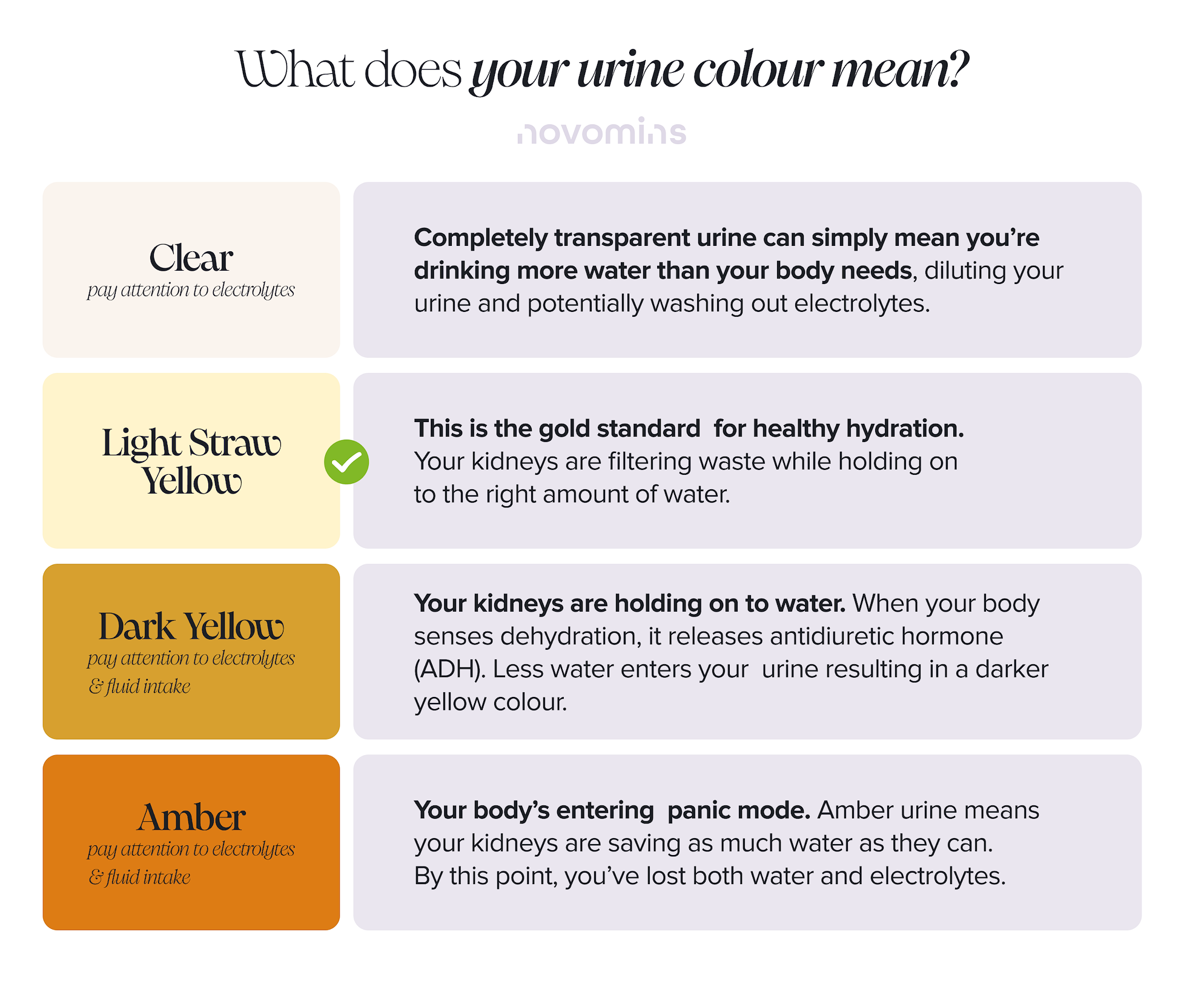
What does your urine colour mean?
-
Clear
pay attention to electrolytes
Completely transparent urine can simply mean you're drinking more water than your body needs, diluting your urine and potentially washing out electrolytes. -
Light Straw Yellow
This is the gold standard for healthy hydration. Your kidneys are filtering waste while holding on to the right amount of water. -
Dark Yellow
pay attention to electrolytes & fluid intake
Your kidneys are holding on to water. When your body senses dehydration, it releases antidiuretic hormone (ADH). Less water enters your urine resulting in a darker yellow colour. -
Amber
pay attention to electrolytes & fluid intake
Your body's entering panic mode. Amber urine means your kidneys are saving as much water as they can. By this point, you've lost both water and electrolytes.
Clear
Usually means: You’re drinking plenty of water.
However, urine that’s consistently crystal clear may suggest you’re drinking more water than your body needs, diluting your urine and potentially reducing electrolyte concentration.
What to do: Don’t force yourself to drink water just to hit a target. Drink according to your thirst and remember that hydration is about both water and electrolytes.
Pale Straw Yellow
Usually means: This is generally considered the ideal hydration zone and signals that the kidneys are maintaining a healthy balance of fluids while filtering waste efficiently.
What to do: Keep doing what you’re doing.
Dark Yellow
Usually means: The body has started conserving water.
ADH is signalling the kidneys to reabsorb more water, leaving less in the urine and making it appear darker.
This is common first thing in the morning.
What to do: Drink more fluids and consider replacing electrolytes too, particularly if you’ve been sweating.
Amber
Usually means: You’re likely significantly dehydrated. Your kidneys are working hard to conserve water.
This commonly occurs after heavy sweating, alcohol, illness or prolonged heat exposure.
What to do: Rehydrate as soon as possible and replace lost electrolytes, especially after heavy sweating, travelling or illness.
Brown
Usually means: Very dark urine can indicate severe dehydration, although certain foods, medications and medical conditions can also cause this colour.
What to do: Increase fluid intake immediately & seek medical advice.
View as text
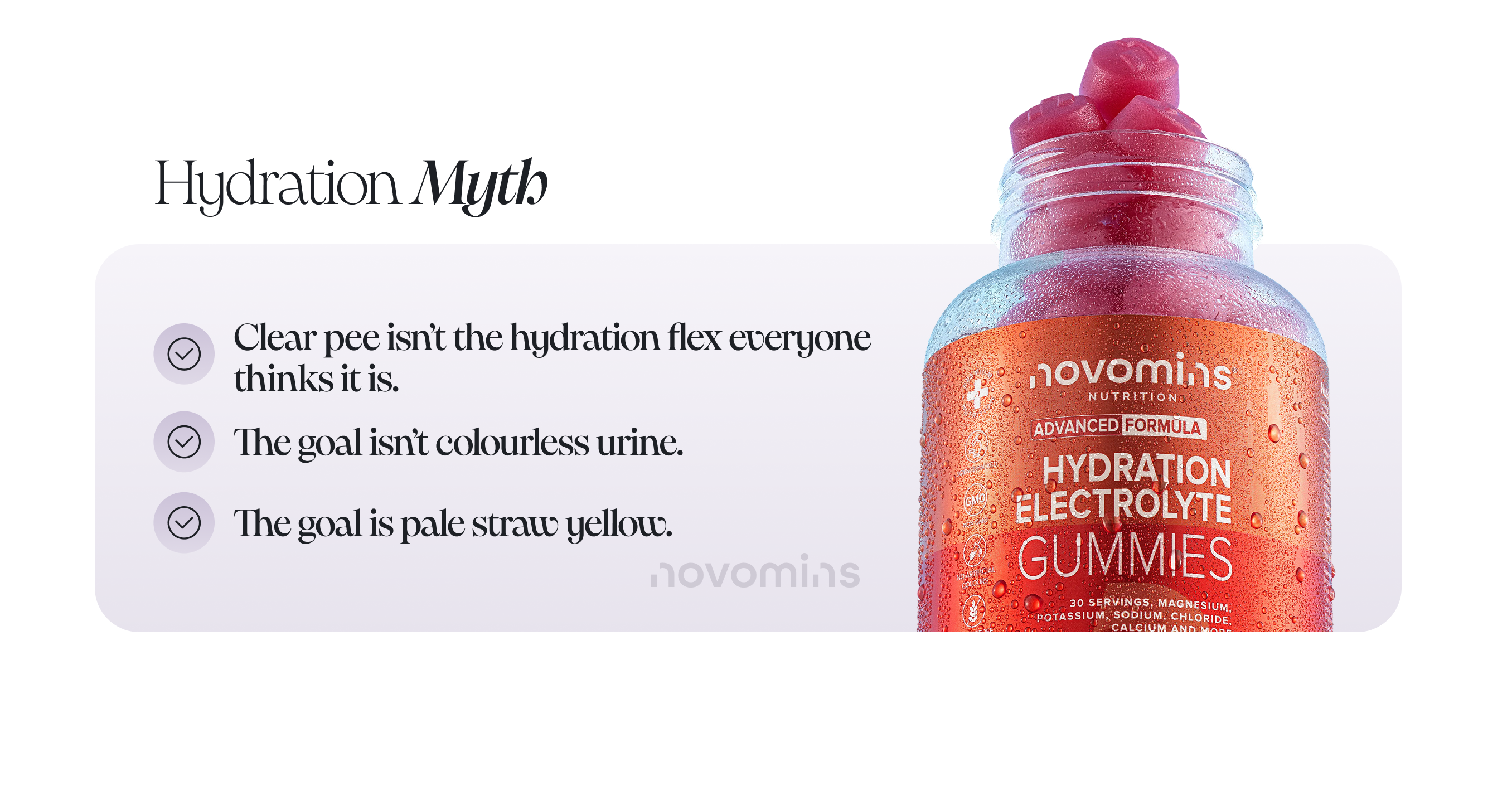
Hydration Myth
- Clear pee isn't the hydration flex everyone thinks it is.
- The goal isn't colourless urine.
- The goal is pale straw yellow.
Why We’re Losing More Electrolytes, Faster
Electrolyte depletion isn’t reserved for marathon runners anymore. Modern life quietly works against our hydration every day.
View as text
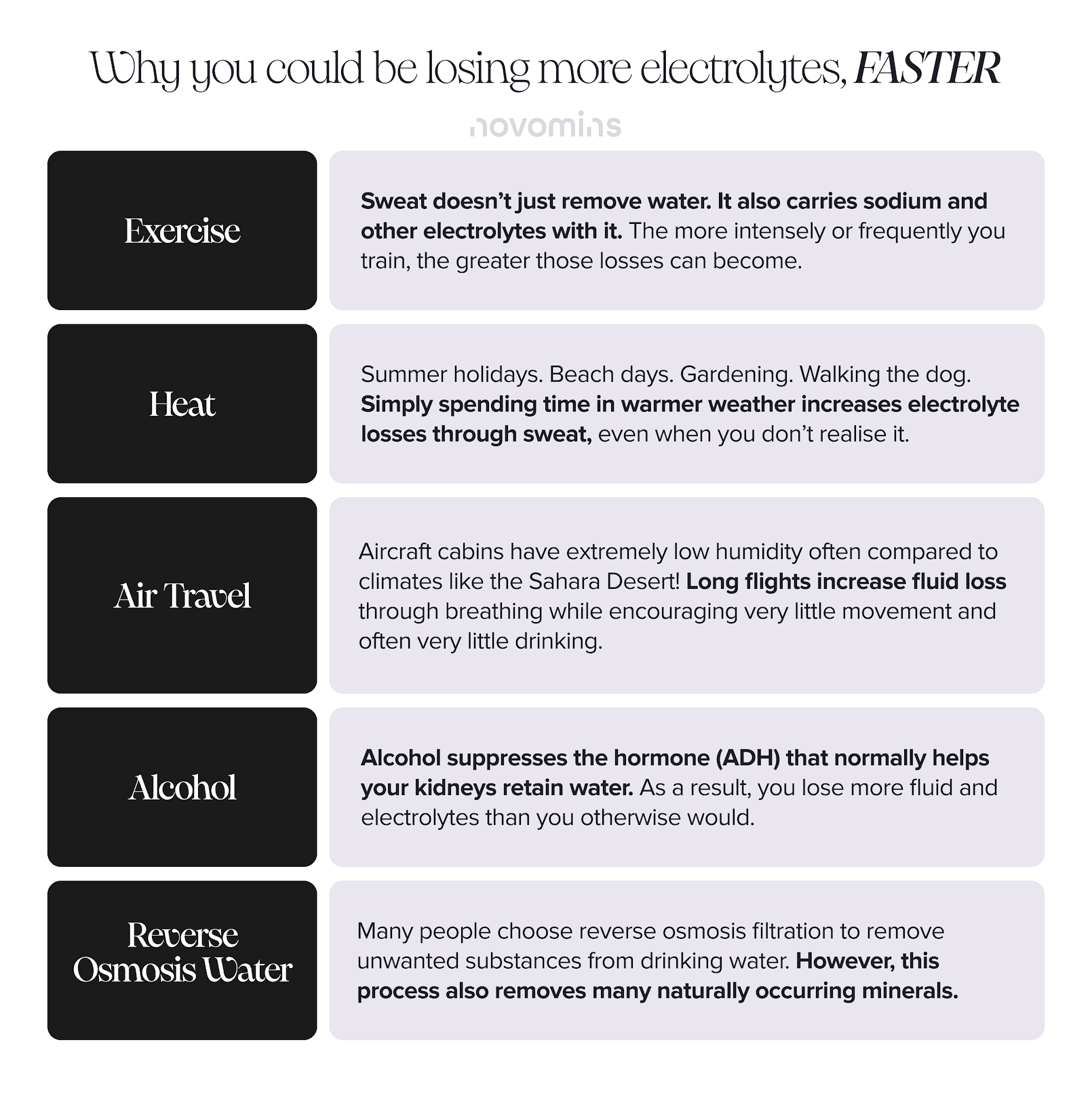
Why you could be losing more electrolytes, FASTER
- Exercise: Sweat doesn’t just remove water. It also carries sodium and other electrolytes with it. The more intensely or frequently you train, the greater those losses can become.
- Heat: Summer holidays. Beach days. Gardening. Walking the dog. Simply spending time in warmer weather increases electrolyte losses through sweat, even when you don’t realise it.
- Air Travel: Aircraft cabins have extremely low humidity often compared to climates like the Sahara Desert! Long flights increase fluid loss through breathing while encouraging very little movement and often very little drinking.
- Alcohol: Alcohol suppresses the hormone (ADH) that normally helps your kidneys retain water. As a result, you lose more fluid and electrolytes than you otherwise would.
- Reverse Osmosis Water: Many people choose reverse osmosis filtration to remove unwanted substances from drinking water. However, this process also removes many naturally occurring minerals.
Who Should Pay Extra Attention To Electrolytes?
View as text
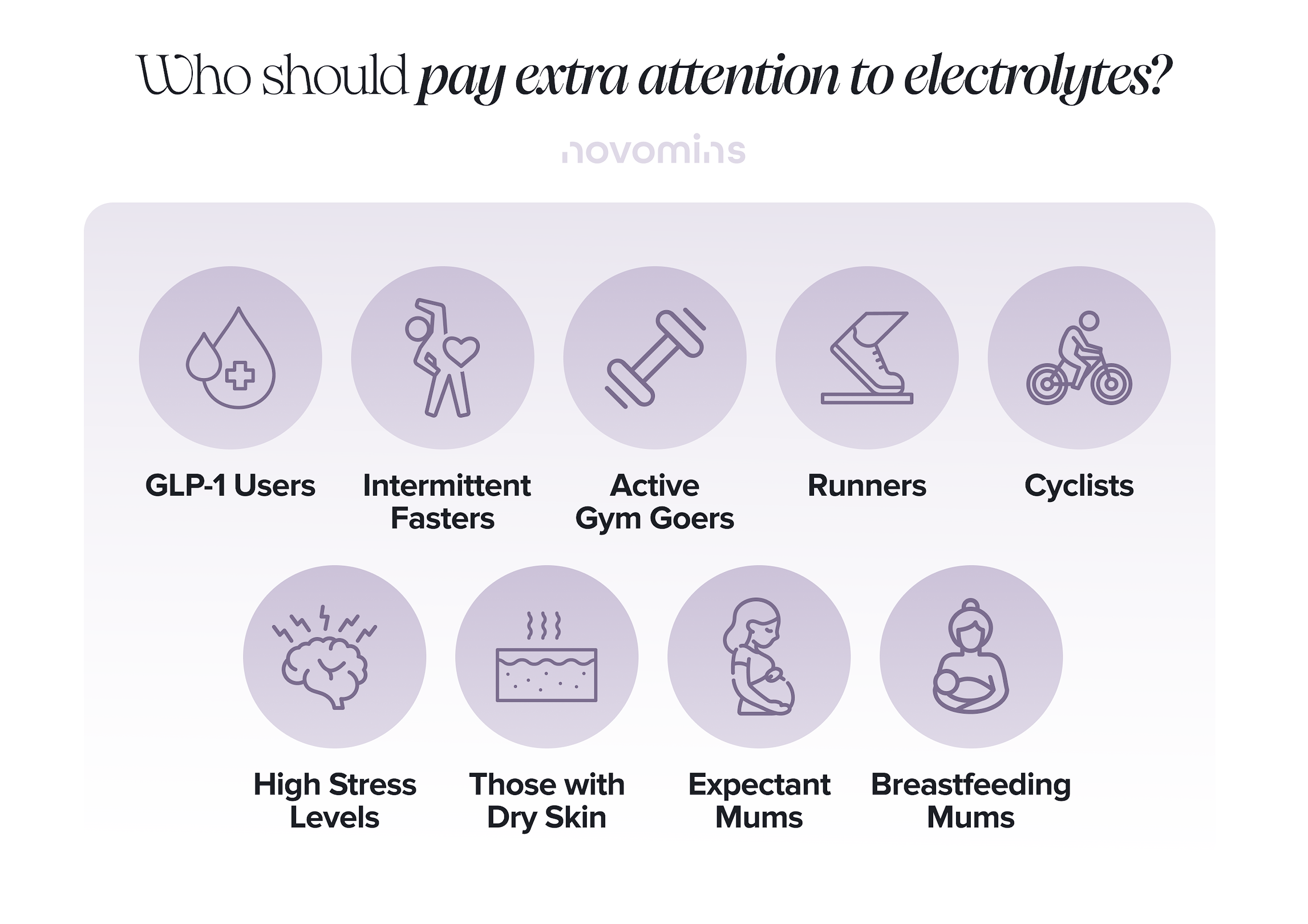
- GLP-1 Users
- Intermittent Fasters
- Active Gym Goers
- Runners
- Cyclists
- High Stress Levels
- Those with Dry Skin
- Expectant Mums
- Breastfeeding Mums
GLP-1 Users
GLP-1 medications reduce appetite and slow stomach emptying.
Eating and drinking less often means consuming fewer electrolyte-rich foods while increasing the risk of dehydration, particularly if nausea or vomiting occur.
Intermittent Fasters
Food provides much of our daily sodium, potassium and magnesium.
During fasting windows, those minerals naturally become less available, making electrolyte intake worth paying closer attention to.
Active Gym-Goers, Runners & Cyclists
The harder you train, the more you sweat.
Along with water, your body loses important electrolytes like sodium and potassium. Replacing water without replacing these minerals may leave you feeling tired, sluggish or crampy after exercise.
People Living With High Stress Levels
High stress doesn’t just drain your energy. It can also affect your hydration.
Chronic stress can increase the amount of magnesium your body loses through urine, while busy, demanding lifestyles often come with skipped meals, extra coffee and simply forgetting to drink enough water.
Together, these habits can make it harder to maintain a healthy fluid and mineral balance.
Those with Persistently Dry Skin
Hydrated skin often looks smoother, fresher and more radiant.
When you’re dehydrated, fine lines may appear more noticeable and skin can look duller.
While hydration isn’t a replacement for collagen, skincare or sun protection, giving the body the fluid and electrolytes it needs can support overall skin health from the inside out.
Sometimes glowing skin starts with better hydration, not another serum.
Expectant Mums
When every sip of water feels like a challenge, staying hydrated becomes easier said than done.
Nausea and vomiting during pregnancy can reduce both your fluid intake and your intake of electrolyte-rich foods. At the same time, vomiting causes your body to lose water and important minerals, making hydration even more difficult to maintain.
*If morning sickness is severe or you’re struggling to keep fluids down, always seek advice from your healthcare provider, as dehydration during pregnancy should be taken seriously.
Breastfeeding Mums
Breastfeeding increases the body’s need for fluids, as breast milk is made up of around 87% water. Alongside water, the body also uses minerals such as sodium, potassium and magnesium as part of normal fluid balance and everyday bodily functions.
Maintaining adequate hydration is crucial during this demanding stage of motherhood.
A Simpler Way To Stay Hydrated
Most electrolyte products come as powders.
That means finding water. Finding a shaker. Mixing everything together. And remembering to pack it all with you and somehow not spill half of it.
👉 Sometimes convenience is what determines whether a healthy habit actually stick.
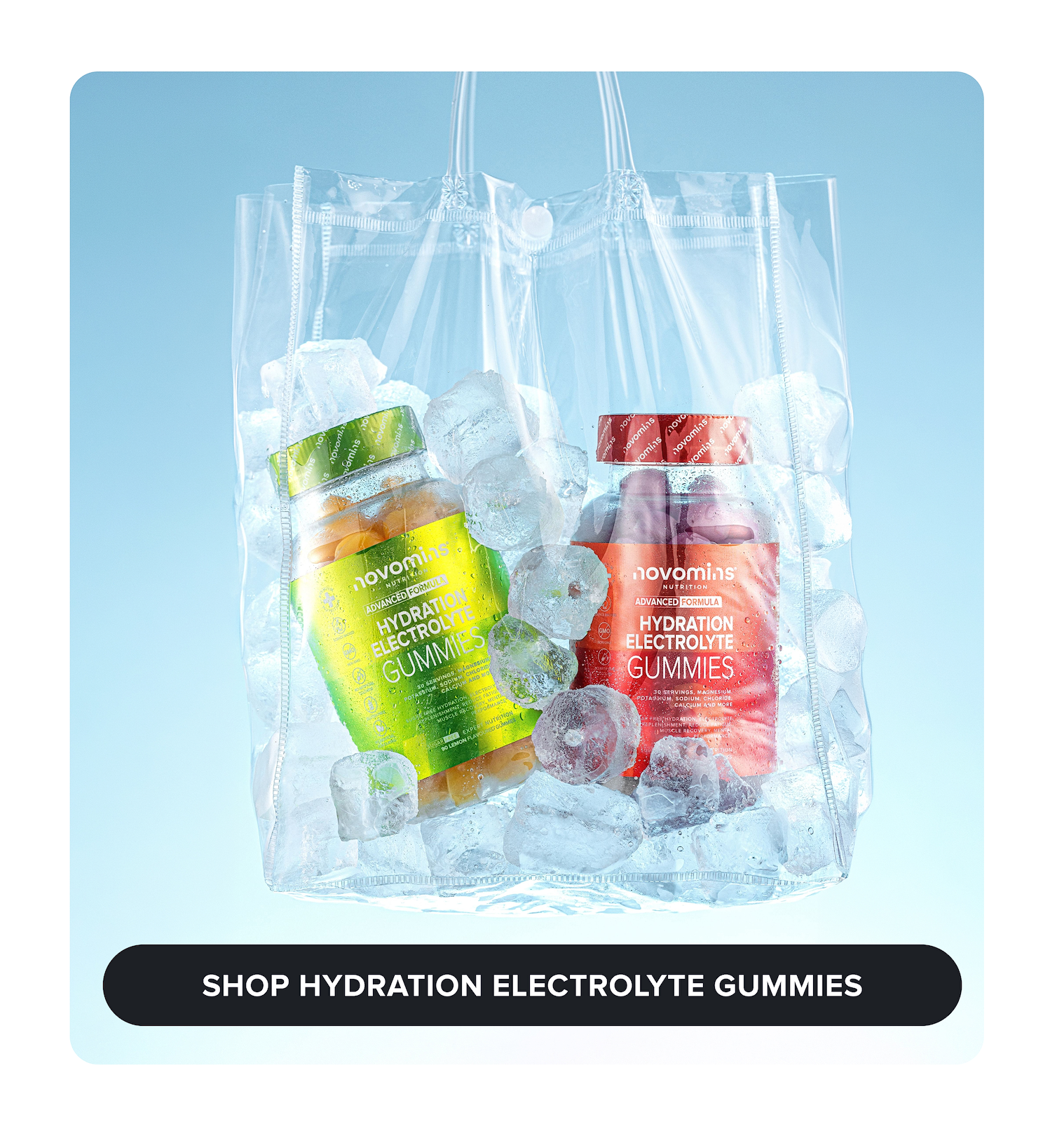
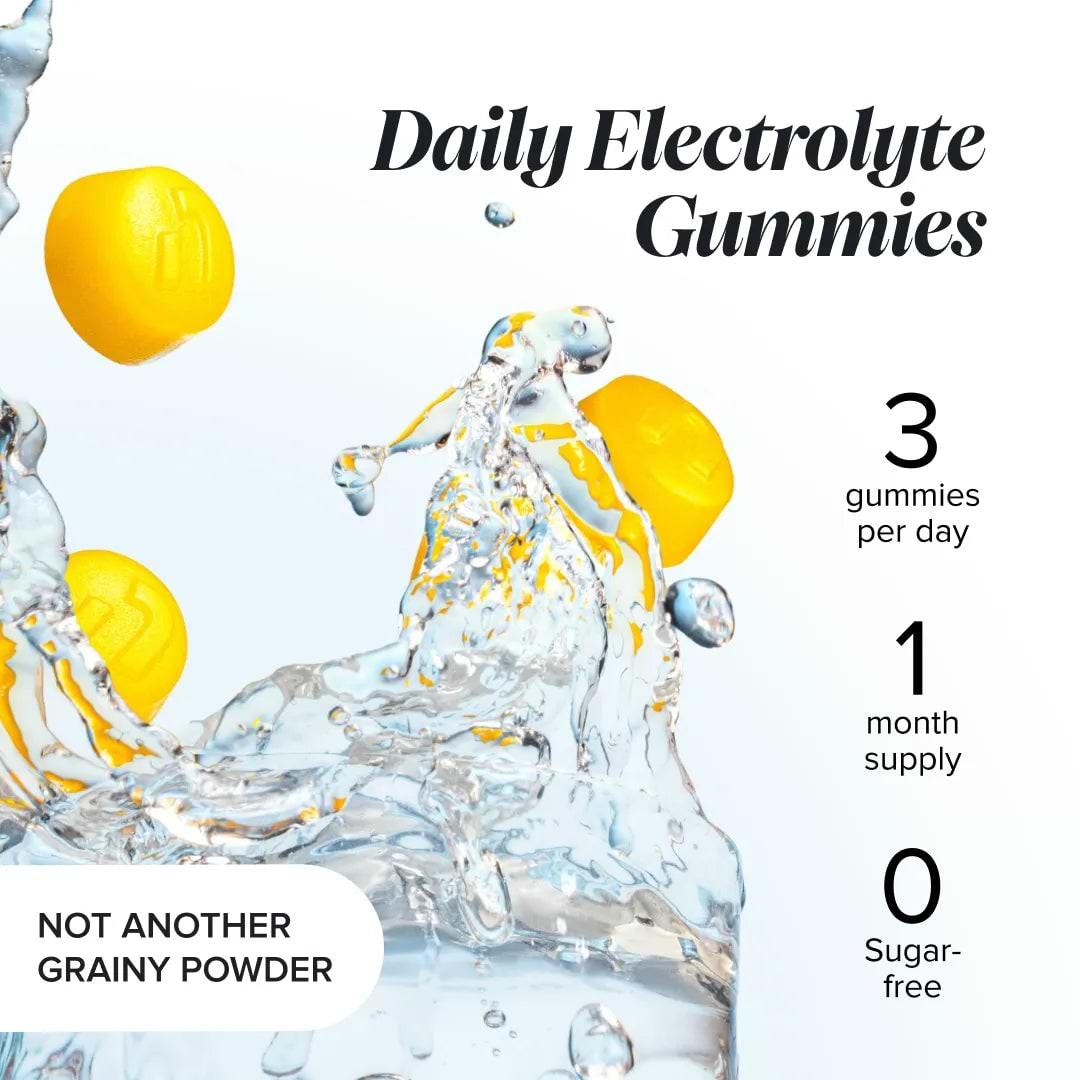
That’s why we created Novomins Hydration Electrolyte Gummies.
View as text
- 3 gummies per day
- 1 month supply
- 0 Sugar-free
Simply chew 3 delicious gummies.
No water. No mixing. No mess.
Available in refreshing Peach 🍑 and Lemon 🍋 flavours.

The perfect on-the-go electrolyte boost that moves with you!
Novomins Hydration Electrolyte Gummies: Advanced Formulation
Unlike many electrolyte products, Novomins doesn’t stop at sodium and potassium.
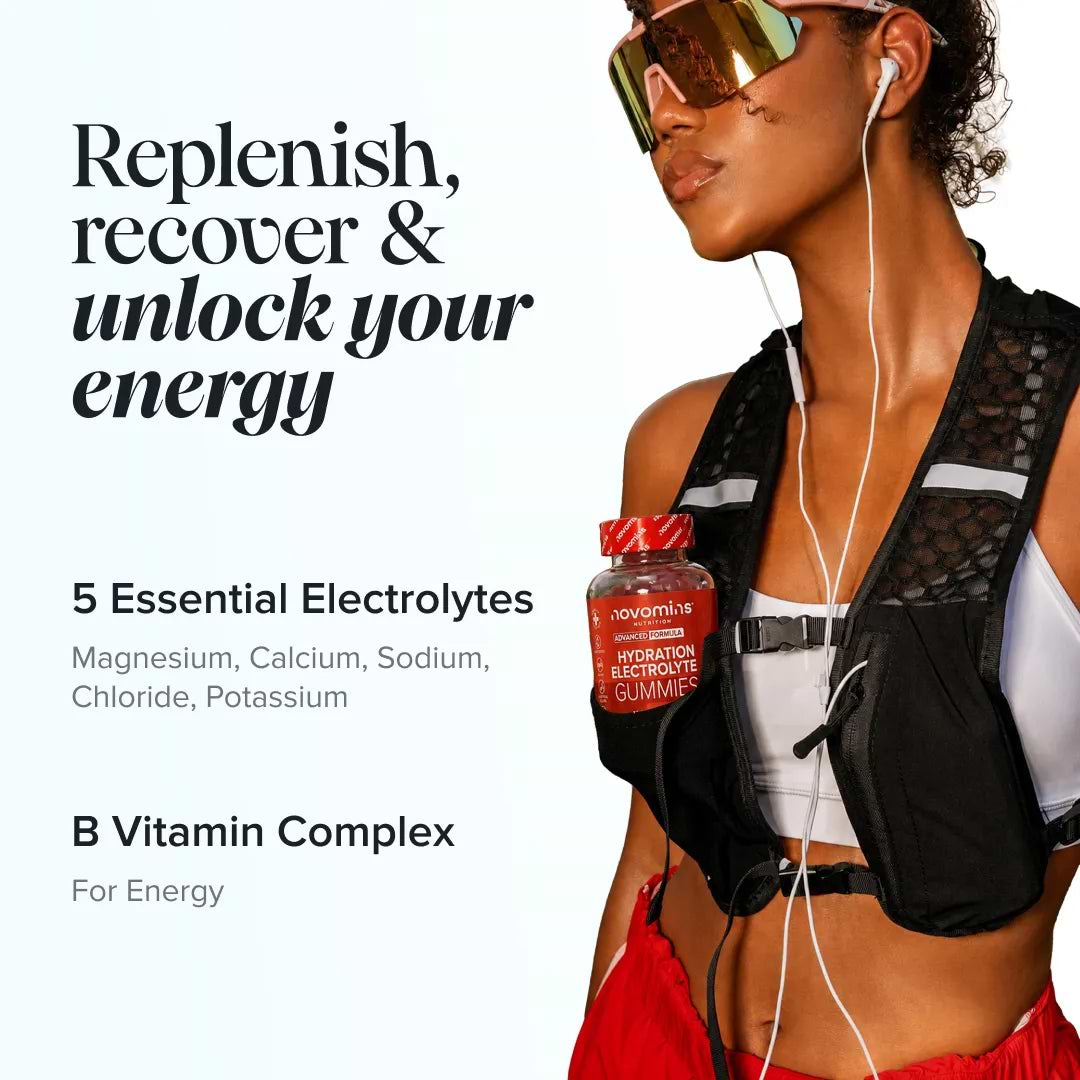
Each serving contains: 5 essential electrolytes
- Magnesium, Calcium, Sodium, Chloride, Potassium
Plus B-Vitamins:
- B3 (Niacin), B5 (Pantothenic Acid), B6, B12
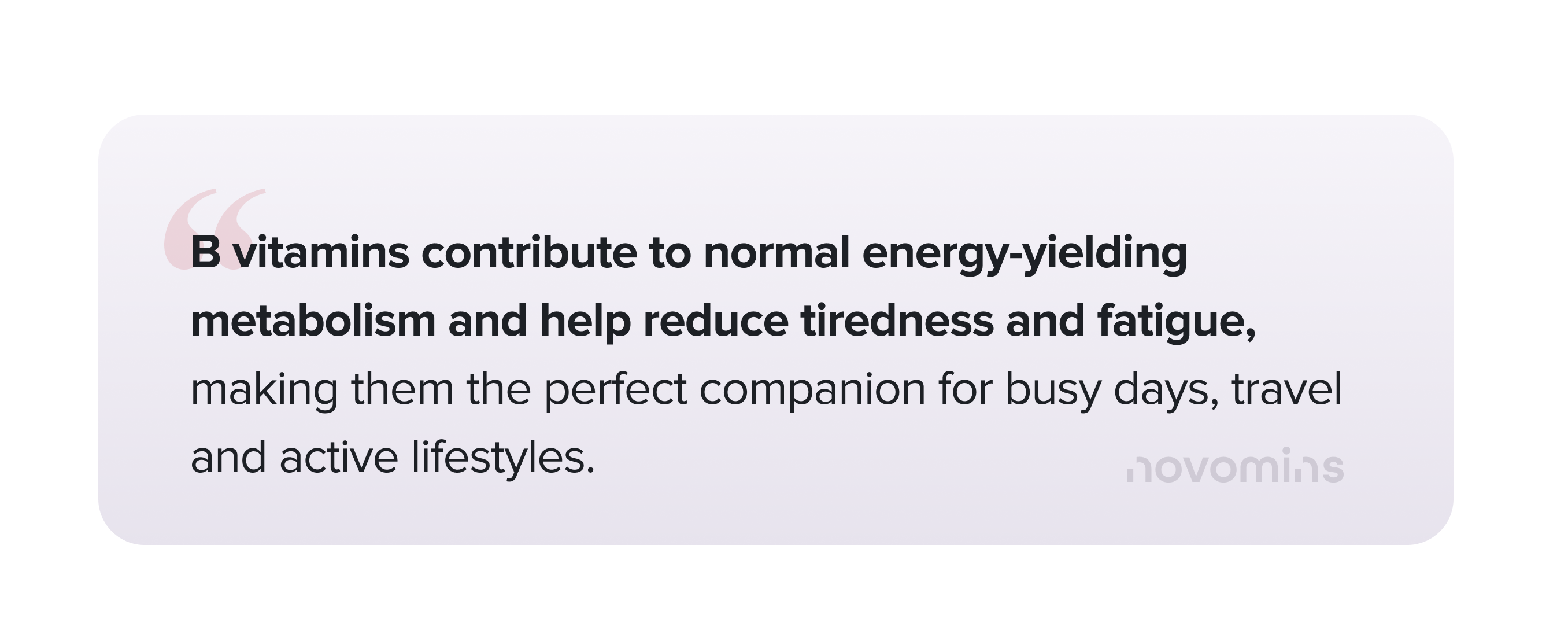
No added sugar. Just convenient daily hydration support in two delicious flavours.
View as text
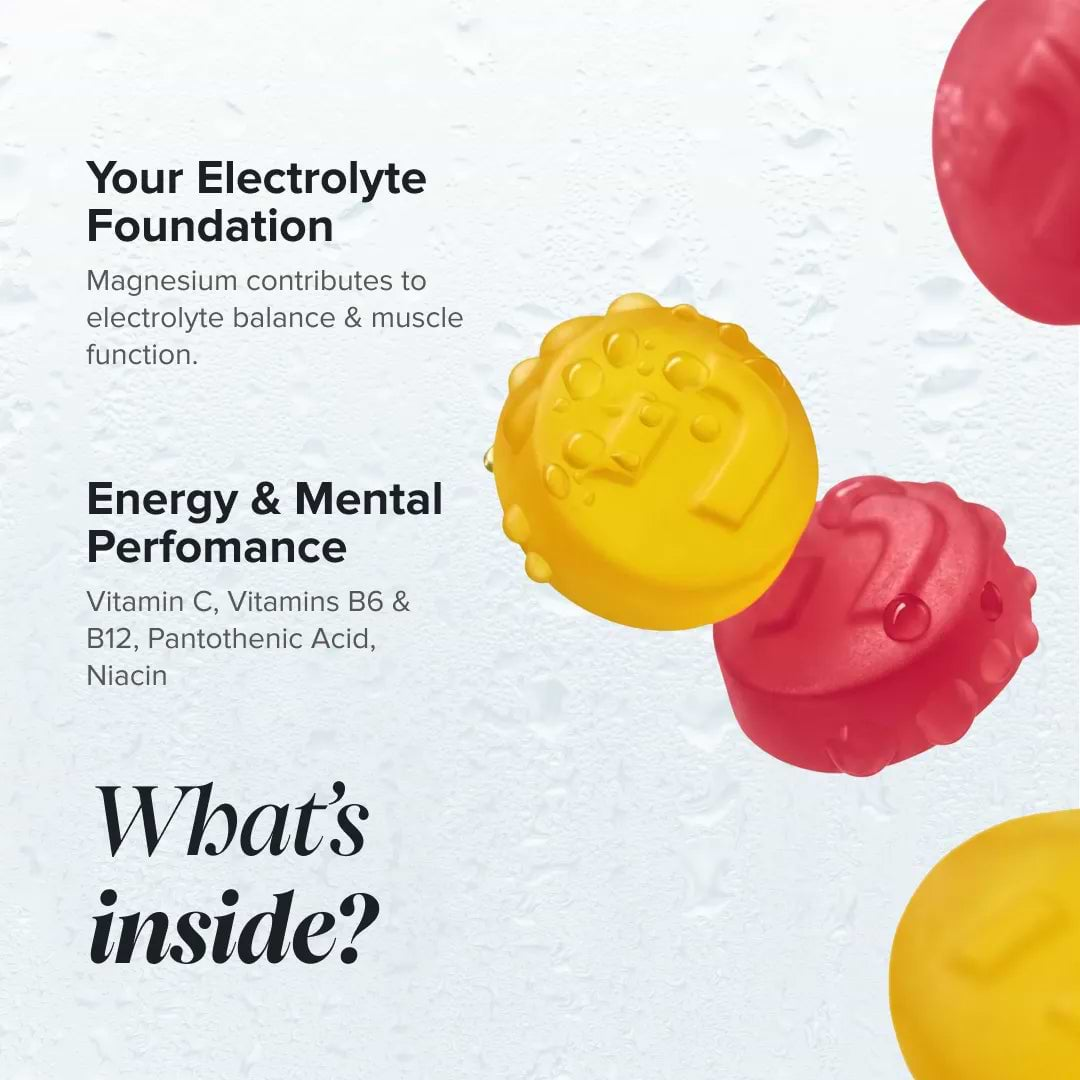
What's inside?
-
Your Electrolyte Foundation
Magnesium contributes to electrolyte balance & muscle function. -
Energy & Mental Perfomance
Vitamin C, Vitamins B6 & B12, Pantothenic Acid, Niacin
🍑🍋 SHOP HYDRATION ELECTROLYTE GUMMIES
Who Are Hydration Electrolyte Gummies For?
View as text
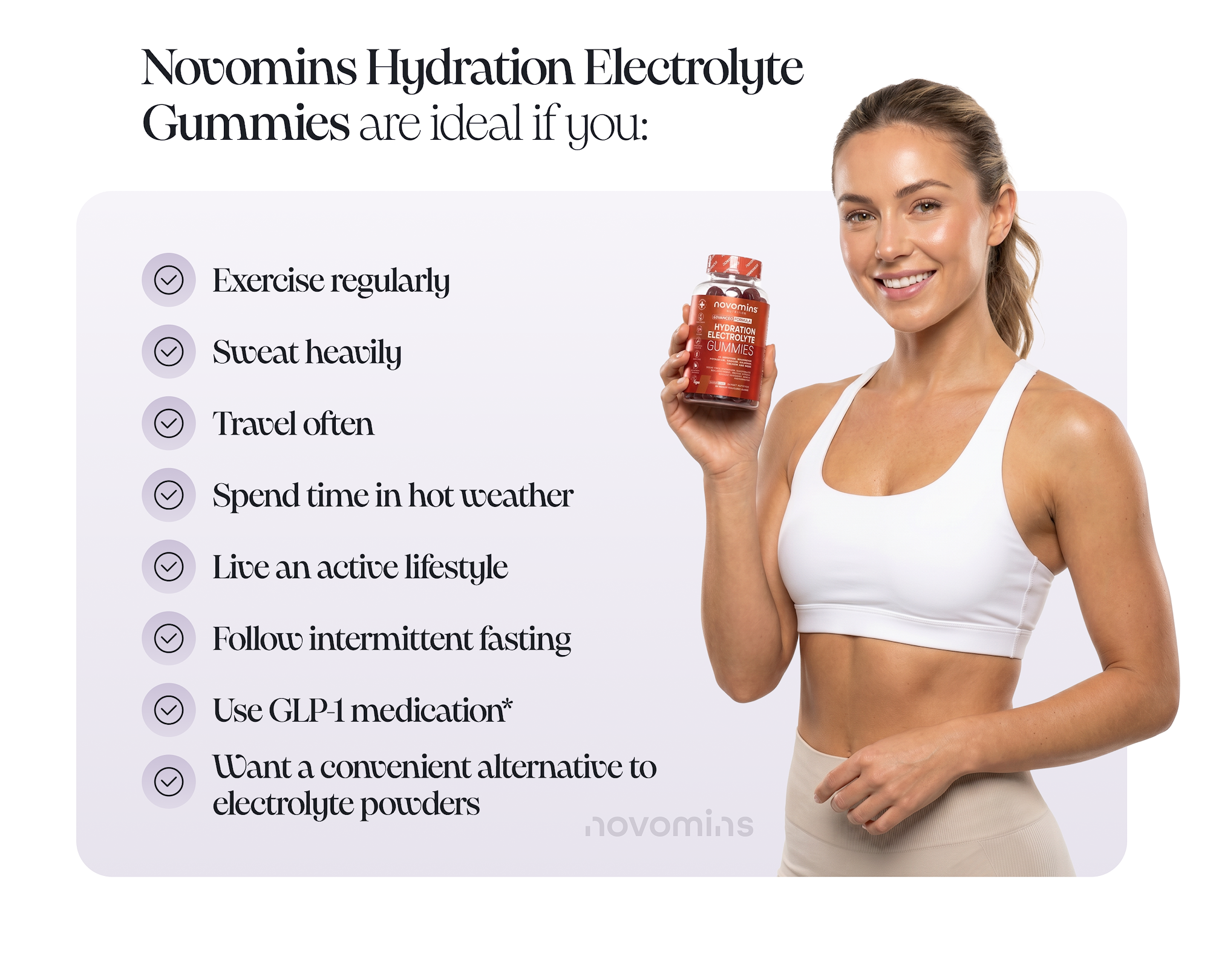
Novomins Hydration Electrolyte Gummies are ideal if you:
- Exercise regularly
- Sweat heavily
- Travel often
- Spend time in hot weather
- Live an active lifestyle
- Follow intermittent fasting
- Use GLP-1 medication*
- Want a convenient alternative to electrolyte powders
*Always follow your healthcare professional’s advice regarding hydration while taking prescription medication.
View as text
- Before or after workout
- To replace what you sweat out
- On hot days or long travels
- For city living & sweaty commutes
- After heavy nights
Final Thoughts
Hydration isn’t just about drinking more, it’s about hydrating smarter.
Water is essential. Electrolytes help your body make the most of it.
When you support both, you support normal fluid balance, muscle function, nervous system function and everyday energy metabolism.
Sometimes the missing piece isn’t just another litre of water, it's about your body being equipped to use that water efficiently.