



Testosterone falls slowly as men get older. The NHS says this gradual fall is unlikely to cause problems on its own. A true deficiency that develops later in life, called late-onset hypogonadism, is uncommon, and it is diagnosed from your symptoms and a blood test.
Low testosterone levels can lead to a range of health problems, including muscle wasting, infertility, hair loss, a reduced sex drive, depression and more. It doesn’t just affect older males: more and more younger men are diagnosed with this health condition, either as a result of genetics or environmental factors.
Vitamins and minerals are only part of the picture. Zinc is the one nutrient with an authorised claim here: zinc contributes to the maintenance of normal testosterone levels in the blood. For vitamin D, B6, K2, E, C and magnesium the research is mixed or limited, and most of the effects seen were in men who were low or deficient to begin with.
Below, we summarise what studies have found for seven nutrients, when to see your GP about a blood test, and the lifestyle factors with the strongest evidence.
What testosterone does and why levels fall
A critical male sex hormone that affects many aspects of health, testosterone levels are highest in adolescent and young adult men. From age 30, these levels decrease roughly 1%-2% each year, slowly declining with age. When men hit age 45, more than a third could have lower testosterone levels than normal.
Lower testosterone is not only an issue for men over 50. Younger men, including those in their twenties, can also be affected. Possible causes include a sedentary lifestyle, chronic stress, poor diet, a lack of quality sleep and varicoceles (abnormally dilated veins around the testicles).
Whatever your age, low testosterone levels shouldn't be overlooked. This crucial hormone is responsible for muscle mass and bone density, regulating sex drive and reproductive function, red blood cell production and a general sense of well-being.
The NHS notes that late-onset hypogonadism is more likely in men who are obese or have type 2 diabetes. The aim is a level that is normal for you, not the highest possible one, and a blood test through your GP is the way to find out where you stand.
What the research shows, nutrient by nutrient
Most studies on vitamins and testosterone are small, short or done in animals. A 2020 systematic review of 26 trials in people aged 45 and over found the effect of vitamins and minerals on sex hormones unclear, because the trials had significant weaknesses in how they were run. Where an effect has been seen, it has mostly been in men who were low or deficient to begin with. The table sums up each nutrient, and the sections below give the detail.
| Nutrient | What research has looked at | What it found | Authorised claim |
| Vitamin D | Trials giving vitamin D to adult men for six weeks to three years, and reviews pooling those trials. | One year-long trial in overweight men who were low in vitamin D, with testosterone at the low end of normal, found testosterone rose. A 2019 review of eight trials found no clear effect overall, including when results were split by starting vitamin D or testosterone level. | No authorised testosterone claim |
| Zinc | Studies that restricted or added zinc in men, and a 2023 review of 38 studies (8 in people, 30 in animals). | Cutting zinc from the diet lowered testosterone in young men. Giving zinc to older men who were mildly zinc deficient raised it over three to six months. The review found the effect depends on how much zinc and testosterone a man has to start with. | Zinc contributes to the maintenance of normal testosterone levels in the blood. |
| Vitamin B6 | Mainly animal studies, plus a review of what products sold as testosterone boosters contain. | In rats fed a diet with no B6, blood testosterone fell. B6 is one of the most common ingredients in products sold as testosterone boosters, often at many times the daily requirement, but we have not found trials showing B6 supplements raise testosterone in men. | No authorised testosterone claim |
| Vitamin K2 | Animal studies in rats. | Rats fed a diet with no vitamin K had a bigger fall in testosterone after an inflammatory challenge. Research in men is lacking. | No authorised testosterone claim |
| Vitamin E | A long-term trial in older men taking alpha-tocopherol, a form of vitamin E, and a review of trials in people aged 45 and over. | Men taking vitamin E had slightly lower testosterone than men taking a placebo. The review found no clear effect on sex hormones, though data were very limited. | No authorised testosterone claim |
| Vitamin C | Blood vitamin C levels in men having fertility tests, and animal studies. | Infertile men with higher blood vitamin C tended to have more favourable hormone profiles, and the link with total testosterone was seen only in men over about 42. This is an association, not proof that supplements raise testosterone. | No authorised testosterone claim |
| Magnesium | One small four-week study in young tae kwon do athletes and inactive men. | Free and total testosterone rose in both groups taking magnesium, more so in those who trained. The evidence rests on very few studies. | No authorised testosterone claim |
Vitamin D and testosterone
Commonly known as the sunshine vitamin, vitamin D is produced naturally by the body through skin exposure to sunlight. Certain food sources also help with vitamin D production, think oily fish like salmon and mackerel, red meat, cheese and egg yolks.
Results are mixed. A year-long trial in overweight men who were low in vitamin D found their testosterone rose with a daily supplement, but a 2019 review that pooled eight trials found no clear effect overall.
Research also indicates a potential link between vitamin D deficiency and reduced testosterone levels. Individuals with a deficiency showed lower hormone concentrations compared to those with normal vitamin D levels.
Our Vitamin D Gummies provide 100 micrograms (4,000 IU) of vitamin D3 per two-gummy serving, in a mango flavour. Vitamin D contributes to the normal function of the immune system and to the maintenance of normal bones. This is the NHS daily maximum for adults, so do not take them alongside another vitamin D supplement.

Vitamin B6 and testosterone
Vitamin B6 is one of the B vitamins. Research on B6 and testosterone has mostly been in animals: in rats fed a diet with no B6, blood testosterone fell. We have not found trials showing that B6 supplements raise testosterone in men.

Vitamin K2 and testosterone
Playing a role in the clotting of blood and healing of wounds, K vitamins are essential for the body. Vitamin K2, in particular, has benefits that include improving heart and bone health, improving bone density and reducing the risk of bone fractures.
The 2011 study often quoted on vitamin K and testosterone was carried out in rats. Rats fed a diet with no vitamin K had a bigger fall in testosterone after an inflammatory challenge than rats on a normal diet. That tells us little about men, and research in men is still lacking.
If you’re looking for a natural source of K2, you’ll find it in foods like meat, cheese and eggs or as a supplement, such as Novomins’ Calcium, Vitamin D & K2 Gummies.

Formulated with 200 mcg of vitamin K2 and 600 IU of vitamin D, these strawberry-flavoured gummies are an easy way to add both to your day.
Zinc and testosterone
Zinc is the one nutrient on this list with an authorised health claim: zinc contributes to the maintenance of normal testosterone levels in the blood.
The research fits that wording. In a 1996 study, cutting zinc from the diet of young men lowered their testosterone, and giving zinc to older men who were mildly zinc deficient raised it over three to six months. A 2023 review of 38 studies, most of them in animals, found the effect depends on how much zinc and testosterone a man has to start with.
Men aged 19 to 64 need about 9.5mg of zinc a day, according to the NHS. The NHS advises not taking more than 25mg of zinc a day from supplements unless a doctor advises it, because high doses reduce how much copper the body can absorb.
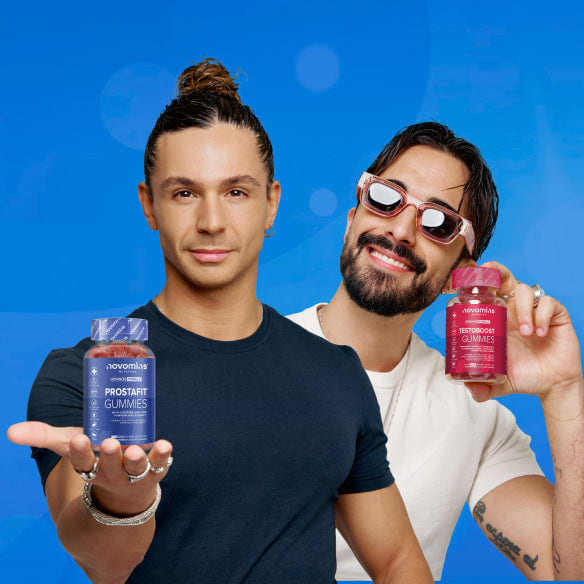
TestoBoost Gummies with zinc provide 15mg of zinc per two-gummy serving, alongside vitamins B6, B12 and D2 and botanical extracts. If you take more than one supplement that contains zinc, add up the total.
Oysters are the richest natural food source of zinc, but it can also be found in red meat, fish, egg, dairy products, nuts and whole grains. If you’re looking for a tasty zinc supplement, check out Novomins’ Zinc, Magnesium & B6 Gummies and Men’s Prostate Gummies.

Vitamin E and testosterone
In a long-term trial in older men, those who took alpha-tocopherol, a form of vitamin E, had slightly lower testosterone than men given a placebo. The evidence does not support the idea that more vitamin E means more testosterone.

Vitamin C and testosterone
We often associate vitamin C with its infamous immune-support abilities. And while that is true, this popular vitamin does so much more.
Also known as ascorbic acid, vitamin C has mainly been studied in men having fertility tests. A 2023 study of infertile men found that those with higher blood levels of vitamin C tended to have more favourable hormone profiles, with the link to total testosterone seen only in men over about 42. That shows an association, not that vitamin C supplements raise testosterone.
Meanwhile, those who don’t get enough vitamin C have increased aromatase levels - an enzyme that converts testosterone into oestrogen.
Novomins Vitamin C Gummies are an orange-flavoured way to top up the vitamin C you get from fruit and vegetables.

Magnesium and testosterone
The evidence on magnesium is thin. A small 2011 study gave magnesium at 10mg per kilogram of body weight a day, for four weeks, to young tae kwon do athletes and to men who did not exercise. Free and total testosterone rose in both groups, more so in those who trained. Because the dose was set by body weight, it was well above the 100mg in a serving of our zinc and magnesium gummies.
Magnesium contributes to a reduction of tiredness and fatigue and to normal muscle function. Our zinc and magnesium gummies provide 100mg of magnesium, 10mg of zinc and 4mg of vitamin B6 per two-gummy serving.
Signs to see your GP and the blood test
The NHS lists symptoms that some men develop in their late 40s to early 50s: depression, loss of sex drive, erection problems, mood swings and irritability, loss of muscle mass and less ability to exercise, fat gathering around the belly or chest, a general lack of energy, difficulty sleeping or more tiredness, and poor concentration and short-term memory.
These symptoms often have nothing to do with hormones. The NHS points to stress, depression, anxiety, lack of sleep, a poor diet, lack of exercise, drinking too much alcohol and smoking as common causes.
If you have any of these symptoms, see your GP. They will ask about your work and personal life, and may order a blood test to measure your testosterone. If the results suggest a deficiency, you may be referred to an endocrinologist, a doctor who specialises in hormone problems.
A deficiency that develops later in life, called late-onset hypogonadism, is uncommon and is not a normal part of ageing. The NHS says it is more likely in men who are obese or have type 2 diabetes. If a specialist confirms it, you may be offered testosterone replacement as an injection or a gel. Vitamins and minerals are not a substitute for that treatment.
Sleep, weight and training
Sleep. Most of the testosterone men release each day is released during sleep. In a small 2011 study, ten healthy young men slept less than five hours a night for a week. On those short nights, their testosterone was at its lowest in the afternoon and evening, between 2pm and 10pm. If your sleep is regularly broken, mention it to your GP.
Weight. A 2013 review of 24 studies found that weight loss in men with obesity, through a low-calorie diet or weight-loss surgery, was linked with a rise in testosterone. The more weight men lost, the bigger the rise.
Training. The picture is less simple than gym advice suggests. A 2019 review of 22 studies in men aged 60 and over found that a short course of resistance training did not significantly change resting testosterone, while aerobic and interval training led to small increases. The NHS lists lack of exercise, drinking too much alcohol and smoking among the lifestyle factors behind symptoms that are often blamed on hormones.
Choosing a supplement
Testosterone peaks in adolescence and early adulthood and falls slowly from around 30. A 2020 review of 50 products sold as testosterone boosters found that fewer than a quarter had published data showing a rise in testosterone, and 13 went over US safe upper limits for zinc, vitamin B3 or magnesium. So check the label, add up the zinc across everything you take, and speak to your GP first if you have symptoms.
There is no single best vitamin for testosterone. Zinc is the nutrient with an authorised claim: zinc contributes to the maintenance of normal testosterone levels in the blood. If a blood test shows you are low in a nutrient, your GP can advise how to correct it.
If you want a zinc supplement made for men, TestoBoost Gummies provide 15mg of zinc per two-gummy serving.
They are made with 11 vitamins, minerals and botanicals, including vitamins B6, B12 and D2 alongside the zinc.

Browse the full men's health gummy range.