





Maca root is having a moment, but this isn’t just another wellness trend.
Searches for maca have surged by 55% in recent years, and it keeps showing up in conversations around energy, mood, libido, and hormonal balance. Naturally, the question follows… is it actually worth it?
Maca, sometimes called Peruvian ginseng, has been used for thousands of years in traditional Andean practices, both as a food source and as part of daily wellbeing rituals. What makes it different today is not just its history, but the growing scientific interest in how it may support the body’s natural balance, particularly when it comes to energy, mood, and hormonal health.
So instead of adding to the noise, let’s simplify it.
What is maca, how does it actually work in the body, and is it something worth making space for in your routine?
What is maca?
Maca is a root, but not in the way you might expect.
Grown high in the Andes Mountains, where few plants can survive, maca has been used for over 3,000 years as both a food source and part of daily wellbeing practices. The conditions it grows in are extreme, and that resilience is part of what makes it so nutritionally interesting.
Often referred to as Peruvian ginseng (although it is not technically a ginseng), maca belongs to the same plant family as broccoli, kale, and cabbage. It is typically dried and ground into a powder, which is how it has traditionally been added to meals in Peru.
What matters more than where it comes from, though, is what it brings with it.
Maca naturally contains a mix of plant compounds, fibre, and essential nutrients, and it is particularly known for unique bioactive compounds called macamides, which are not commonly found in other foods.
These compounds are part of why maca continues to attract attention today, especially in conversations around energy, mood, and hormonal balance.
In short, maca is not just a historical ingredient, it is a functional one, which is exactly why it has made its way into modern routines.
How does maca work in the body?
Maca is essentially a cruciferous vegetable, like broccoli, cabbage or kale. It contains fibre, vitamins and minerals that are thought to provide various health benefits.
A large part of maca’s activity in the body takes place in the recently discovered endocannabinoid system, or ECS for short, which regulates and controls many critical bodily functions, including sleep, memory and inflammatory and immune responses.
This has been attributed to bioactive molecules in maca called macamides. Macamides are long-chain fatty acids that have energy-boosting, fertility-enhancing and neuroprotective effects and are almost identical in structure to the natural cannabinoids in our brain.
Macamides can also help protect anandamide in the body, a fatty acid neurotransmitter, contributing to a more resilient nervous system.
Benefits of maca: what is maca good for?
Maca is often spoken about in the context of energy, mood, and hormonal balance, but one area it is especially known for is sexual wellbeing.
Maca benefits for sexual health
Maca is best known for its sexual health benefits in both men and women alike. These include reducing erectile dysfunction, increasing the libido and enhancing fertility.
Studies show that maca increased libido in men after eight weeks of taking 1.5-3 grams every day compared to those who received the placebo.
A 2009 study that looked at the effects of a daily 2.4mg dose over the course of 12 weeks also highlighted that maca root was potentially beneficial in men with erectile dysfunction.
Additionally, a small 2001 study found that maca improved semen production in men who consumed maca daily over four months, and a 2020 study found that a daily dose of 2 grams improved sperm concentration.
However, more research is still needed, as there wasn't a significant difference in sperm motility between placebo and treatment groups.
Maca's sexual health benefits aren't just restricted to men. Maca root’s benefits for females include reducing antidepressant-induced sexual dysfunction in postmenopausal women.
Can maca root get you pregnant?
If you’re trying to boost your chances of getting pregnant or have been trying to conceive for a while, taking a maca supplement could help.
As we’ve already seen, research shows potential benefits in enhancing sexual health and fertility in men, like improving sperm count. This could lead to improved chances of conception.
One study also confirmed that the traditional use of maca can enhance female fertility. Therefore, maca may also benefit women who are trying to conceive.
Another 2019 study found that taking maca alongside other natural remedies could improve ovulation in fertile women. However, scientific research on maca benefits for women’s fertility is limited.
Maca benefits for energy levels
If your energy feels inconsistent or your mood dips under pressure, this is where maca tends to come into the conversation.
Unlike caffeine, which works quickly and often comes with a crash, maca is often described as a more gradual, steady form of support. It is not about stimulation, but about helping your body maintain balance over time.
A 2022 study showed that maca extract reduced fatigue in young adults and women, and a small study involving 175 people found that participants who took 3 grams of maca for 12 weeks repeated a boost of energy.
Maca benefits for mood
Maca has adaptogenic qualities and is rich in flavonoids, meaning it can help the body manage stress and might be especially helpful for those with anxiety or depression.
It does this by balancing the body’s HPA axis, responsible for how our nervous and hormone systems respond to stress.
Maca helps regulate the stress hormone cortisol, preventing it from rising, as well as dopamine and serotonin to improve mood. Further research also found that maca reduced anxiety and depression in two separate studies in postmenopausal women.
Maca benefits for hormonal balance
Maca root holds benefits for females in particular. Thanks to its adaptogenic properties, maca may help with hormonal balance, boost libido, increase fertility and alleviate menopausal symptoms.
It's thought that maca does this by nourishing the glands in the endocrine system, like the pituitary gland, and promoting the normal secretion of women's hormones essential for fertility. One study confirmed that maca positively affected hormone-balancing function in early-postmenopausal women.
Moreover, maca's protective effect on the body from producing an excess of the stress hormone cortisol can directly benefit women's hormonal health. High cortisol levels are known to lower oestrogen in the body, which regulates menstruation, maintains the reproductive system and affects thyroid hormones.
Maca benefits for overall well-being
There are a tonne of maca root benefits. For example, maca is a great source of magnesium, potassium and calcium, which are essential minerals for general well-being and maintaining optimal bone health.
One study showed that those who consumed maca had noticeably improved bone density markers. One likely reason for this is that maca contains polyunsaturated fatty acids, which are beneficial for bone health.
Maca root benefits also include its antioxidant properties. This protects cells in the body by fighting damaging free radicals and reducing the risk of serious health conditions, including cancer and heart disease.
Lastly, research suggests that maca can help improve blood pressure, learning, and memory and even protect skin from UV rays and sunburn. However, it's important to note that these results were found in animal studies and research still needs to be done on humans.
Who should and should not take maca?
If you are generally healthy but want to balance your hormones and improve your overall well-being, energy, and health after menopause, maca could very well be beneficial. Likewise, if you’re a man and need help with your libido, erectile dysfunction or fertility, maca is a good supplement to add to your daily routine.
But, while maca health benefits are numerous, that doesn’t mean it’s suitable for everyone.
While it’s considered safe for most people, with little to no reported side effects, avoid it if you are pregnant or breastfeeding, as there simply isn’t enough information yet regarding its safety.
As maca affects sex hormones and hormonal balance, anyone with a hormone-sensitive cancer like ovarian, uterine or breast cancer, as well as those with conditions like uterine fibroids and endometriosis, should also avoid it.
What are the different types of Maca?
Maca red benefits
Red maca is one of the rarest forms of maca, alongside black, and provides the most antioxidants out of all three variants. It also has the highest amount of amino acids.
Scientific research has found that a high dose of red maca can be beneficial for bone health and preventing post-menopausal bone loss. It found that maca may also support female fertility, libido and prostate function in men.
However interestingly enough, red maca doesn’t seem to be better at increasing sperm motility in men compared to black and yellow variants.
Maca black benefits
Black maca is considered to be the rarest type of maca. It is also the most nutrient-dense and has the highest amount of antioxidants of the three varieties.
It has a higher concentration of certain compounds and essential vitamins and minerals, with studies suggesting that black maca powder can benefit cognitive function, in particular.
Also known as ‘men’s maca’, black maca is incredibly potent when it comes to increasing sperm production, making it a powerful tool to boost male fertility. This is in contrast to red maca, which has been shown to be more helpful in improving female fertility.
It’s also a favourite among athletes looking to boost their performance thanks to benefits like increased energy levels and endurance.
Yellow maca benefits
Yellow maca is the most common variant of the three and is traditionally known as classic maca. Mild in flavour, it's also the least potent and expensive option, making it a great choice if you're new to maca and are looking for a natural way to improve your general health.
It's highly regarded for its adaptogenic properties and is packed with B vitamins which can enhance energy levels.
What is the best way to take Maca?
Gummies are a great way to receive the health benefits of maca for those who find it difficult to swallow traditional capsules. They are also a lot more convenient than powders, as you don’t have to measure out a dose each time. They can even be taken on the way to work or dropping the kids off at school.

What do our customers say?
- 95% Consider Novomins gummies more effective than powders and capsules
- 89% Prefer Novomins gummies to capsules and powders
- 85% Recommended Novomins gummies to their friends and family
*Based on consumer study of 363 participants
How to use and get the most out of maca
To get the most out of your maca, choose a high-quality maca extract to add to your daily health and wellness routine.
When it comes to maca, quality matters. Opt for the purest form of maca available, which means selecting supplements and powders that are minimally processed with organic ingredients.
Steer clear of products high in additives, artificial flavours, sugars or sweeteners to gain more health benefit and always buy from a reputable brand.
An optimal maca dose hasn’t been established, so you should always stick to the recommended dose on the label and take a consistent serving size daily.
As maca is famous for its energy-boosting properties, it’s also best to take it in the morning or just before a workout to benefit from the full effects. It can be taken with or without food, although if you have a sensitive stomach, taking it with food is recommended.
If you’re looking for the convenience of maca in a gummy, you can’t go wrong with Novomins.
Meet Novomins Maca Gummies
Our Maca Gummies are scientifically formulated to deliver high absorption. The mouth can also absorb nutrients through the mucous membranes in the mouth (also known as buccal absorption), allowing the uptake of maca from the very first chew.
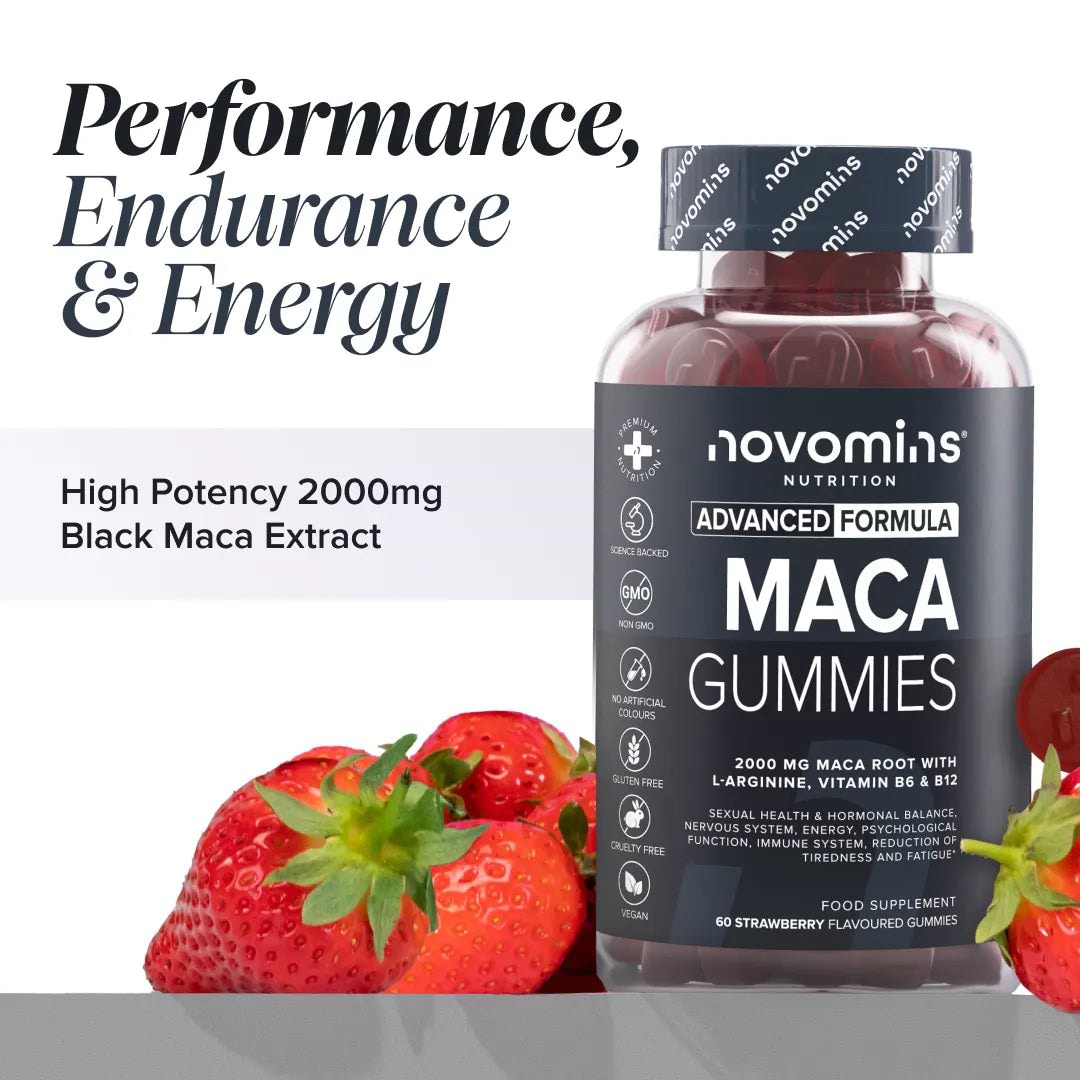
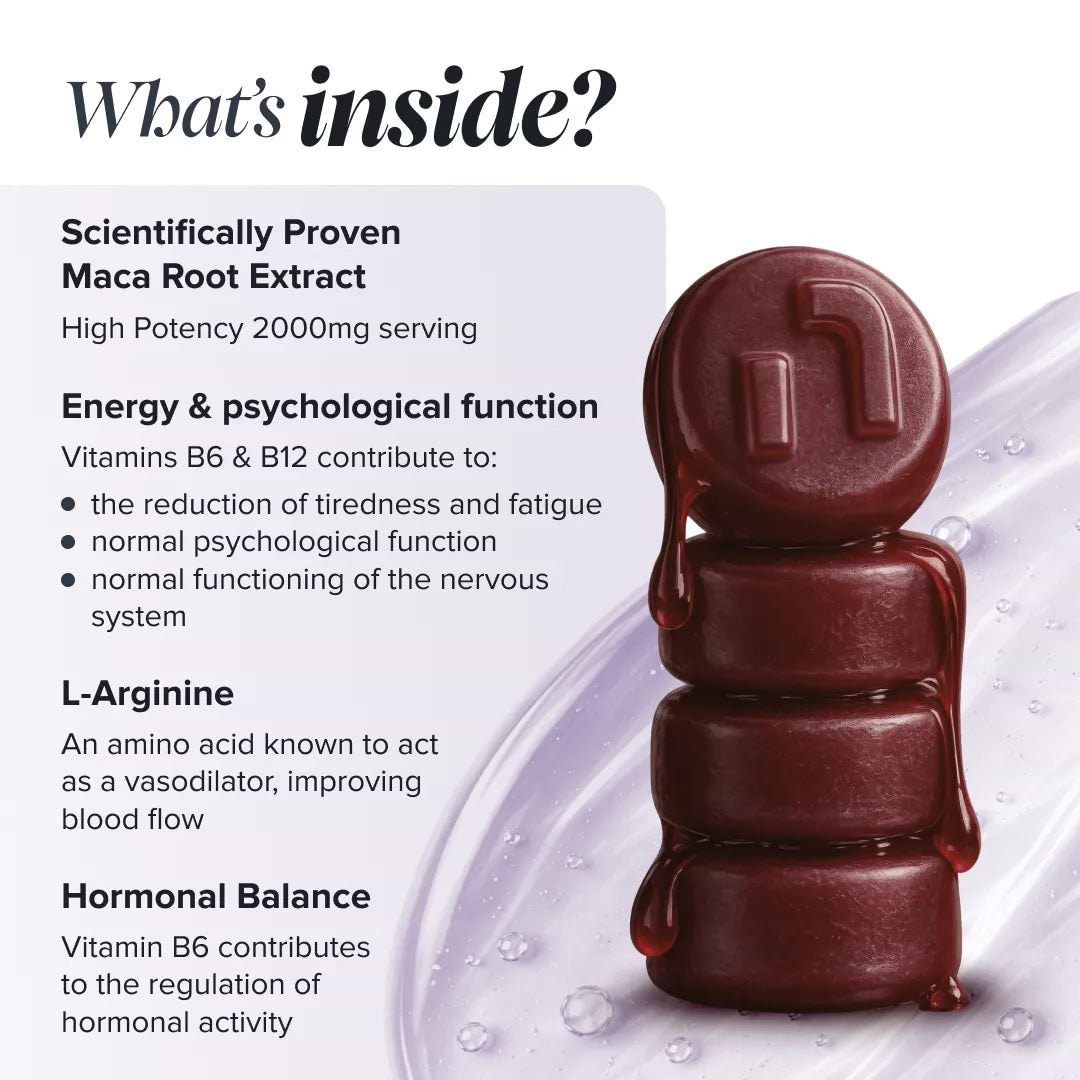
Novomins Maca Gummies are formulated with key ingredients know to contribute to energy and psychological function as well as regulation of hormonal activity.
Conclusion: is maca worth taking?
You may find maca beneficial for its potential sexual health benefits. Studies have found it possible for maca to be valuable for increasing libido, enhancing fertility and reducing erectile dysfunction.
Various studies have found that Maca could also improve sperm count and can potentially enhance female fertility, making it helpful for couples trying to conceive.
Other potential health benefits include boosting energy levels, reducing stress, improving mood and supporting bone health.
Maca can come in many forms, including powders, liquid extracts, coffees and gummies.
Explore Novomins Maca Gummies for a powerful, yet convenient addition to your routine.

Maca Benefits FAQs
What happens if I take maca every day?
Taking maca daily is generally considered safe for most people when used as directed. Over time, consistent intake is often associated with support for energy, mood, and overall wellbeing. Like most plant-based supplements, maca tends to work gradually rather than delivering immediate effects.
Is maca good for libido?
Maca is commonly associated with sexual wellbeing and desire in both men and women. Some studies have explored its role in supporting libido when taken consistently, although results can vary from person to person.
Can maca support fertility?
Maca has traditionally been used in fertility support and has been studied for its potential role in reproductive health, particularly in men. However, fertility is complex, and maca should be seen as a supportive addition to a broader lifestyle approach rather than a standalone solution.
Does maca help with hormones?
Maca is often described as an adaptogenic plant, meaning it may support the body’s natural balance, including systems linked to stress and hormonal signalling. It does not contain hormones but may support how the body regulates them.
When is the best time to take maca?
Maca is typically taken in the morning or earlier in the day, especially if you are using it as part of your energy or focus routine.
What is the best way to take maca?
Maca can be taken as a powder, capsule, or gummy. Gummies are often preferred for ease, consistency, and taste, making them easier to incorporate into a daily routine.
Disclaimer
This content is for informational purposes only and is not intended as medical advice. Food supplements should not be used as a substitute for a varied, balanced diet and a healthy lifestyle. If you are pregnant, breastfeeding, have a medical condition, or are taking any medication, please consult a healthcare professional before use.


