





"Folic acid is a toxic chemical." "Your MTHFR gene means you can't process it." "They're putting it in the bread to control us."
If you've scrolled social media lately, you'd think a humble B vitamin had been caught running a criminal empire. Meanwhile, the actual science has been sitting quietly in the corner for 90 years, holding a mountain of evidence and wondering why nobody asks it anything.
So let's ask it.
From 13 December 2026, folic acid will be added by law to most non-wholemeal wheat flour in the UK. That's why it's suddenly everywhere in your feed. Here's what it is, where it came from, what it does, how much is safe, and why you can take it with confidence.
The Short Answer: Is Folic Acid Safe?
Yes. As with literally everything, at recommended doses, folic acid is one of the most researched, best-proven and safest supplements in the world.
Folic acid is the stable, manufactured form of folate, also called vitamin B9. Your body uses it to make DNA, build new cells and produce healthy red blood cells.
It's the form used in the landmark trials that showed it prevents serious birth defects of the brain and spine. The UK government expects flour fortification alone to prevent around 200 affected pregnancies every year.
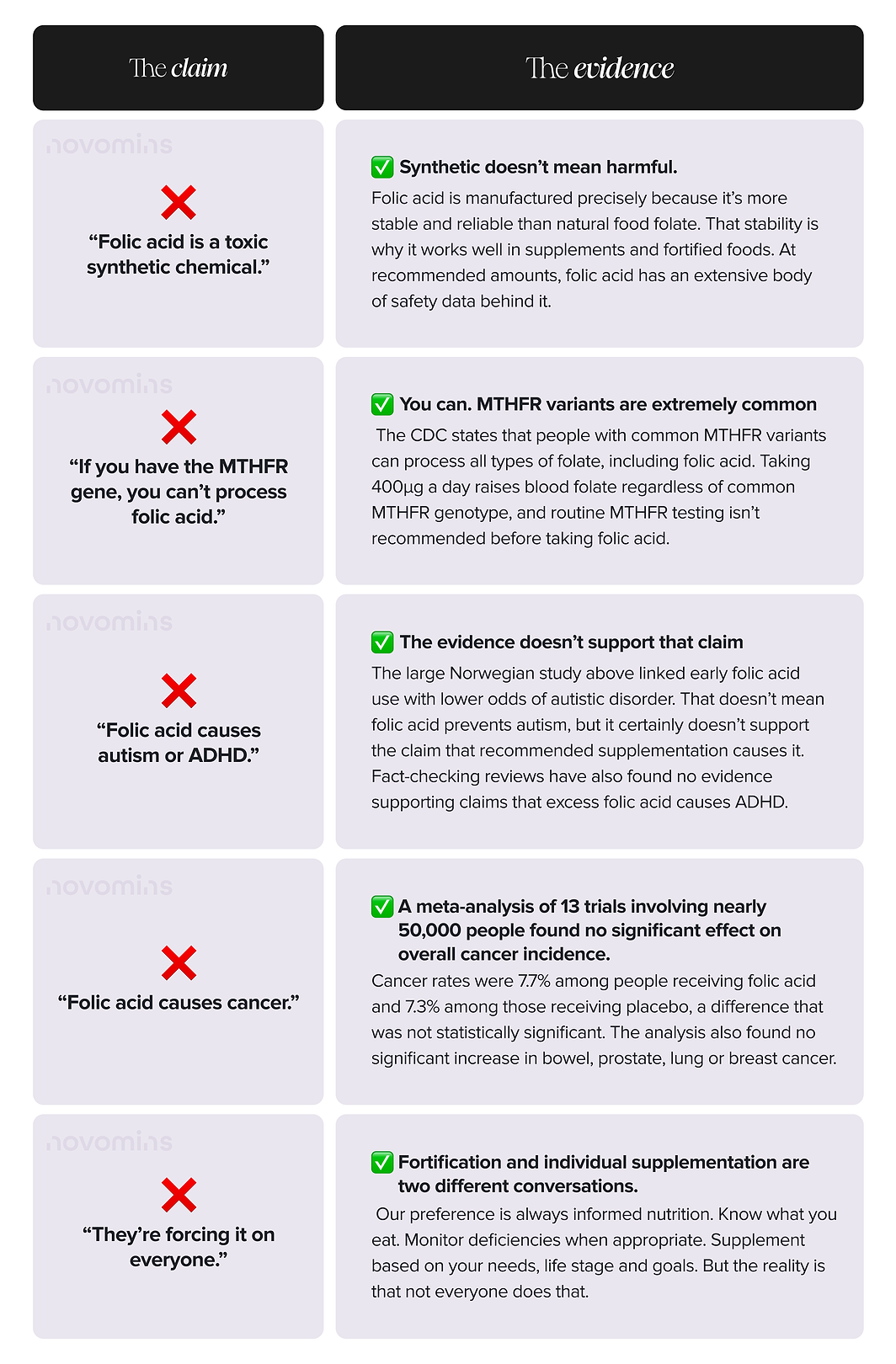
The viral claims fall apart under the evidence. People with MTHFR gene variants can process all types of folate, including folic acid, and a meta-analysis of nearly 50,000 people found no effect on cancer rates.
The important part is dose.
For most adults, total folic acid intake from supplements and fortified foods should stay below 1mg (1,000μg) per day unless a healthcare professional advises otherwise.
Folate, Folic Acid, Methylfolate: Same Vitamin, Different Outfits
"Folate" is the family name for vitamin B9. Folic acid and methylfolate are two members of that family. They all end up doing the same job; they just take slightly different routes to get there.
| Food folate | Folic acid | Methylfolate (5-MTHF) | |
|---|---|---|---|
| What it is | The natural form found in food | The stable, manufactured form | The "active" form the body uses directly |
| Where you find it | Leafy greens, beans, lentils, chickpeas, oranges, broccoli | Supplements and fortified foods like bread and cereals | Some supplements |
| Stability | Fragile: easily lost to heat, light and cooking | Very stable, which is why it's used to fortify foods that get cooked | Less stable than folic acid |
| Evidence for pregnancy | Important, but hard to get enough from food alone | The form used in all the major neural tube defect prevention trials | Raises blood folate well, but hasn't been tested on birth outcomes |
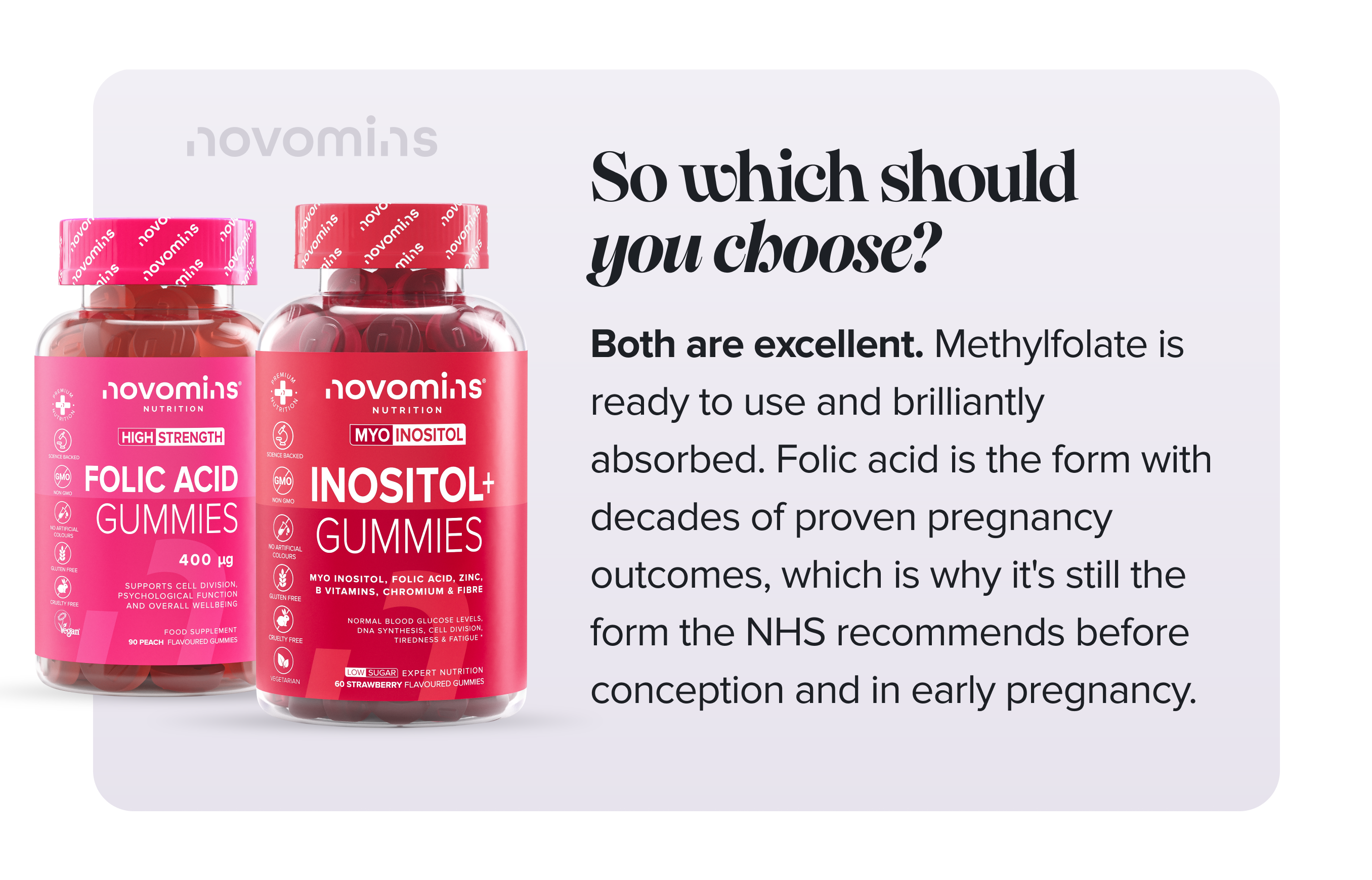
| Novomins option | Eat your greens! | Folic Acid Gummies | Inositol+ Gummies |
The bottom line: both folic acid and methylfolate are effective ways to top up your folate.
If you’re planning a pregnancy or in the first 12 weeks, folic acid is the form UK and international health bodies recommend because it has decades of pregnancy outcome data behind it.
Methylfolate: the ready-to-use form
Think of folic acid as flat-pack furniture and methylfolate as the version that arrives already built.
Methylfolate (5-MTHF) is the main form of folate already found in your bloodstream. Folic acid has to go through several conversion steps, including the MTHFR enzyme, before your body can use it. Methylfolate skips the queue.
And the absorption research is impressive:
- Higher folate levels at the same dose. In a 24-week trial of 144 women, an equal dose of methylfolate raised red blood cell folate significantly more than folic acid, to roughly 1,400 vs 1,250 nmol/L (summary).
- Faster and higher in the blood. In a study of 24 adults, a single dose of methylfolate produced higher blood folate than an equal dose of folic acid, in both men and women.
- Works whatever your MTHFR genes. Methylfolate raised plasma folate more effectively regardless of MTHFR variant, so it's a natural choice if you know you carry one and prefer the active form.
- Gentler on B12 checks. Researchers note methylfolate is unlikely to mask vitamin B12 deficiency.
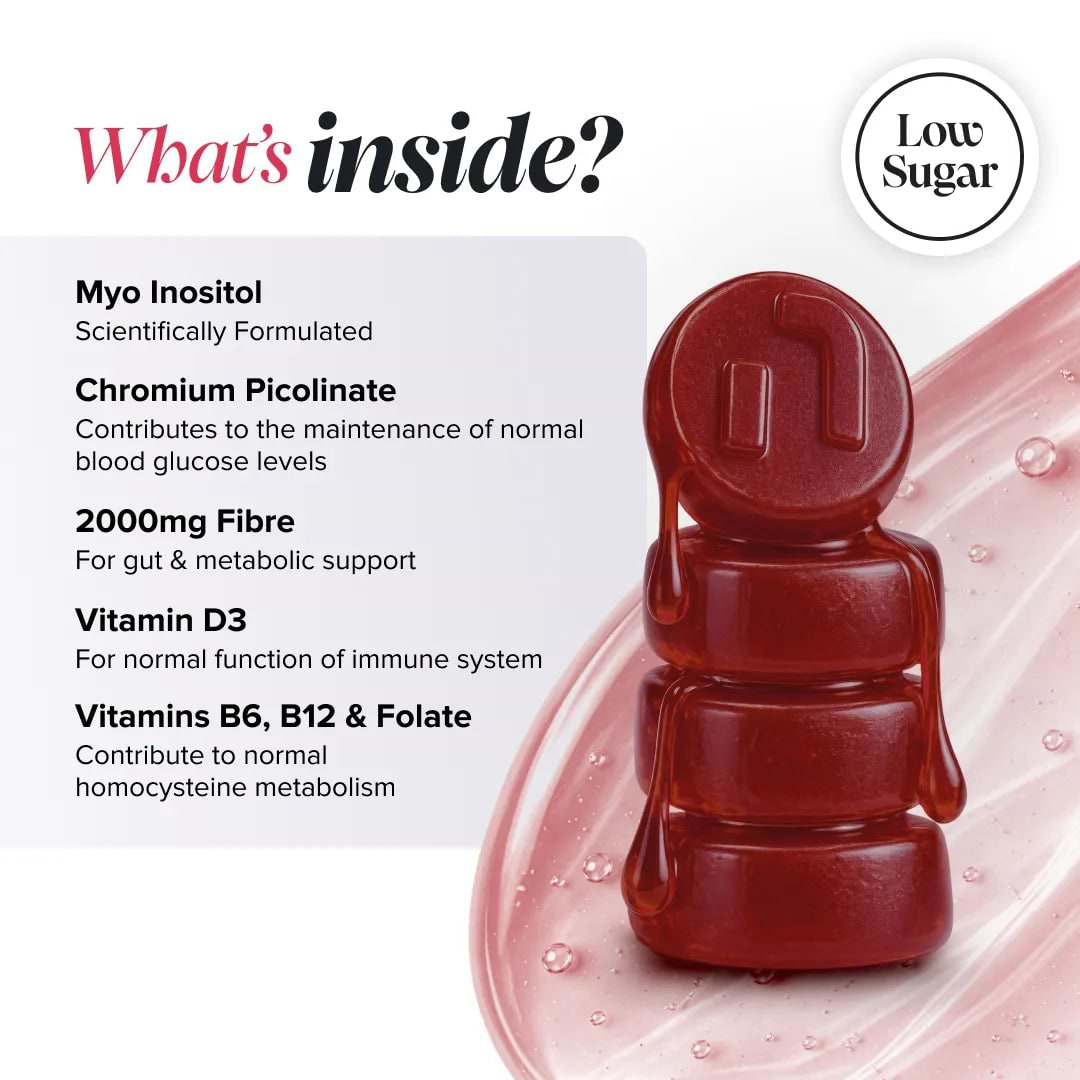
That's exactly why our Inositol+ Gummies use 400μg of folate as methylfolate, the most bioavailable form, alongside myo-inositol, chromium, zinc and vitamins B6, B12 and D3.
Why not just eat spinach?
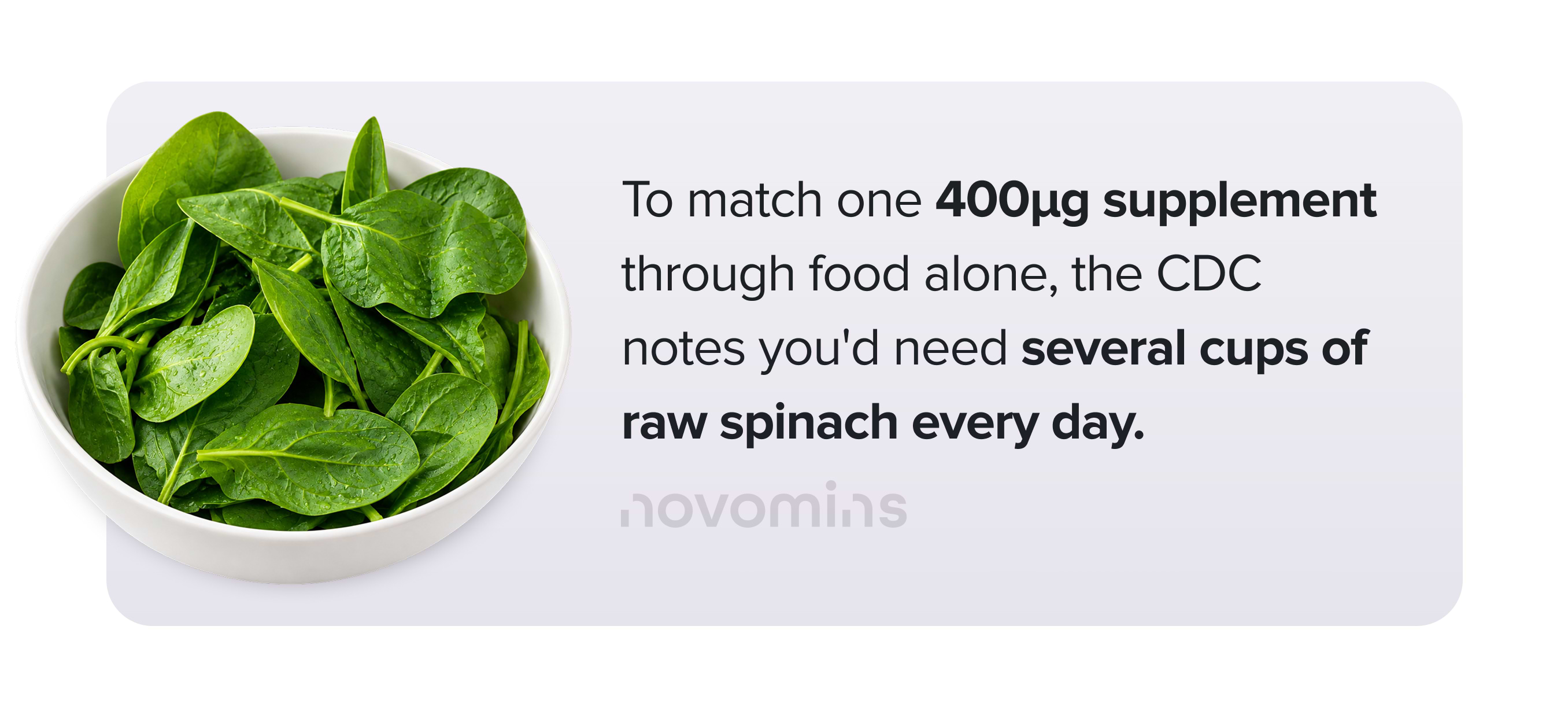
You can, and you should. But natural folate is fragile. Boil your broccoli and some of its folate ends up in the cooking water. Folate can also be affected by heat, storage, and food preparation.
That’s one reason pregnancy recommendations don’t rely on food alone.
That's a lot of leaves. Even Popeye would ask for a gummy.
A Brief History: From Marmite to Your Morning Toast
Folic acid's story starts with a British doctor, a jar of yeast extract, and a group of pregnant women nobody else was helping.
 In 1931, haematologist Lucy Wills was studying severe anaemia in pregnant textile workers in Bombay (now Mumbai). She found that a cheap yeast extract, Marmite, reversed it. The mysterious "Wills factor" turned out to be folate.
The real turning point came 60 years later. The UK's MRC Vitamin Study gave 1,817 women who'd had a pregnancy affected by a neural tube defect either folic acid or other vitamins. Folic acid cut the recurrence rate by 72%. The trial was stopped early because the result was so clear.
Since then, more than 60 countries have fortified wheat flour, including Australia, Canada and the USA. In the US, neural tube defects fell by roughly 35% after fortification began.
What Folic Acid Does for You
Folate is a hard-working vitamin with a CV most of us would envy. Every time your body makes a new cell, folate is in the room.
1. Pregnancy: the headline act
Your baby's neural tube, which becomes the brain and spinal cord, forms between day 21 and day 28 of pregnancy. That's often before you've even done a test.

Supplemental folic acid increases maternal folate status, and low maternal folate is a risk factor for neural tube defects. Folate also contributes to maternal tissue growth during pregnancy.
2. A bonus finding for your baby's brain
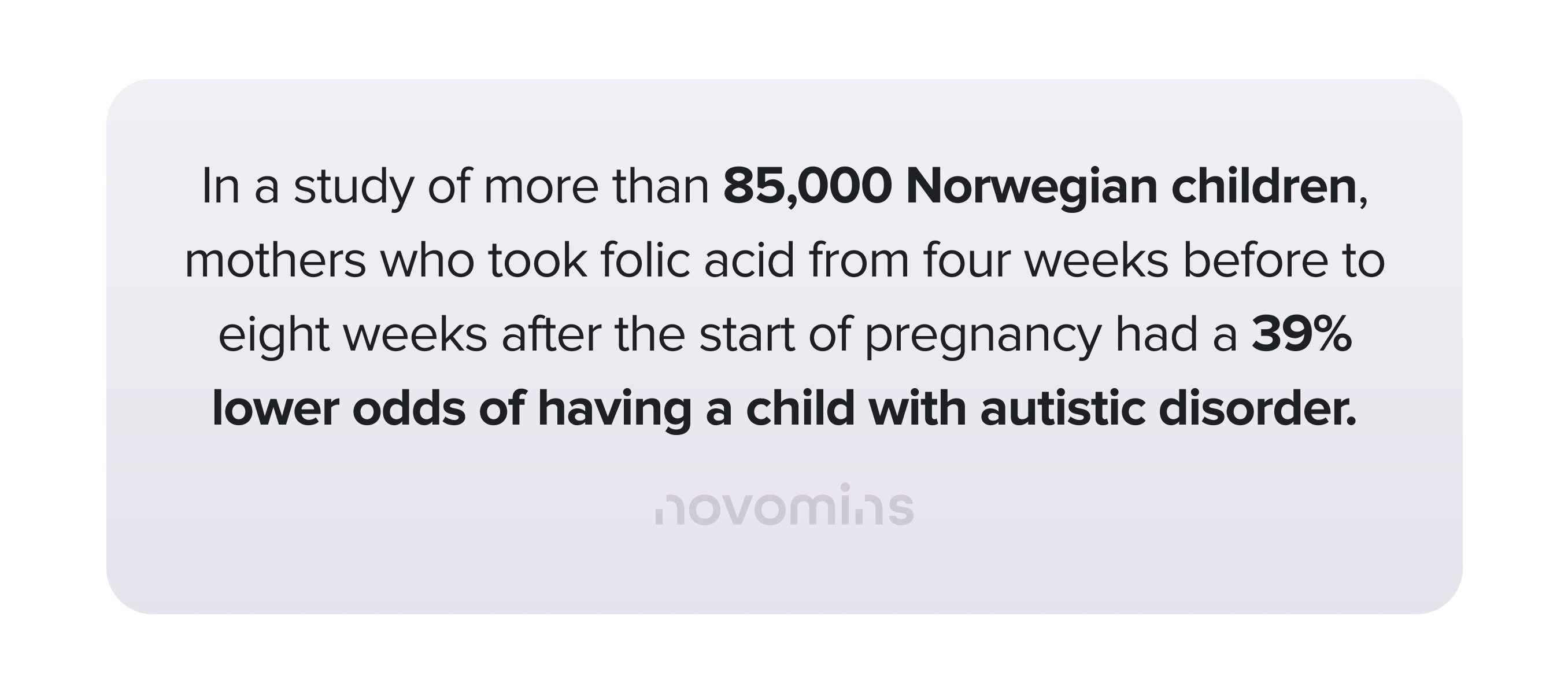
It’s an observational study, so it shows an association rather than proving that folic acid caused the difference. But importantly, it points in the opposite direction to claims that recommended folic acid supplementation causes autism.
3. Everyday health: blood, energy, mood, and immunity
Folate isn't just for pregnancy. It contributes to:
- Normal blood formation, helping you make healthy red blood cells
- The reduction of tiredness and fatigue
- Normal psychological function
- Normal function of the immune system
- Normal homocysteine metabolism. Homocysteine is an amino acid your body breaks down with the help of B vitamins.
-
Normal amino acid synthesis and cell division
Who might need more?
Some people are advised a higher dose of folic acid, usually 5mg on prescription, because they have an increased risk of neural tube defects.
This may include people with a previous pregnancy affected by a neural tube defect, diabetes, a BMI of 30 or more, or those taking certain epilepsy medicines.
This is a prescribed dose for higher-risk pregnancies, so speak to your GP rather than doubling up on supplements.
Our Approach to Supplementation
Ideally, nutrition should be personal.
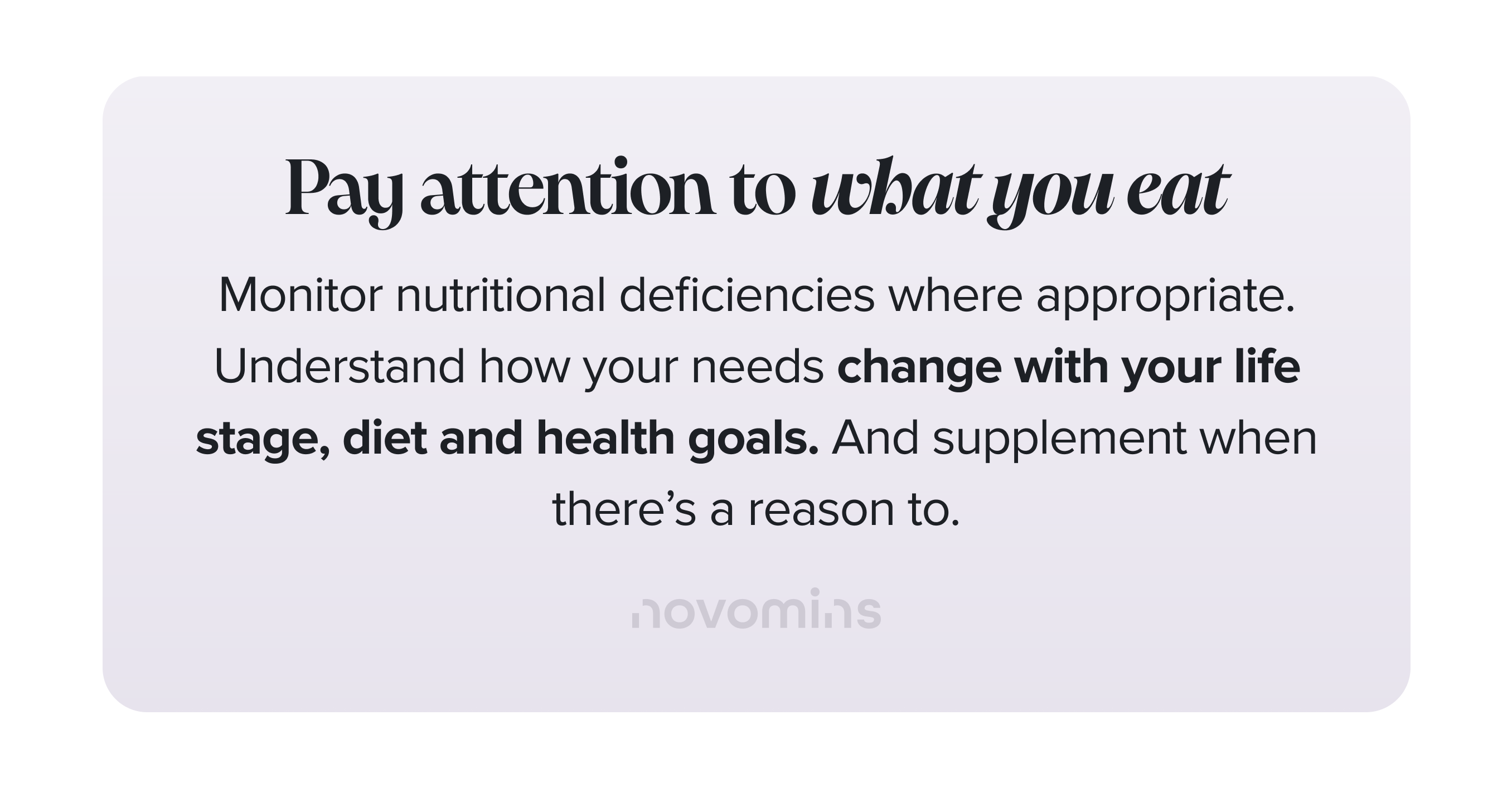
Food fortification takes a different approach.
It isn’t personalised nutrition. It’s a population-level measure designed to reach people who may not be actively monitoring their folate intake, planning supplementation, or even know they’re pregnant yet.
Those two approaches don’t have to contradict each other.
Myth-Busting: What the Science Actually Says
Social media loves a villain. Unfortunately for the algorithm, folic acid makes a terrible one.
Many people don’t track micronutrients, test nutritional status, or plan supplements before pregnancy. That matters because the neural tube develops extremely early, often before pregnancy is recognised.
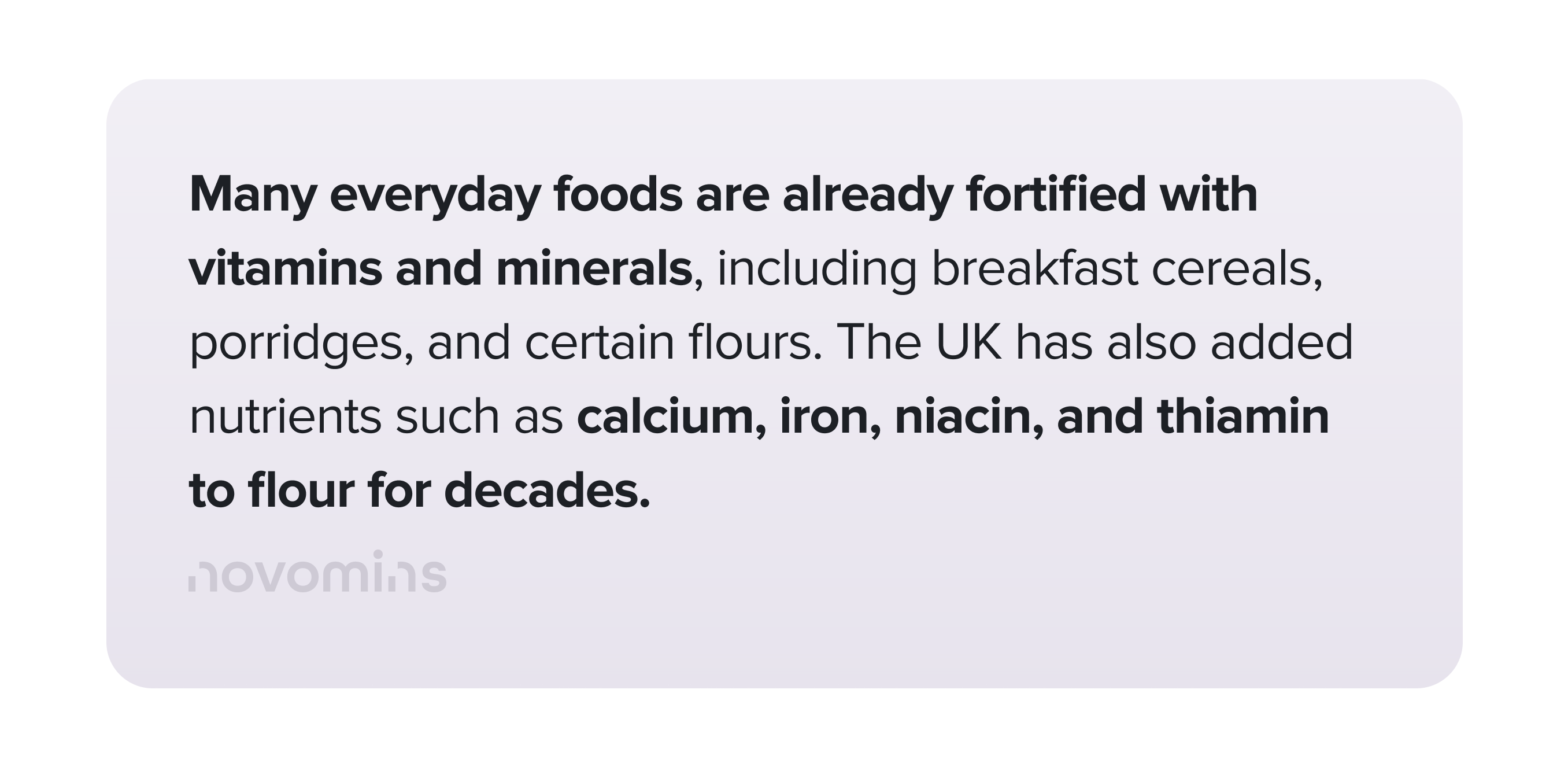
Flour fortification is designed as a population-level safety net for that gap. And fortification itself isn’t unusual.
If you actively read labels and monitor your nutrition, you can continue making informed choices about what you eat and supplement.
If you don’t, fortification provides a small baseline amount of a nutrient that may matter before you even realise you need it.
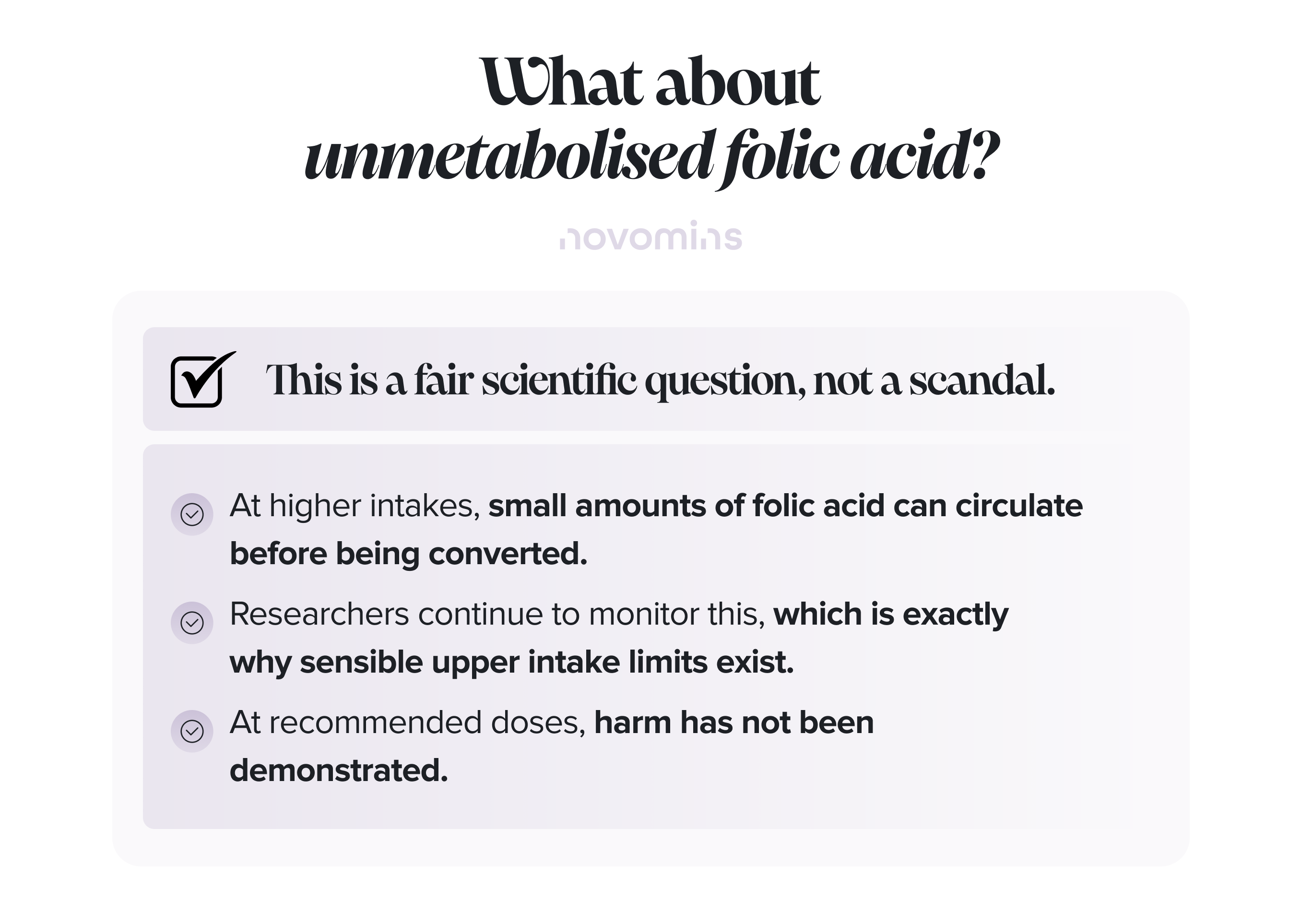
Why Is Folic Acid Being Added to UK Flour?
From 13 December 2026, folic acid will be added to most non-wholemeal wheat flour in the UK.
The reason comes back to one problem: The neural tube develops before many pregnancies are even recognised.
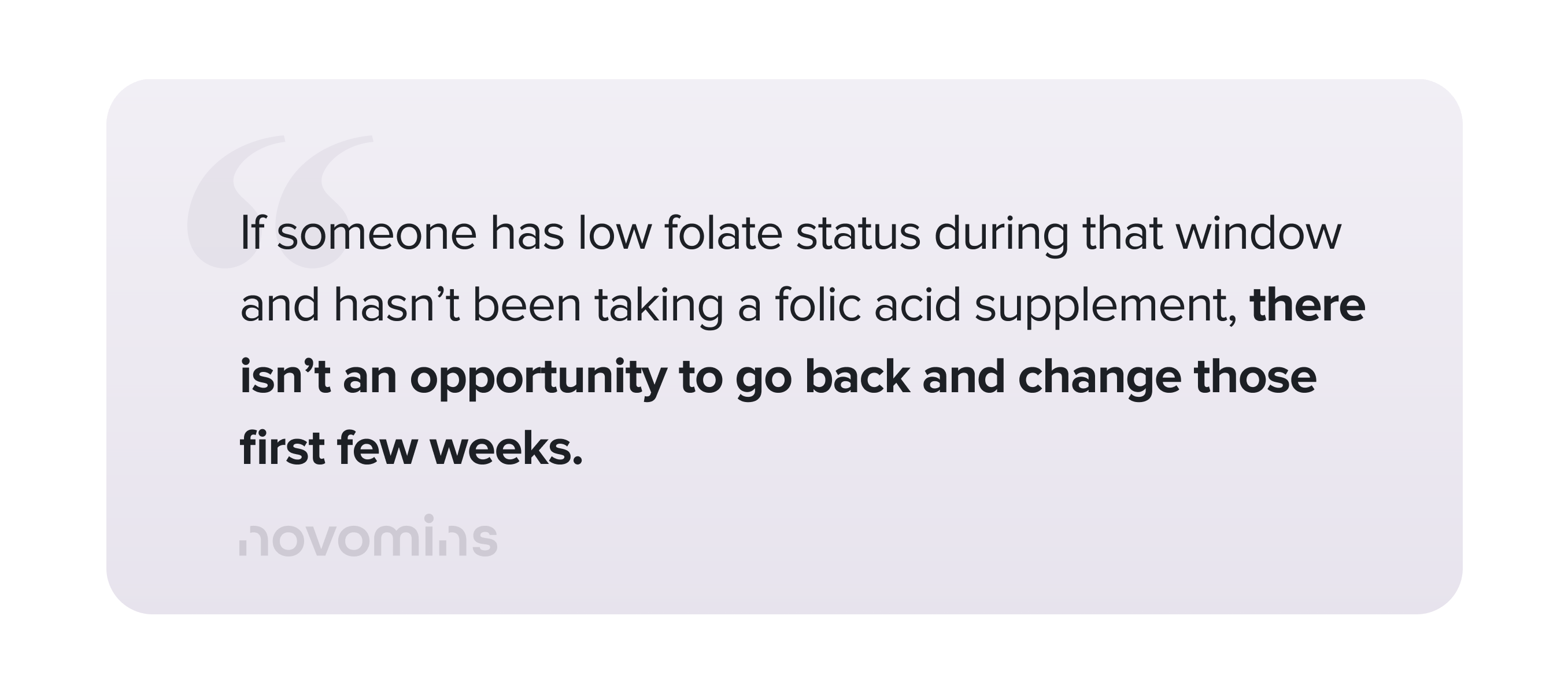
Fortification aims to raise baseline folate intake across the population.
The UK government expects the policy to prevent around 200 pregnancies affected by neural tube defects each year.
That doesn’t mean fortified flour replaces personalised supplementation. It doesn’t. And it doesn’t mean everybody needs to seek out extra folic acid.
It’s simply one population-level strategy aimed at reducing the number of people entering early pregnancy with inadequate folate status.
Do You Still Need Folic Acid If Flour Is Fortified?
If you’re trying to conceive or are in the first 12 weeks of pregnancy, yes.
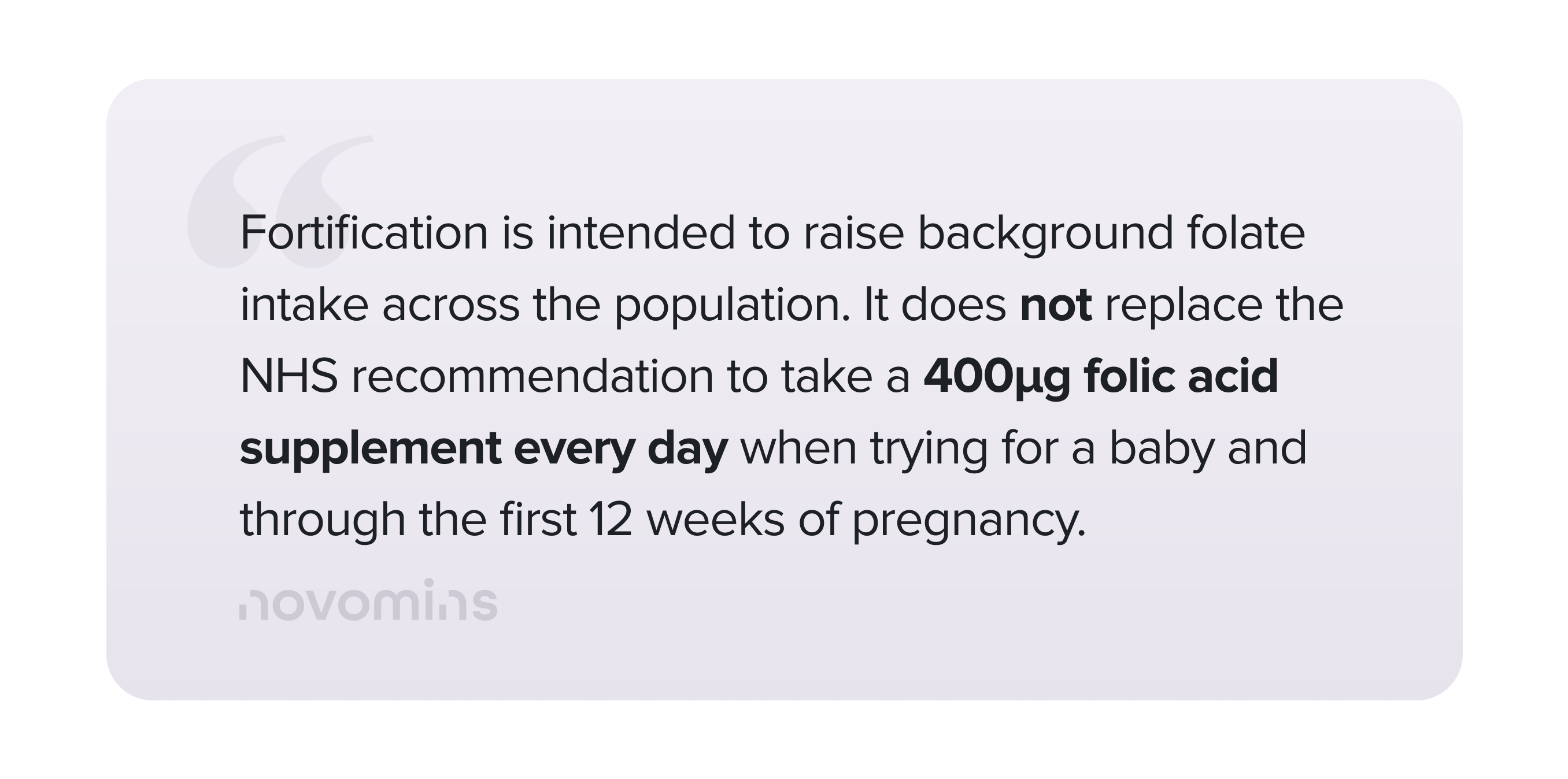
This is where individual supplementation and population fortification serve different purposes. One gives you a known, targeted daily amount. The other raises baseline intake across people who may not otherwise be supplementing.
How Much Is Safe? The Numbers in One Place
Folic acid is like sunshine: brilliant in the right amount, and there's a sensible ceiling.
| Who | How much | Notes |
|---|---|---|
| Most adults | Folate from a balanced diet | Leafy greens, beans and fortified foods cover most people's needs. |
| Trying to conceive, up to 12 weeks pregnant | 400μg folic acid supplement daily | Start before you conceive, ideally at least one month before. |
| Higher-risk pregnancies | 5mg daily, on prescription | Previous neural tube defect, diabetes, BMI of 30+, some epilepsy medicines. Ask your GP. |
| Upper limit for adults | Below 1mg (1,000μg) folic acid a day | From fortified foods and supplements combined, unless prescribed. Lower limits apply for children. |
Where does fortified bread fit in? UK flour will contain 0.25mg of folic acid per 100g. The government has confirmed that fortification levels and health impacts will be kept under review, and the NHS still advises a 400μg supplement for anyone trying to conceive, on top of fortified food.
The one real caution: vitamin B12
Folic acid and vitamin B12 work as a team. Doses of folic acid above 1mg a day can hide the signs of a B12 deficiency, which can damage nerves if it isn't spotted.
That's not a reason to avoid folic acid. It's a reason to stick to the recommended dose, and to keep an eye on B12 if you're over 50, vegan or vegetarian, or take metformin or acid-reducing medicines. If you're unsure, ask your GP for a quick blood test.
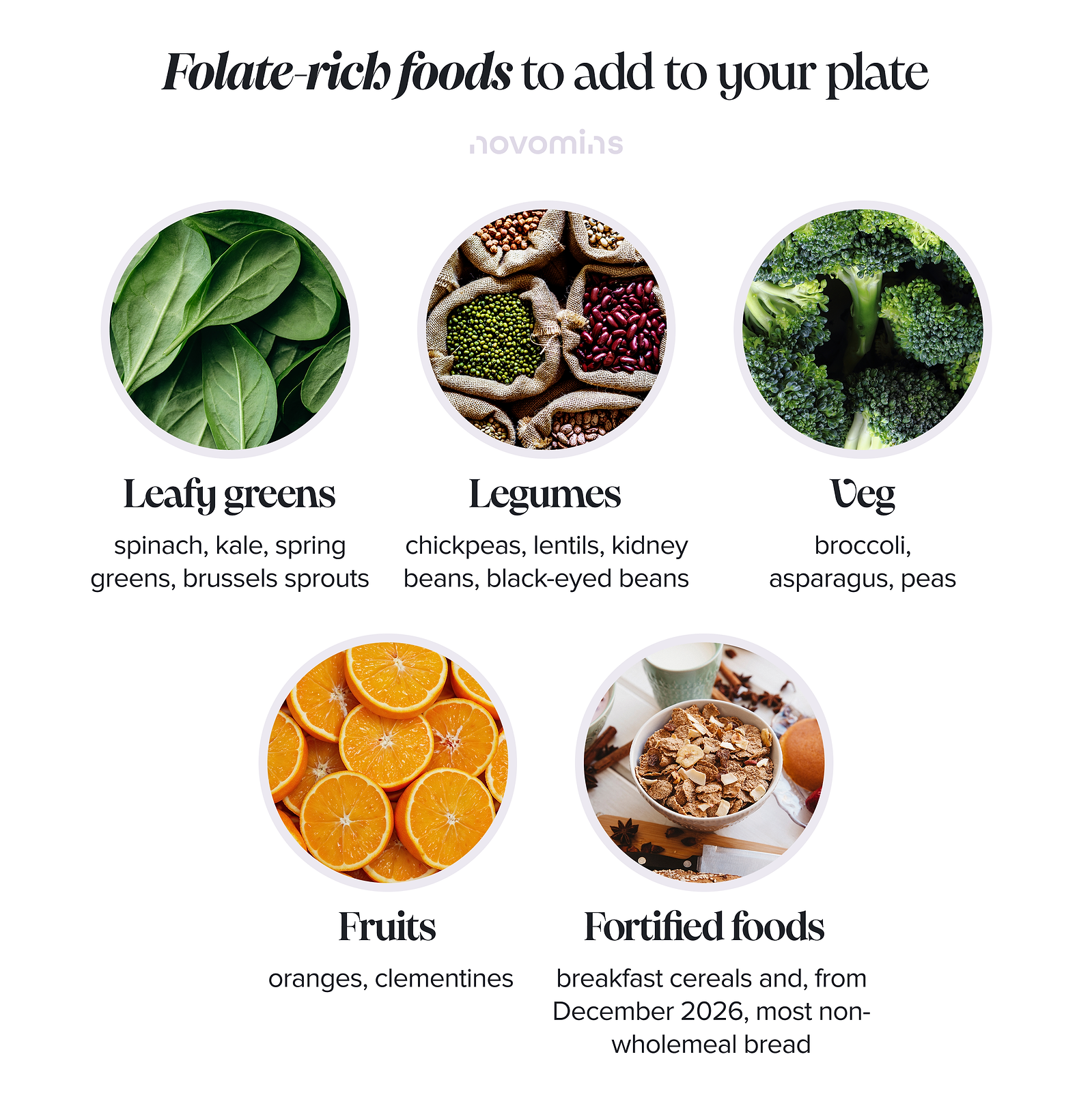
Steam or microwave your greens rather than boiling them, so more of the folate stays in your food and out of the pan.
Novomins Folic Acid Gummies: The NHS Dose, Made Easy
Planning a pregnancy is a lot. Remembering a tablet shouldn't be.
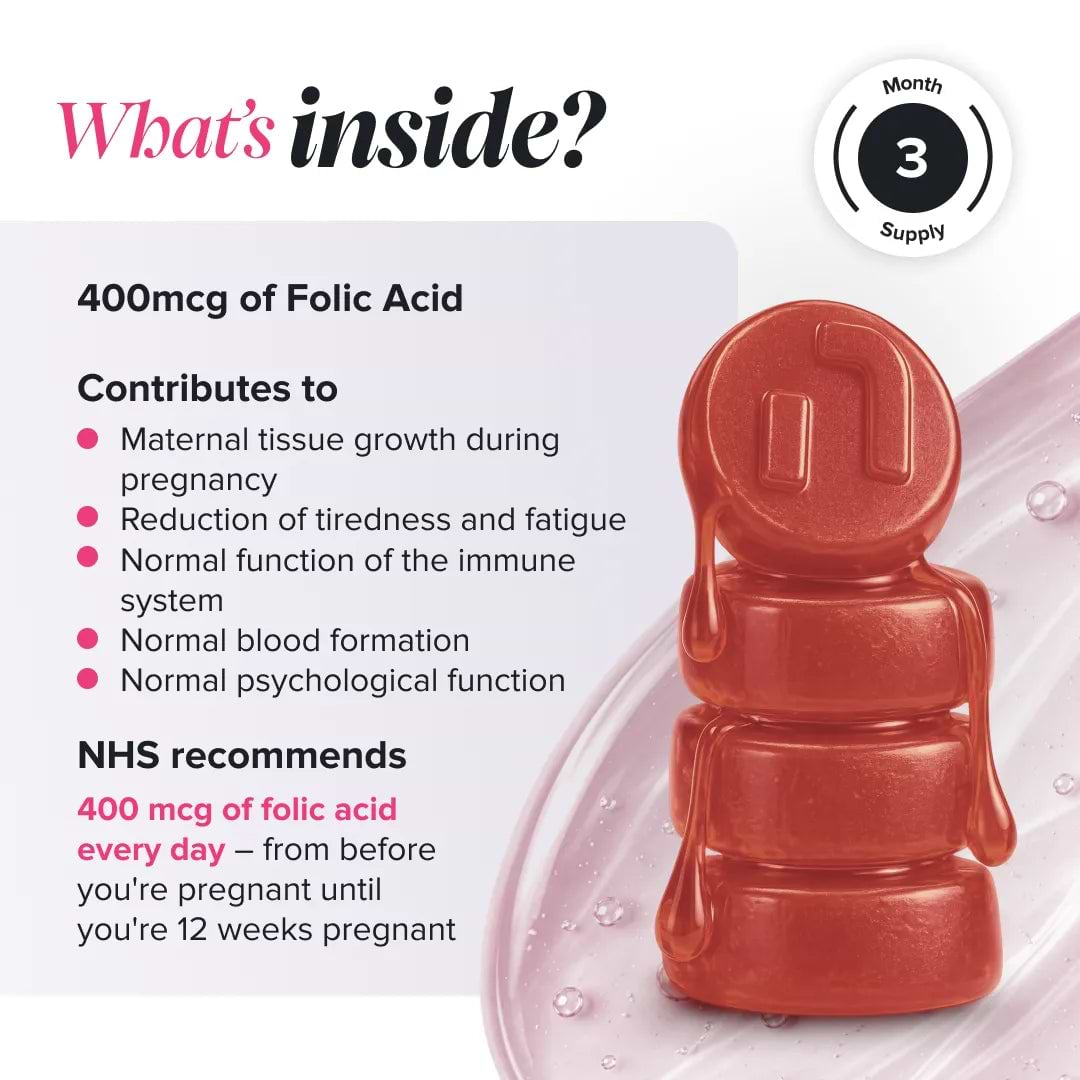
Novomins Folic Acid Gummies give you the NHS-recommended 400μg of folic acid in one gummy a day, made for before conception and through the first 12 weeks of pregnancy.
|
|
 |
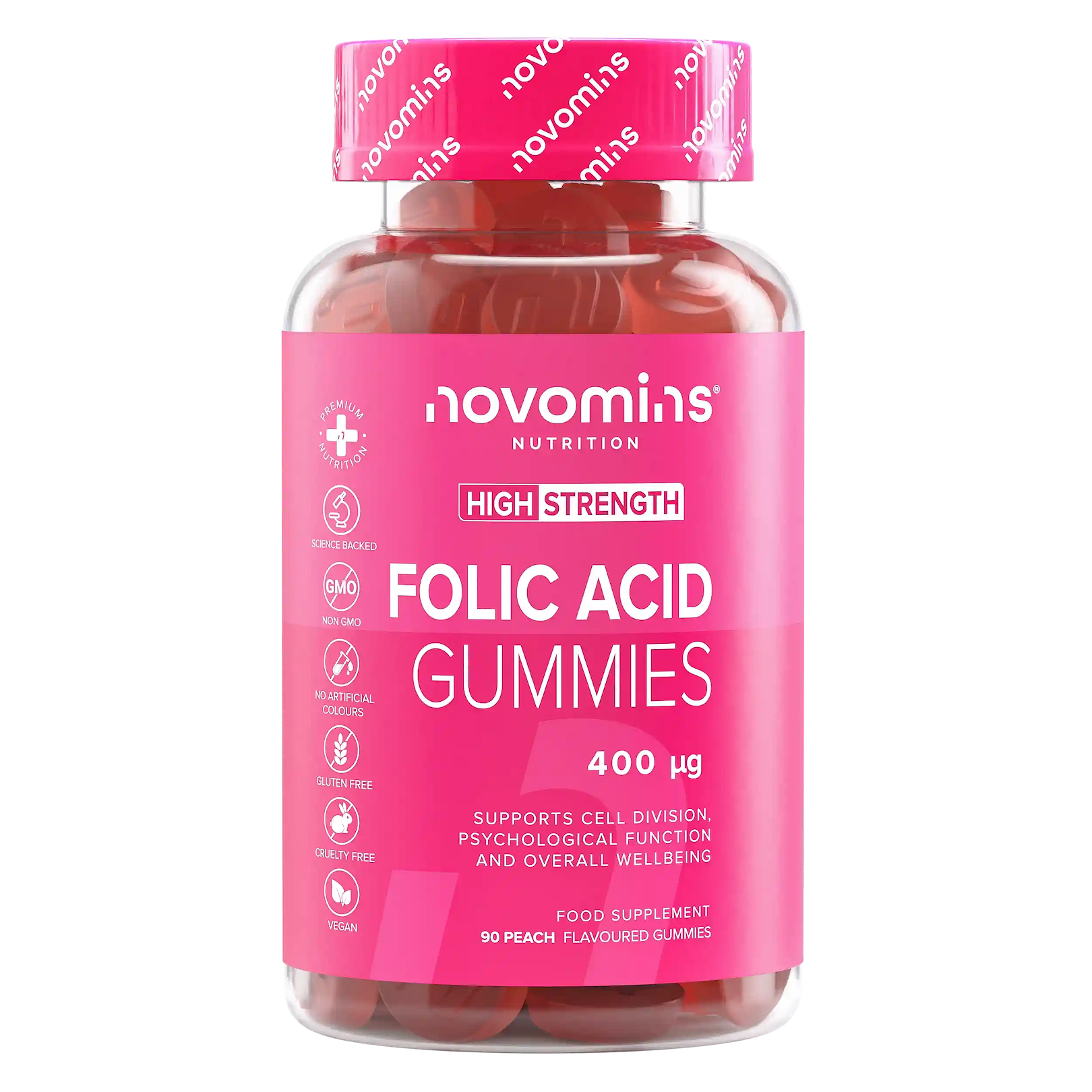
That's the same form used in the landmark trials, in a format you'll actually look forward to.
- Before conception: start as soon as you begin trying, ideally at least a month before, so your folate levels are topped up before the neural tube starts forming.
- After conception: keep going every day until 12 weeks, the window when your baby's brain and spine are developing.
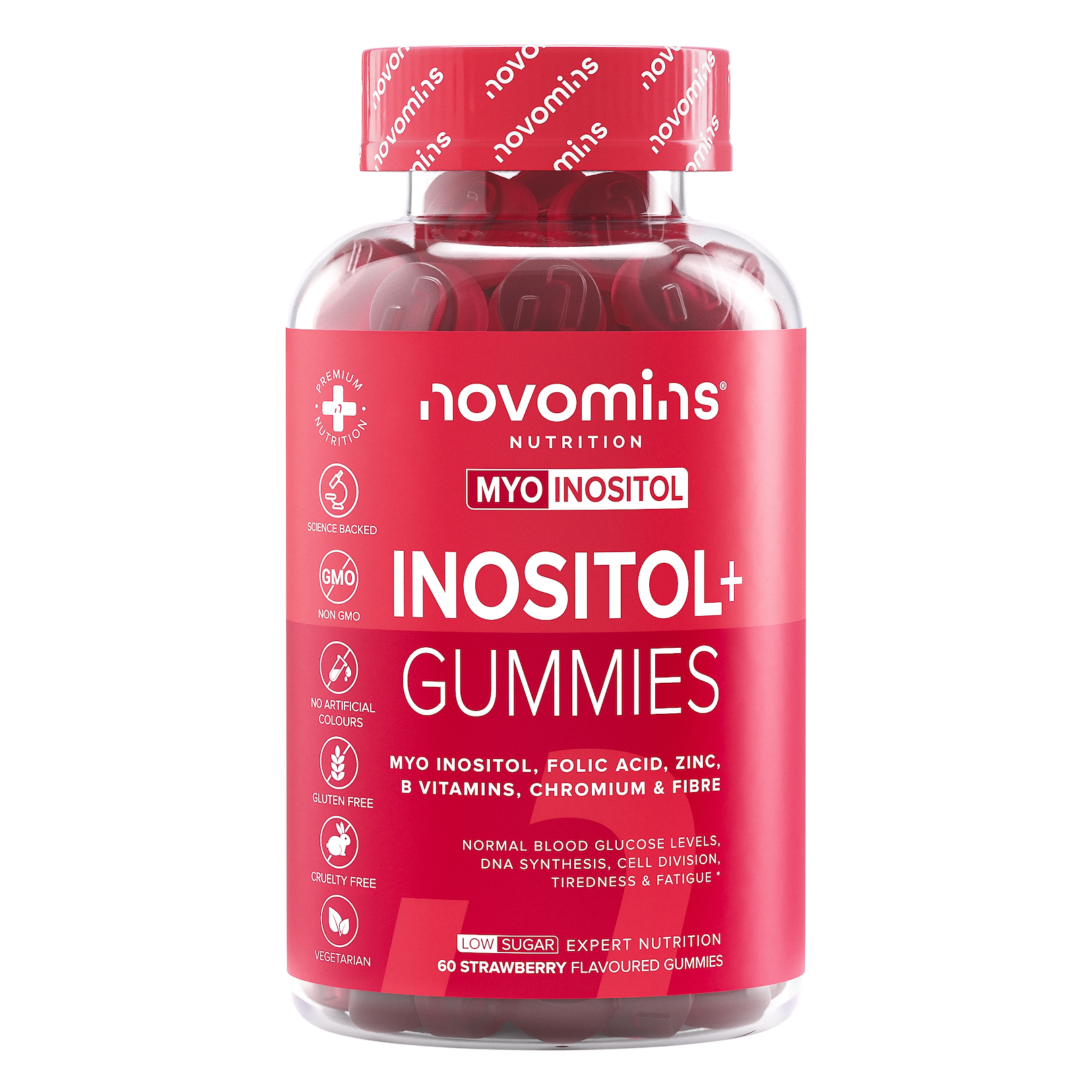
Prefer the active form? Inositol+ Gummies contain 400μg of folate as methylfolate, the ready-to-use form your body doesn't need to convert, which raised blood folate more than folic acid in head-to-head trials. You also get myo-inositol, chromium, zinc and vitamins B6, B12 and D3.
|
|
|
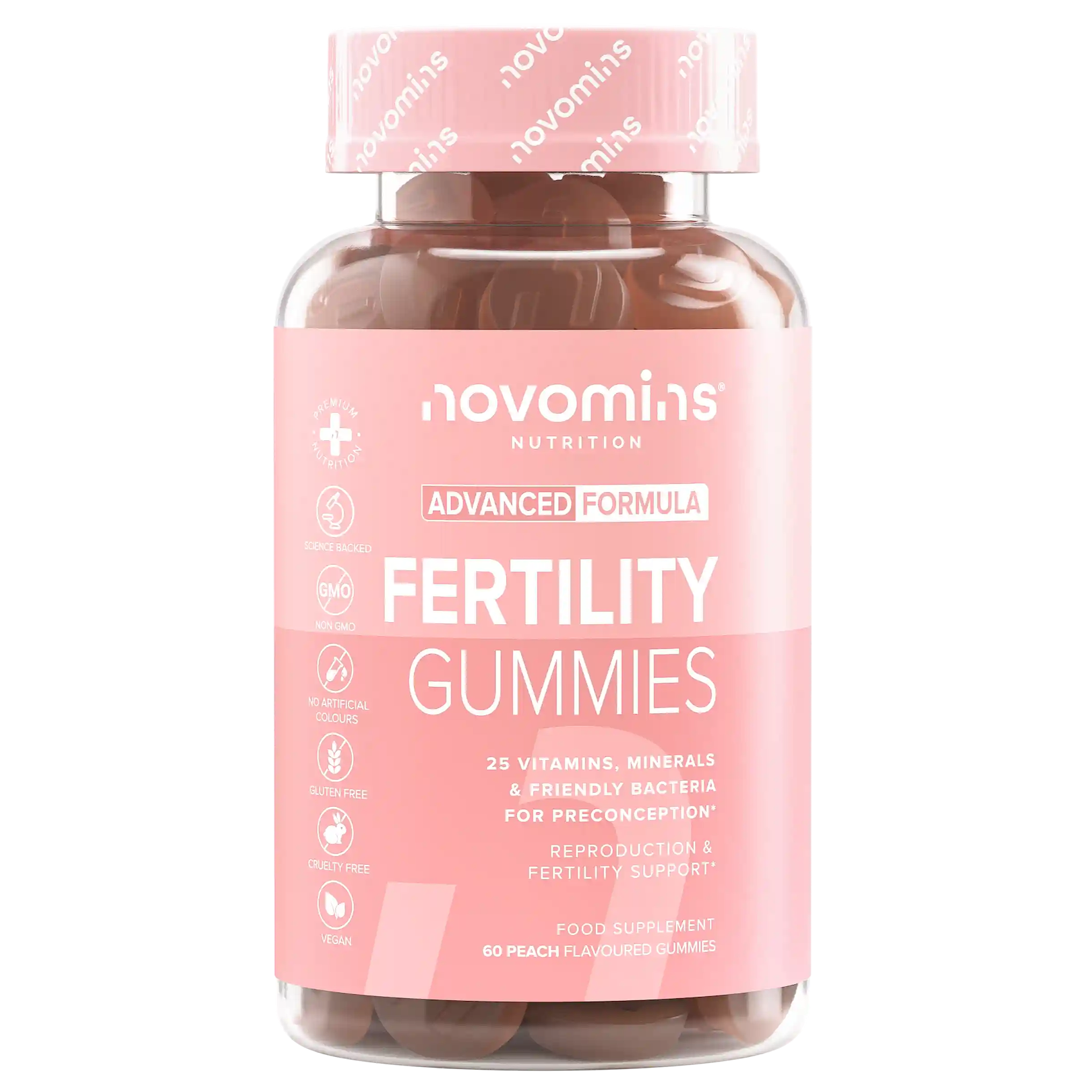
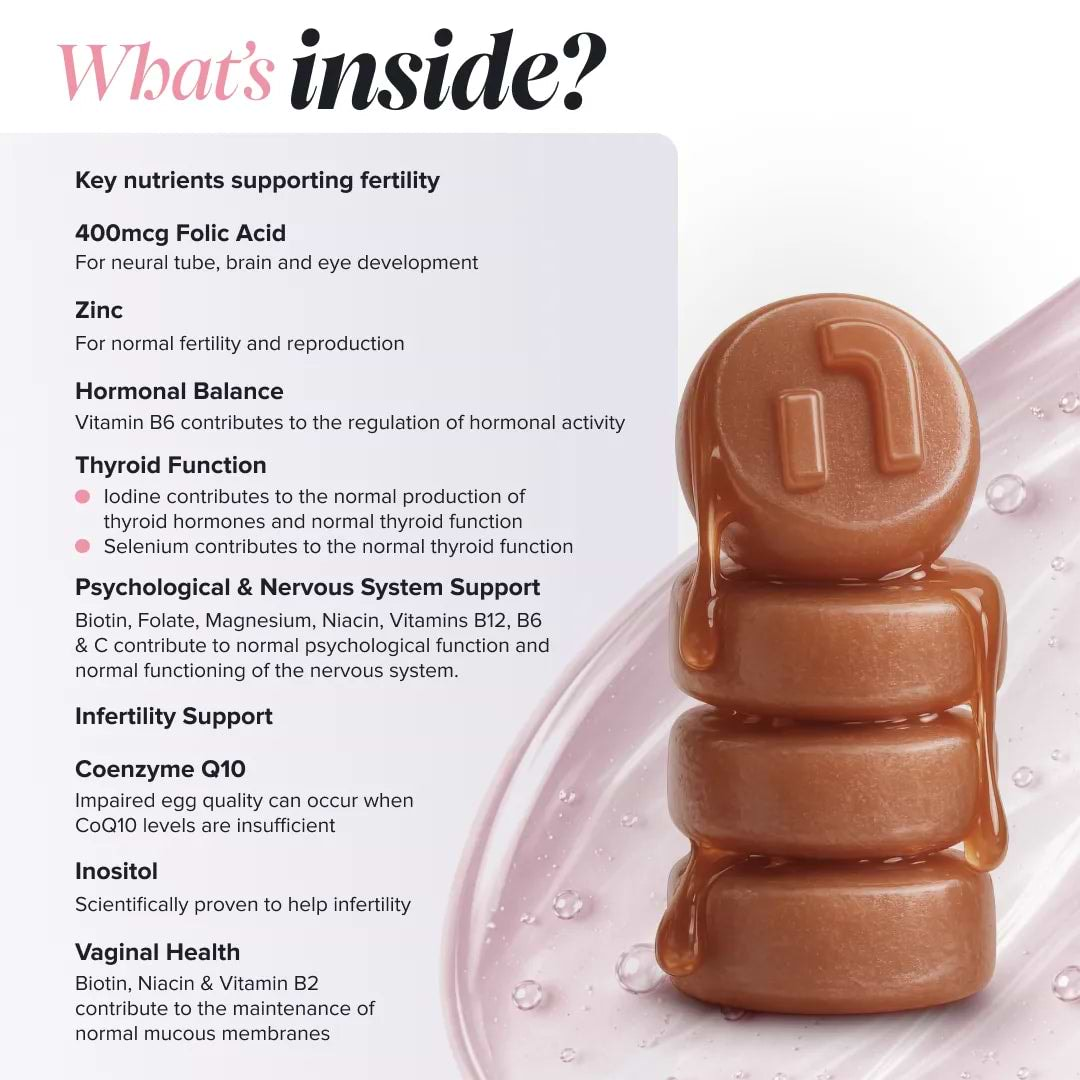
Want an all-rounder for trying to conceive? Fertility Gummies combine folic acid with zinc and B12.
|
|
|
Folate for the whole family
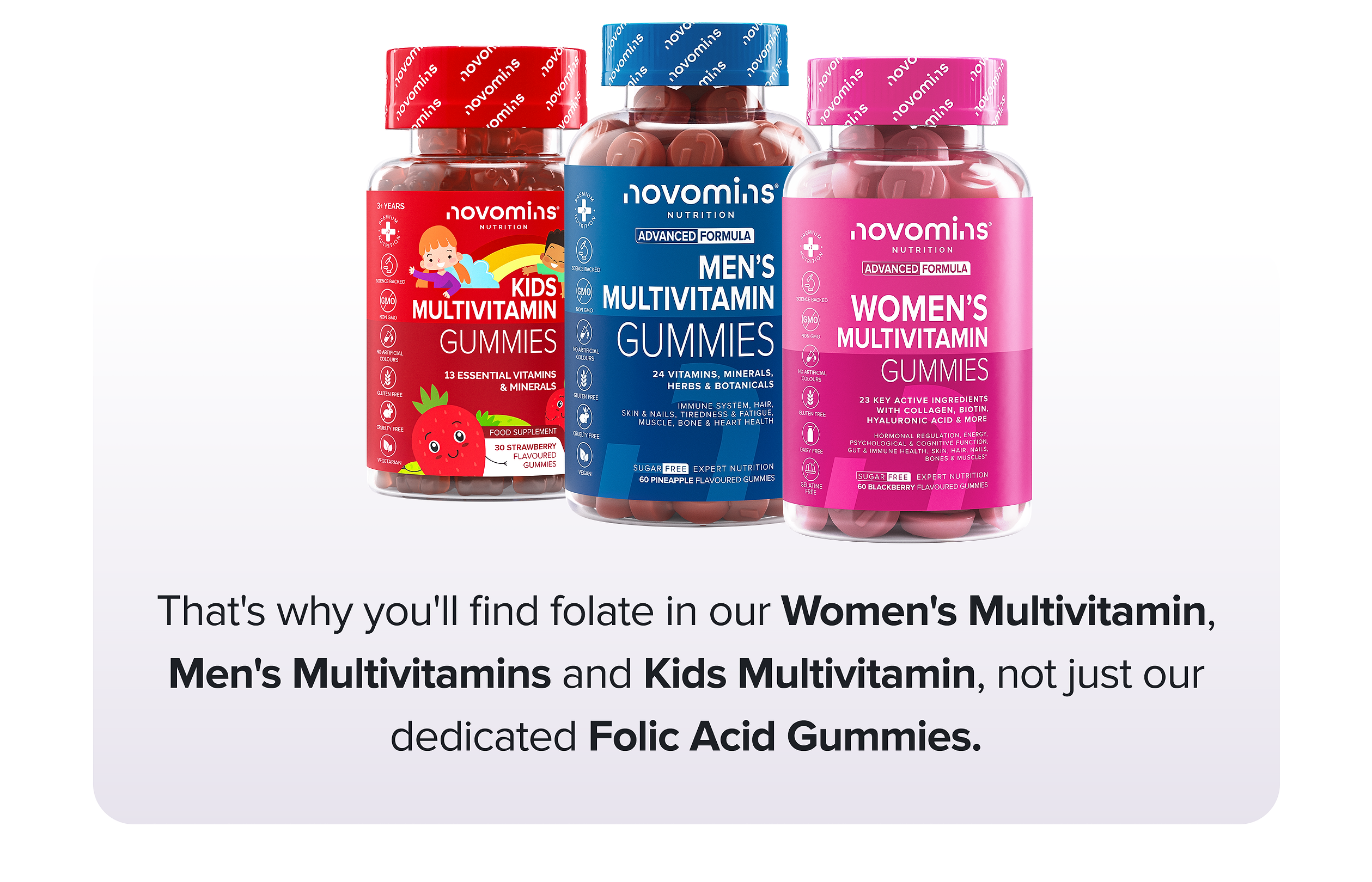
Not planning a baby? Folate still matters. It contributes to normal blood formation, the reduction of tiredness and fatigue, and normal immune function, for everyone. That's why we include it in all three of our core multivitamins:
| Product | Who it's for | Why folate's in there |
|---|---|---|
| Women's Multivitamin | Women | 23 active ingredients, including folate alongside the other B vitamins |
| Men's Multivitamins | Men | 24 active ingredients, with folate and B vitamins for energy |
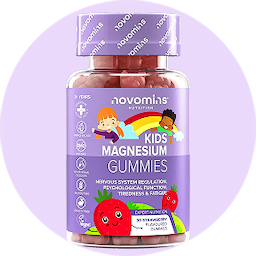
| Kids Multivitamin Gummies | Children | 13 essential vitamins and minerals, including the full B-vitamin family for growing bodies |
If you're taking more than one Novomins product containing folate, check the labels so your total from supplements stays within the recommended amount.
TL;DR: Folic Acid, the Facts
- Folic acid is vitamin B9 in a stable, manufactured form.
- Folate matters before pregnancy, because the neural tube develops extremely early.
- Trying to conceive? The NHS recommends 400μg of folic acid daily before conception and until 12 weeks of pregnancy.
- MTHFR variants don’t mean you can’t use folic acid.
- Methylfolate is an active alternative that raises folate levels effectively.
- The evidence does not show that recommended folic acid supplementation increases overall cancer risk.
- UK flour fortification is a population-level measure, not personalised nutrition.
- Fortification is already common across cereals, porridges, flours and other foods.
- Our preferred approach is informed supplementation: understand your diet, nutritional status, life stage and goals, then supplement accordingly.
-
Stay below 1mg of folic acid per day from fortified food and supplements unless a healthcare professional advises otherwise.
Confidence Over Clickbait
You don’t have to support every public-health policy to understand why it exists.
And you don’t have to choose between trusting your own nutritional decisions and understanding population-wide measures.
If you’re planning a pregnancy, getting your folate status right before conception matters.
If you aren’t monitoring your micronutrient intake at all, a small amount added to a food that has already been fortified with other nutrients for decades probably deserves context before outrage.
The goal here isn’t to defend flour. It’s to understand folate.
And when the next viral video tells you what to think, check the evidence before checking the comments.