


Dry like the Sahara down there? Let’s talk about why.
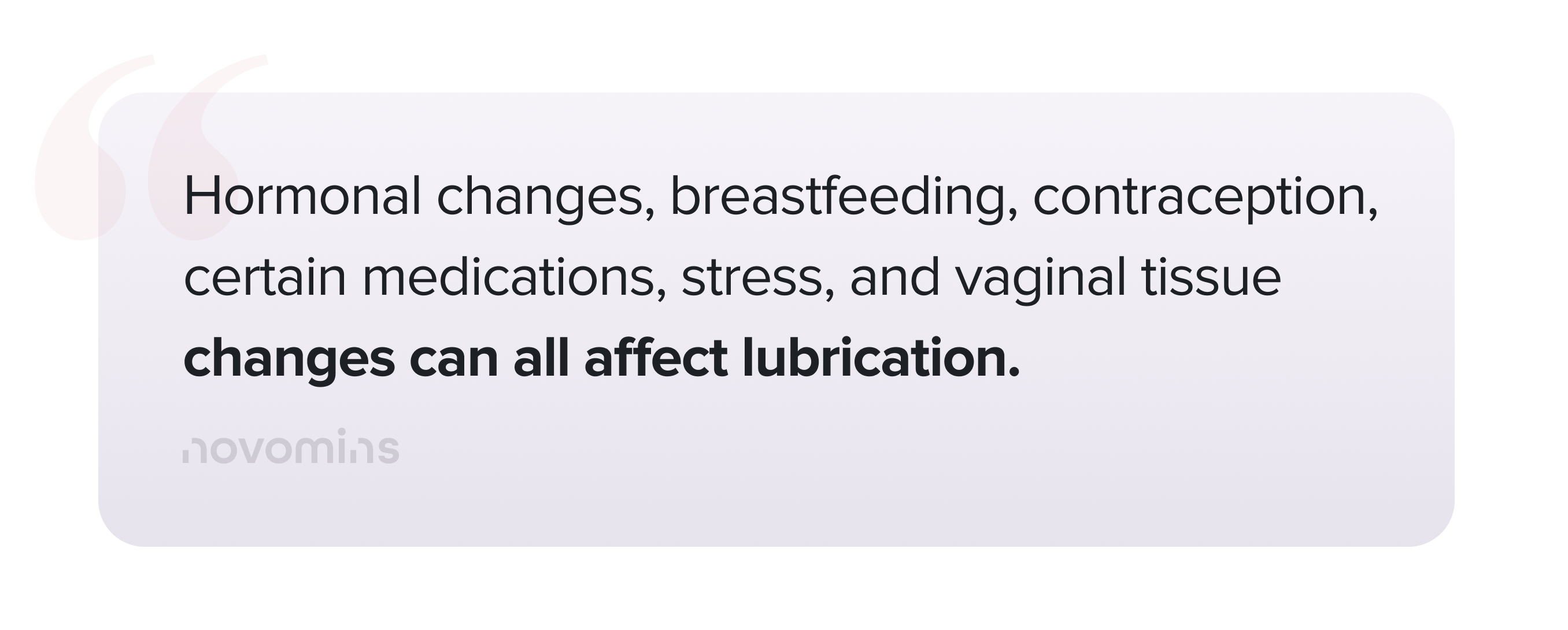
Vaginal dryness can happen at any age. Hormonal changes are a major cause, but contraception, breastfeeding, certain medications, stress, arousal and other factors can all play a role.
And it rarely exists in isolation.
Moisture, pH, your microbiome, smell, arousal, and even orgasms are more connected than you might think.
Consider this the down-there conversation we should have been having all along.
What is vaginal dryness?
Vaginal dryness is a reduction in the natural moisture and lubrication of the tissues in and around the vagina.
It can feel different for everyone, but you may notice the following:
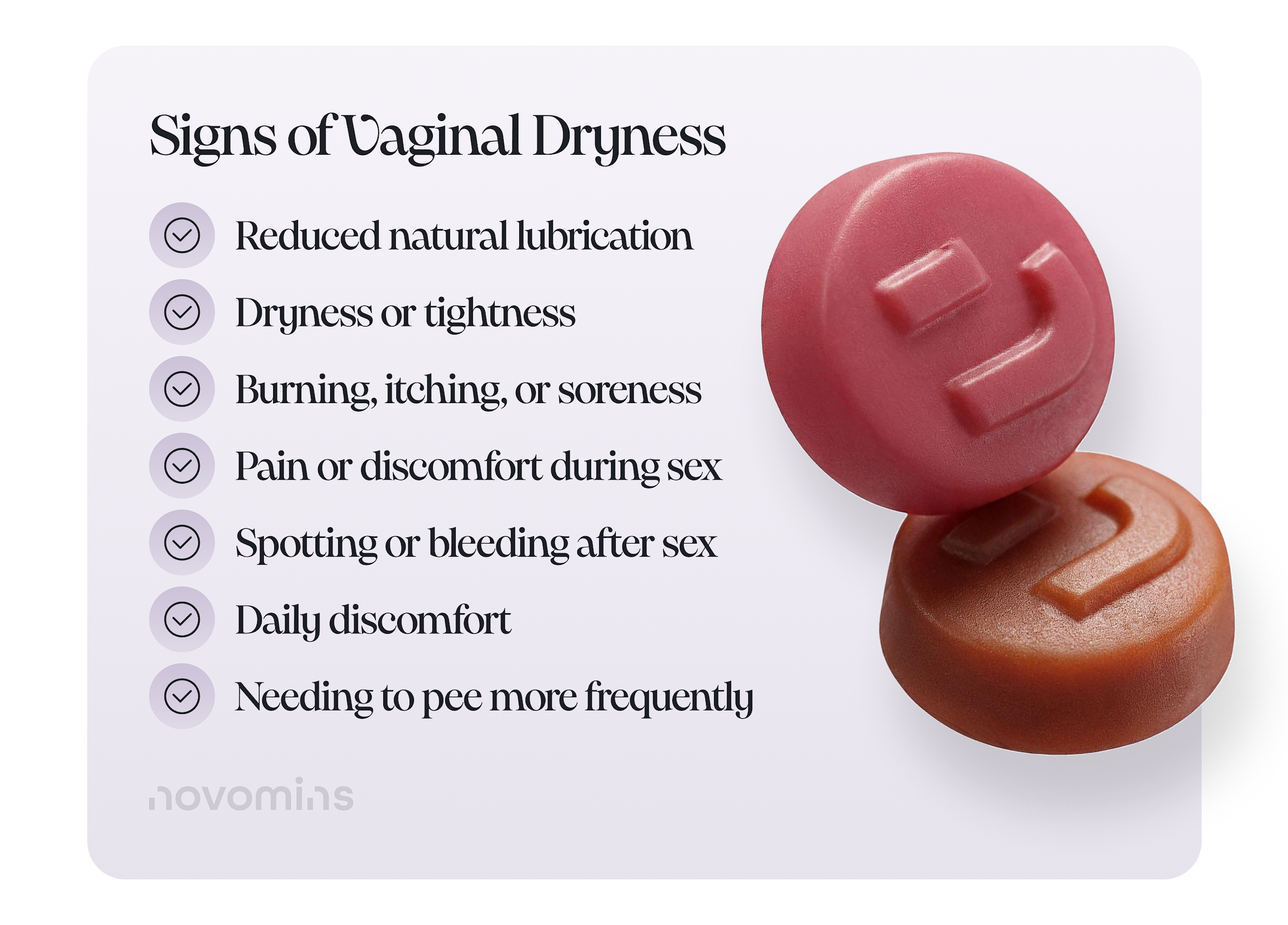
Persistent or recurrent symptoms, unexplained bleeding, unusual discharge, or significant pain should always be discussed with a healthcare professional.
But there’s something important that often gets missed when we talk about vaginal dryness.
Moisture isn’t only about sex.
Why Does Vaginal Moisture Matter?
Vaginal moisture helps support comfort, elasticity, and the delicate protective barrier of the vaginal tissues.
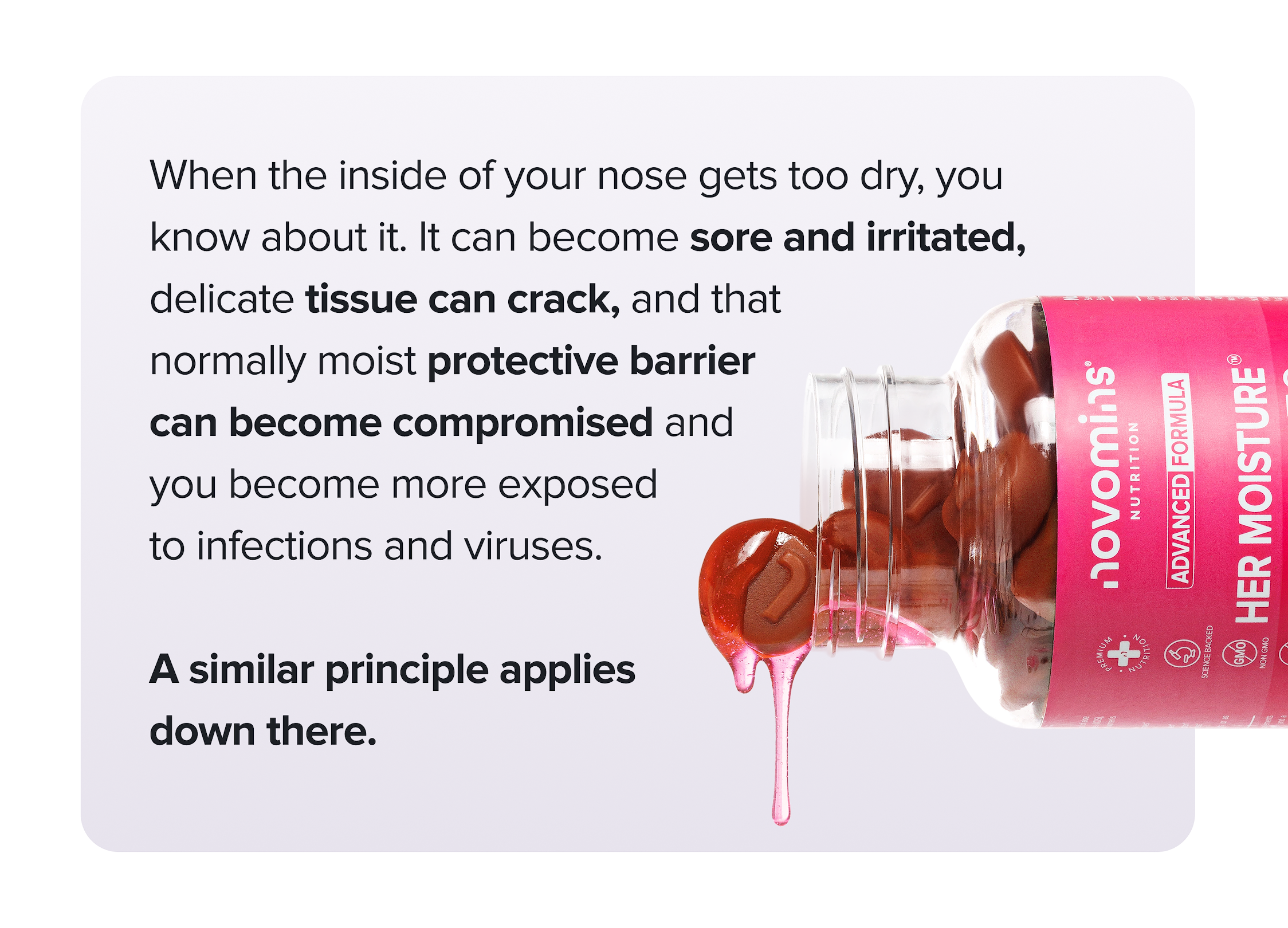
To understand why that matters, think about your nose.
The inside of your nose is lined with a mucous membrane. So is your vagina.
Healthy vaginal tissue works alongside vaginal secretions, an acidic pH, and beneficial bacteria as part of the vagina’s natural defence system.
When the tissue becomes drier or more fragile, friction can increase, irritation and tiny cracks can occur, and sex can become uncomfortable, interfering with both comfort and pleasure.
There’s a health piece too.
When the vaginal barrier and wider vaginal environment are disrupted, changes in pH and the microbiome can occur too, increasing susceptibility to irritation and vaginal or urinary infections.
And that brings us to what is actually happening underneath the surface.
What Causes Vaginal Dryness?
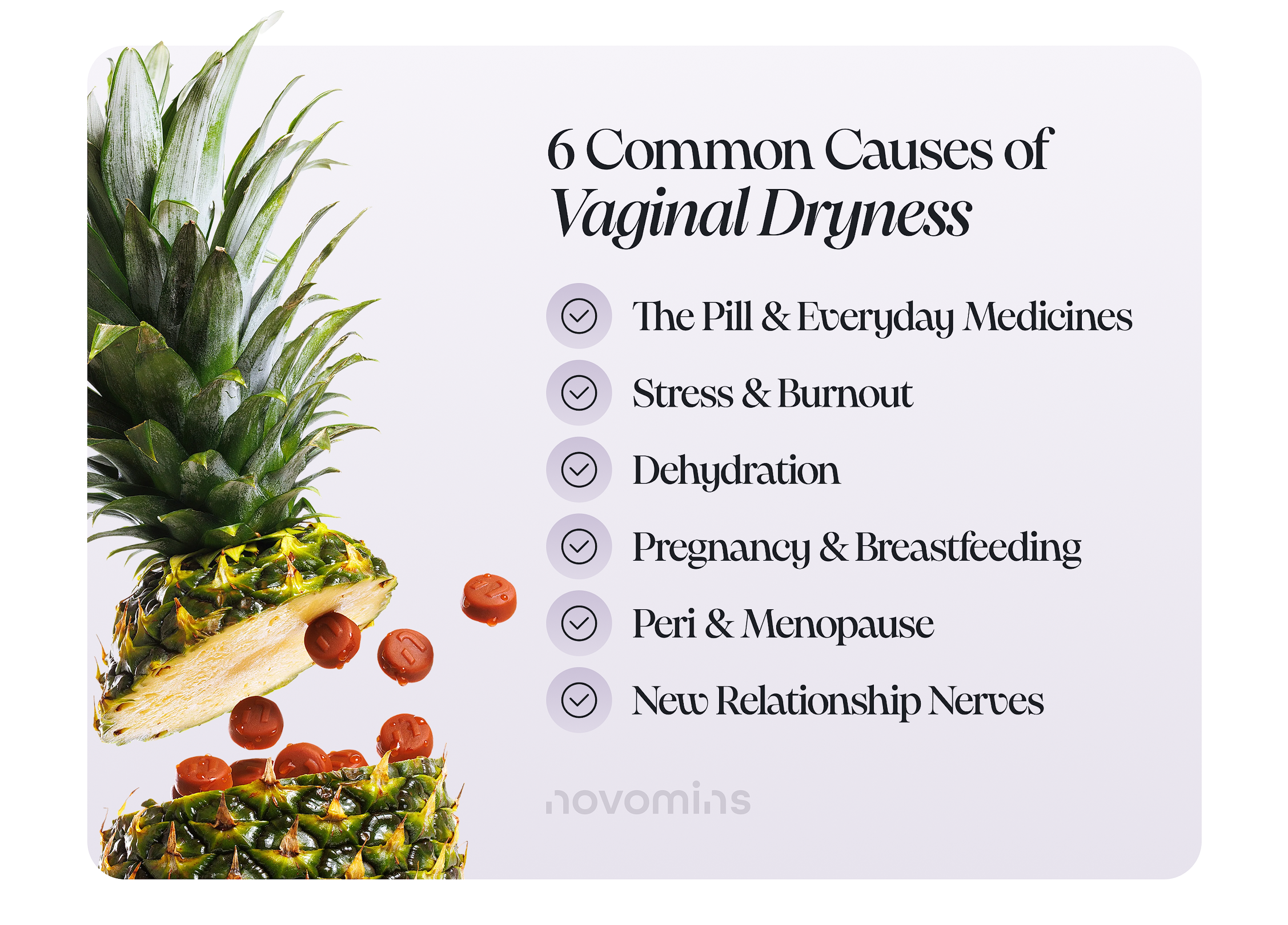
Vaginal dryness can be caused by hormonal changes, breastfeeding, contraception, certain medications, stress, and big life changes.
One of the biggest players is oestrogen.
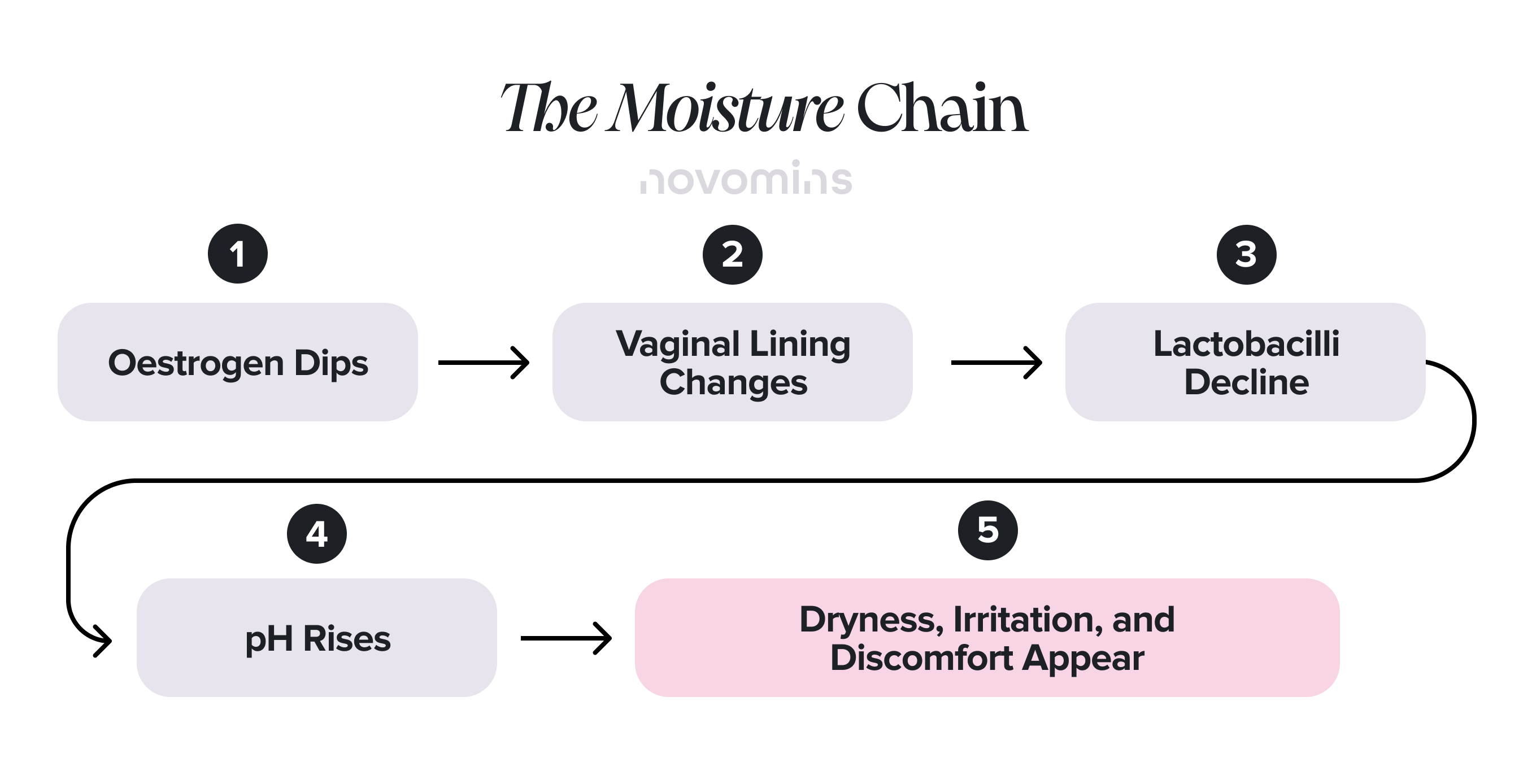
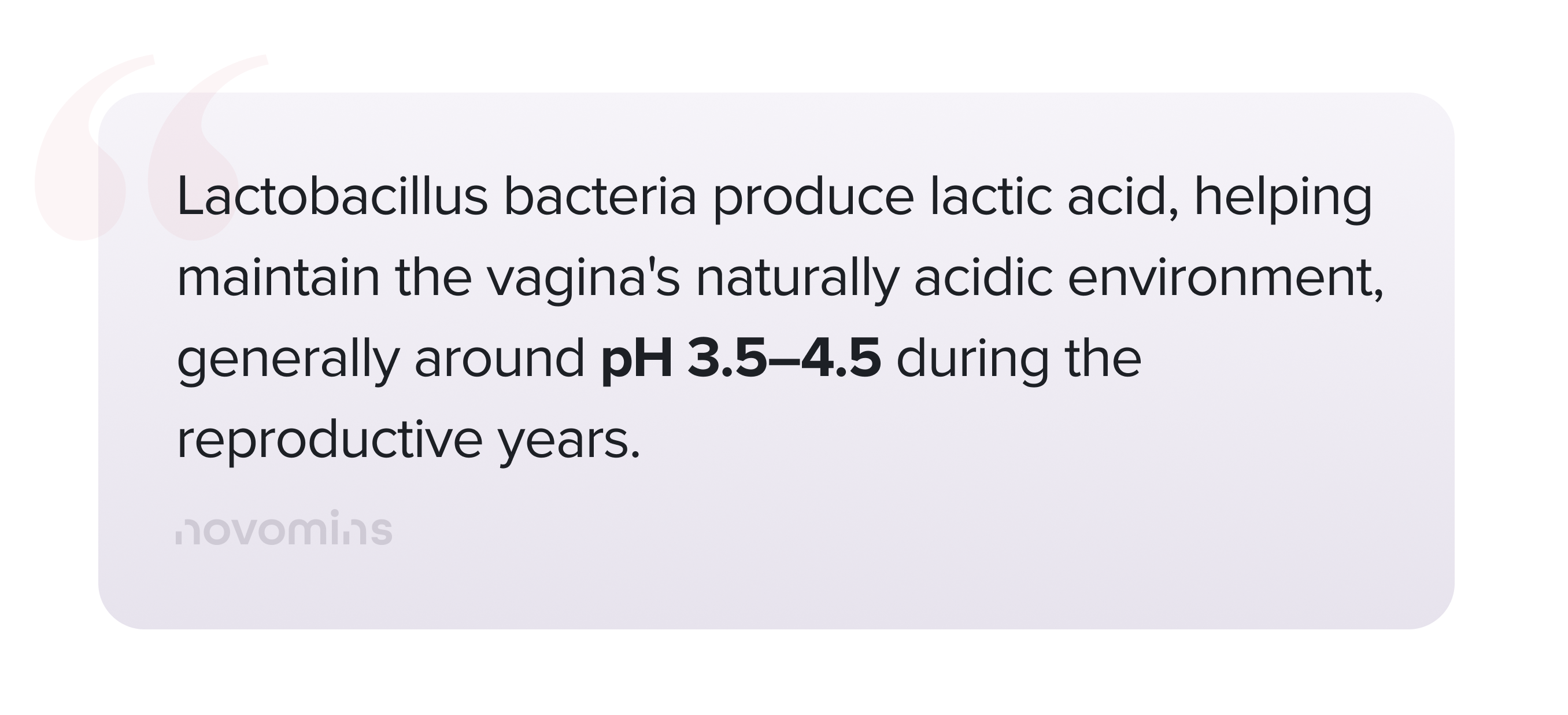
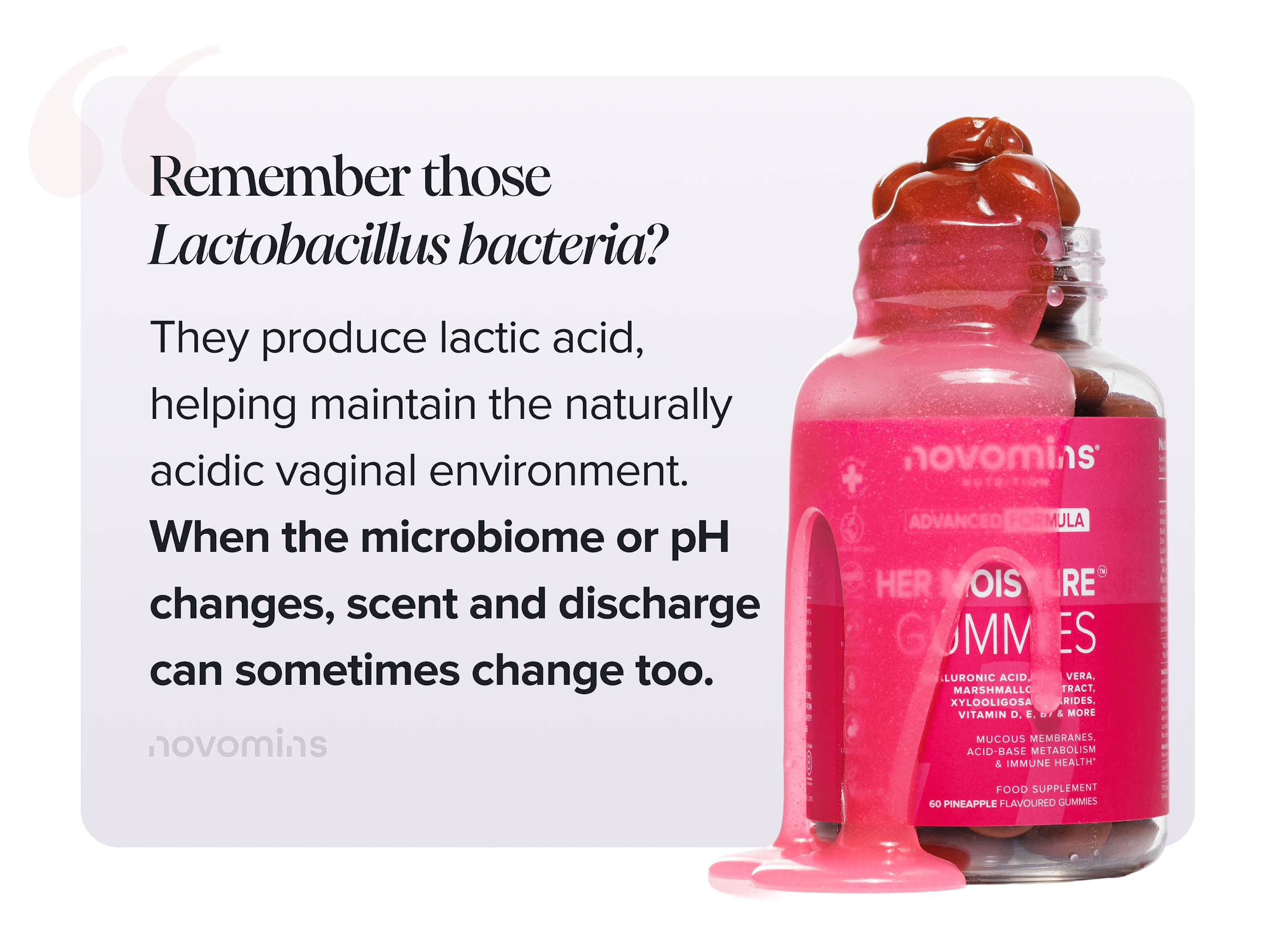
Oestrogen helps keep the vaginal lining thick, elastic, and stocked with glycogen. Beneficial Lactobacillus bacteria thrive in this environment and produce lactic acid, helping maintain a naturally acidic vaginal pH.
When oestrogen falls, there can be a knock-on effect.
And here’s the important bit: Oestrogen doesn’t only change during menopause.
Can the Pill Cause Vaginal Dryness?
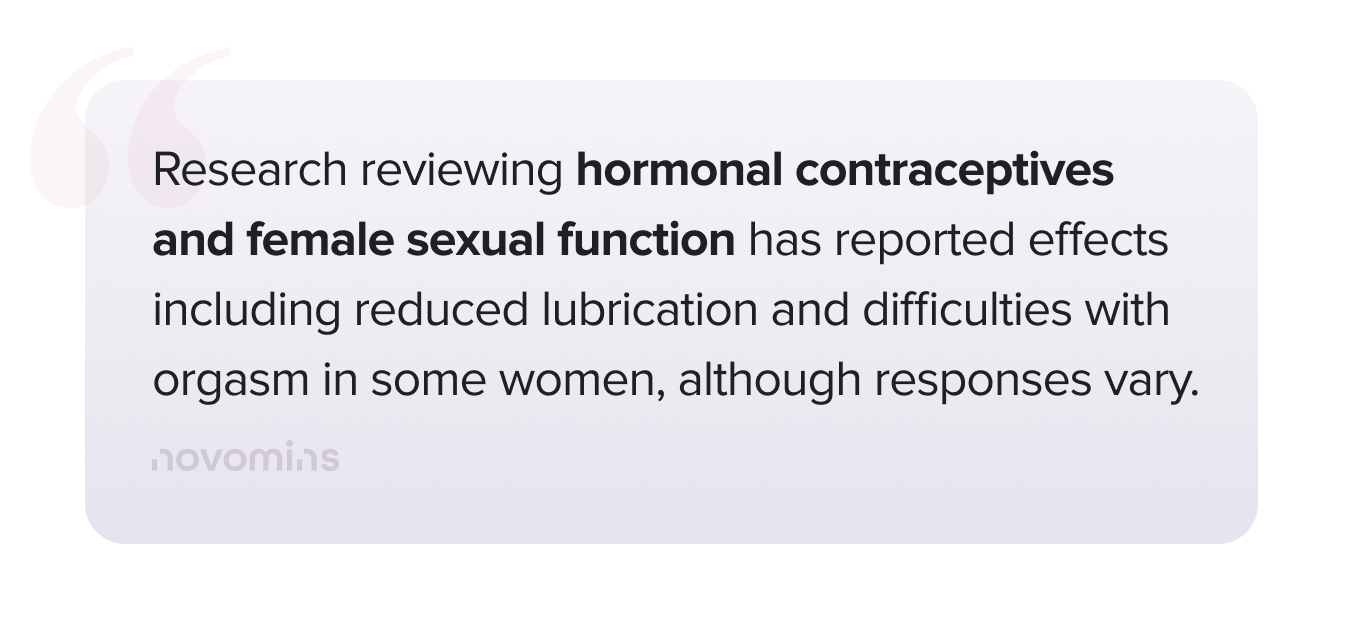
Hormonal contraception can affect lubrication and sexual function in some women.
Not everyone experiences it, but hormonal contraceptives can alter hormone levels, and research into hormonal contraception and female sexual function has reported changes in lubrication among some users.
So if things suddenly feel different after starting or changing contraception, the timing may be worth paying attention to.
Can Stress Cause Vaginal Dryness?
Stress, nerves, and exhaustion can influence arousal and natural lubrication.
This can be particularly noticeable during periods of burnout, major life changes, or even a new relationship.
Your mind can be completely into it while your body has other ideas.
Which brings us to an important point.
Can You Get Vaginal Dryness in Your 20s and 30s?
Yes. Vaginal dryness can happen in your 20s and 30s and is not exclusive to menopause.
Hormonal contraception, breastfeeding, medications, stress, arousal, and hormonal changes can all play a role much earlier in life.
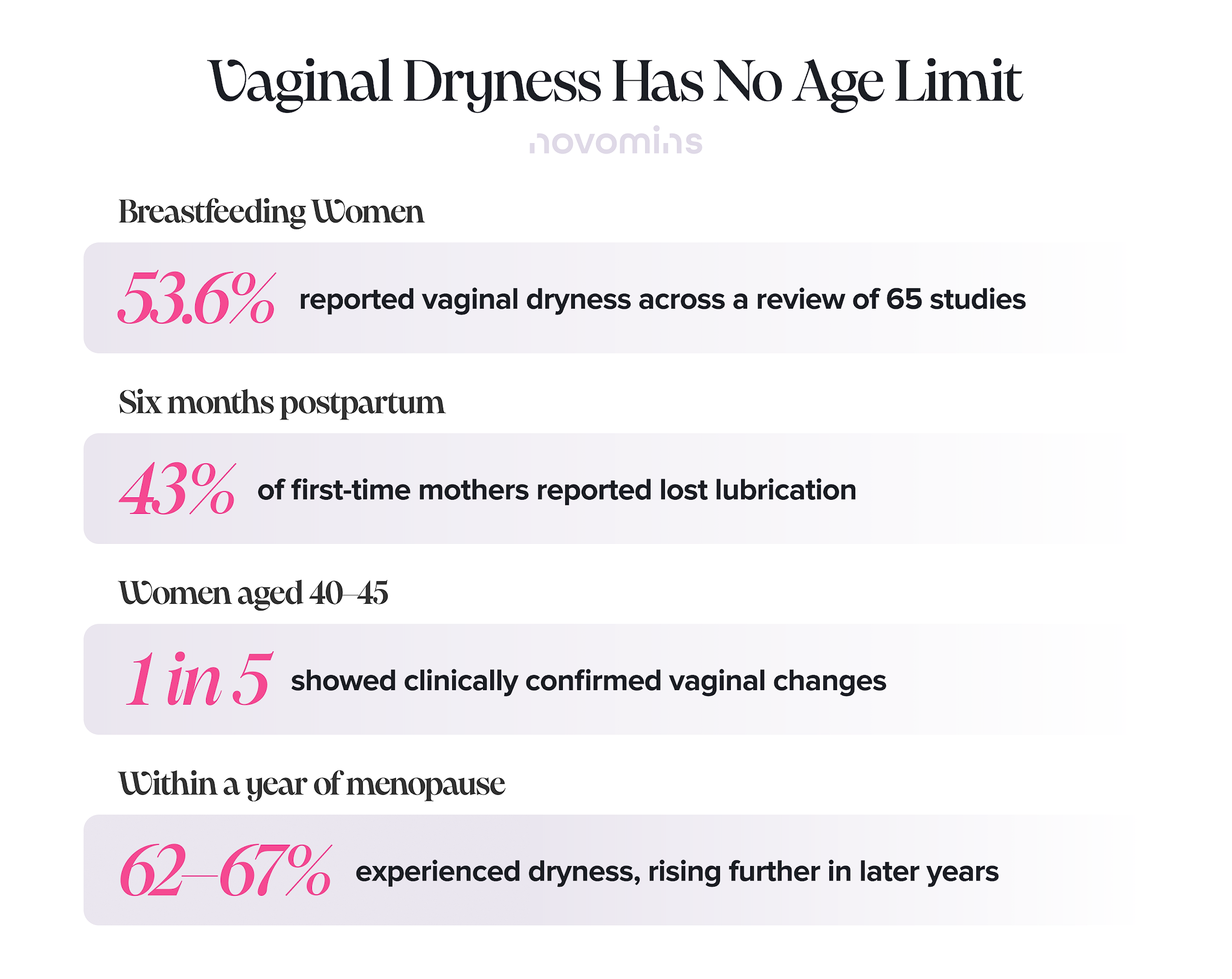
So if you’ve ever thought: “I’m too young for this.” The data says otherwise.
Can Perimenopause Cause Vaginal Dryness?
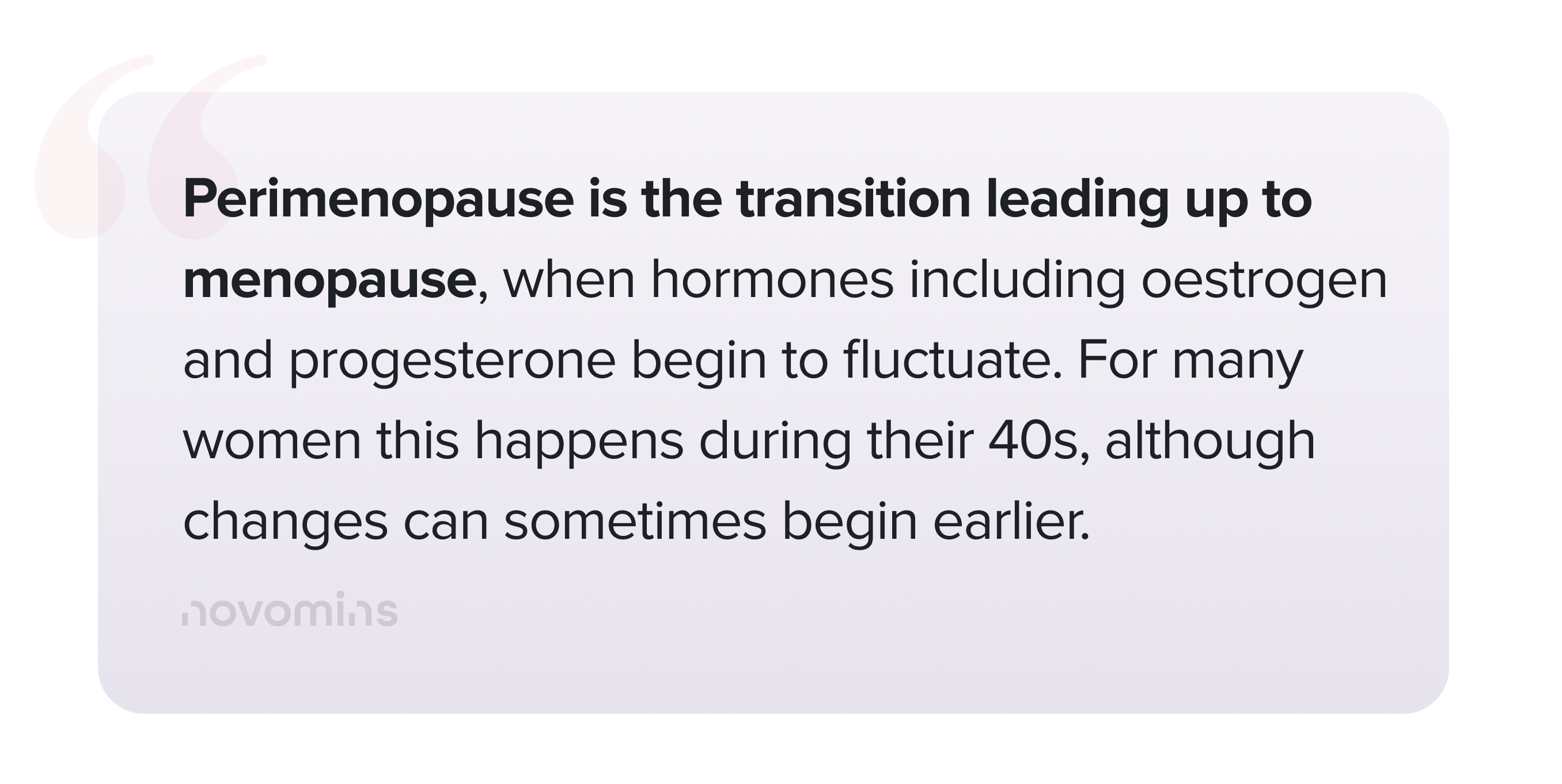
Yes. Fluctuating and declining oestrogen during perimenopause can affect vaginal moisture, elasticity, and tissue health before menopause actually begins.
When we hear menopause, we tend to picture our 50s. But perimenopause can enter the conversation as early as the late 30s.
And the signs aren't always the ones you expect.
Changes to your periods might get your attention first, but shifting oestrogen can also affect the vaginal tissues that rely on it for thickness, elasticity, and natural moisture.
So if your periods are still arriving but things suddenly feel different down there, your V might be noticing hormonal changes before you’ve even considered the word perimenopause.
What Is the Difference Between Lubrication and Arousal?
Arousal and vaginal lubrication are related, but they are not the same biological response.
This one deserves to be shouted louder.
You can want sex, feel attracted to your partner, and be completely mentally engaged while experiencing less natural lubrication than you expected.
So dryness during intimacy does not automatically mean low desire.
And it definitely doesn't automatically mean something is wrong with your relationship.
Your brain can be saying “absolutely” while your V is still buffering.
Can Vaginal Dryness Make It Harder to Orgasm?
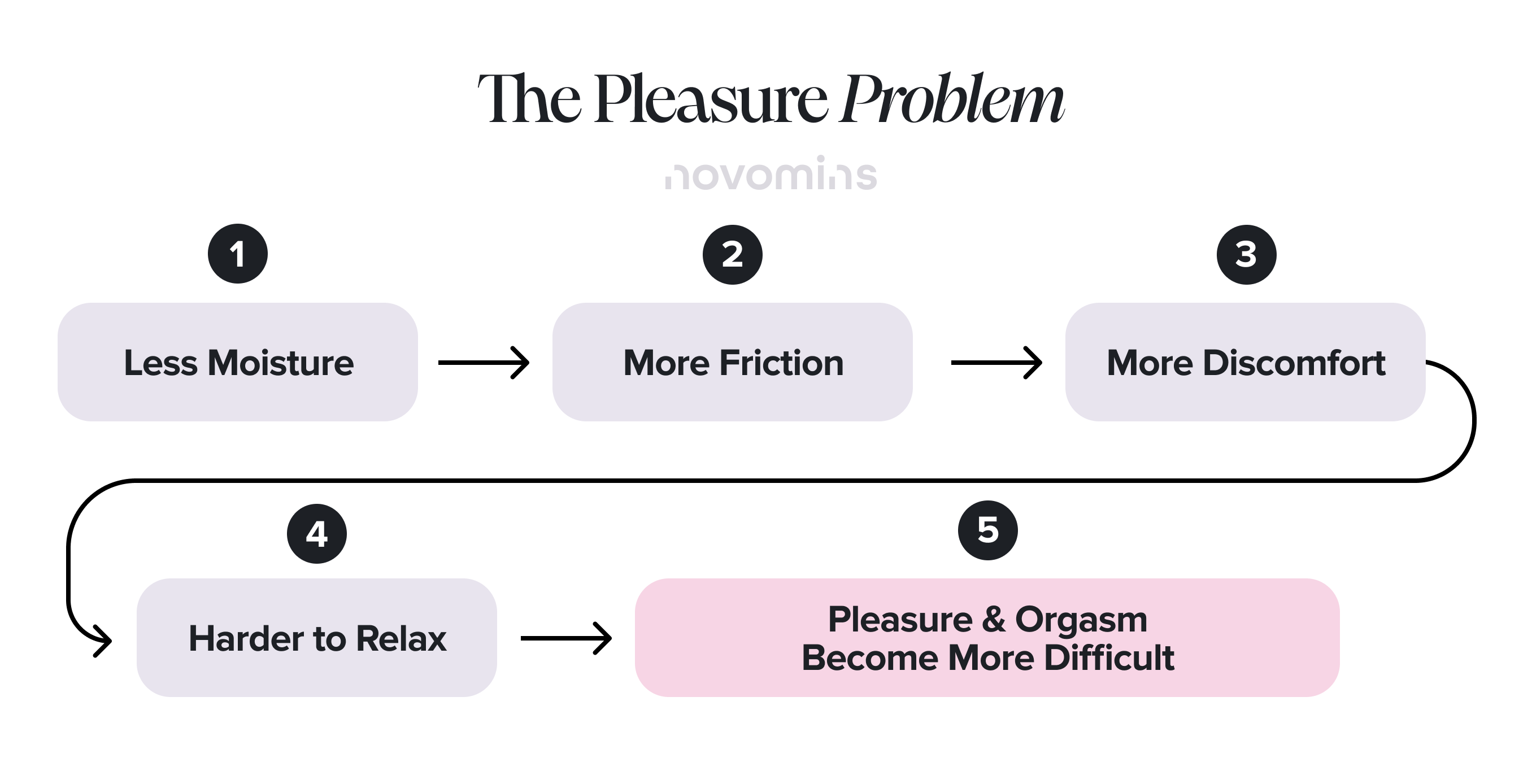
Vaginal dryness can increase friction and discomfort during sex, which may make pleasure and orgasm more difficult for some women.
When there isn't enough natural lubrication, sex may become uncomfortable or painful.
And when your body is busy anticipating discomfort, relaxing into pleasure can become considerably harder.
Hormonal contraception can complicate the picture too.
Importantly, vaginal dryness does not necessarily directly cause delayed or absent orgasms.
Instead, dryness, discomfort, hormonal changes, medication, arousal, and orgasm can overlap as parts of the same sexual-function picture.
If orgasm suddenly becomes noticeably delayed, difficult or absent, particularly alongside new dryness or after changing medication or contraception, it's worth discussing with a healthcare professional.
Because sometimes what looks like a sex problem is your body giving you a clue.
What Do Vaginal pH and the Microbiome Have to Do With Dryness?
Vaginal moisture, pH, and the microbiome are different parts of the same intimate environment.
A healthy vaginal microbiome is commonly dominated by Lactobacillus bacteria.
Hormonal changes can affect the vaginal lining and the glycogen that helps support Lactobacillus populations. As Lactobacilli decline, vaginal pH can rise and the microbial environment may change.
This doesn't mean every dry spell equals a microbiome problem.
It means moisture, hormones, vaginal tissue, pH, and beneficial bacteria shouldn't always be thought about separately.
Can Vaginal Dryness Affect Smell?
Vaginal dryness itself doesn't necessarily cause odour, but changes in hormones, pH, and the vaginal microbiome can happen alongside changes in vaginal scent.
First things first: Every vagina has a smell.
Despite what certain “feminine hygiene” aisles would have you believe, it isn't supposed to smell like absolutely nothing.
Your natural scent can change throughout your cycle, after sex, during your period, after exercise and alongside hormonal changes.
A new, strong or persistent odour, particularly alongside unusual discharge, itching, burning, or discomfort, deserves medical attention rather than a spritz of something floral.
And please don't perfume the problem away.
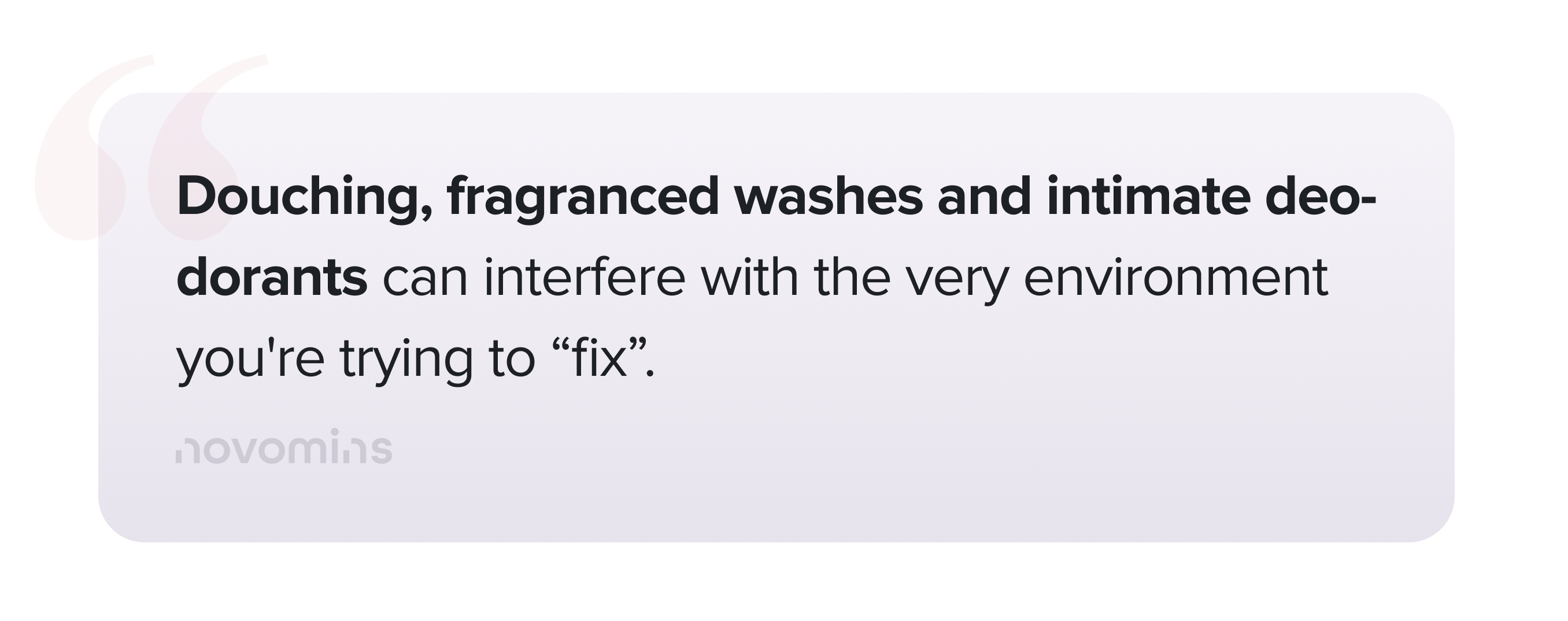
The vagina is self-cleaning. Keep cleansing gentle and external.
Your V having a natural scent is normal. A sudden plot twist in that scent is worth paying attention to.
Why Don't More Women Talk About Vaginal Dryness?
Embarrassment and misconceptions about sex and ageing can make women reluctant to talk about vaginal dryness, despite how common it is.
Research has linked vaginal dryness with embarrassment, reduced self-esteem, feeling less attractive, and avoiding intimacy.
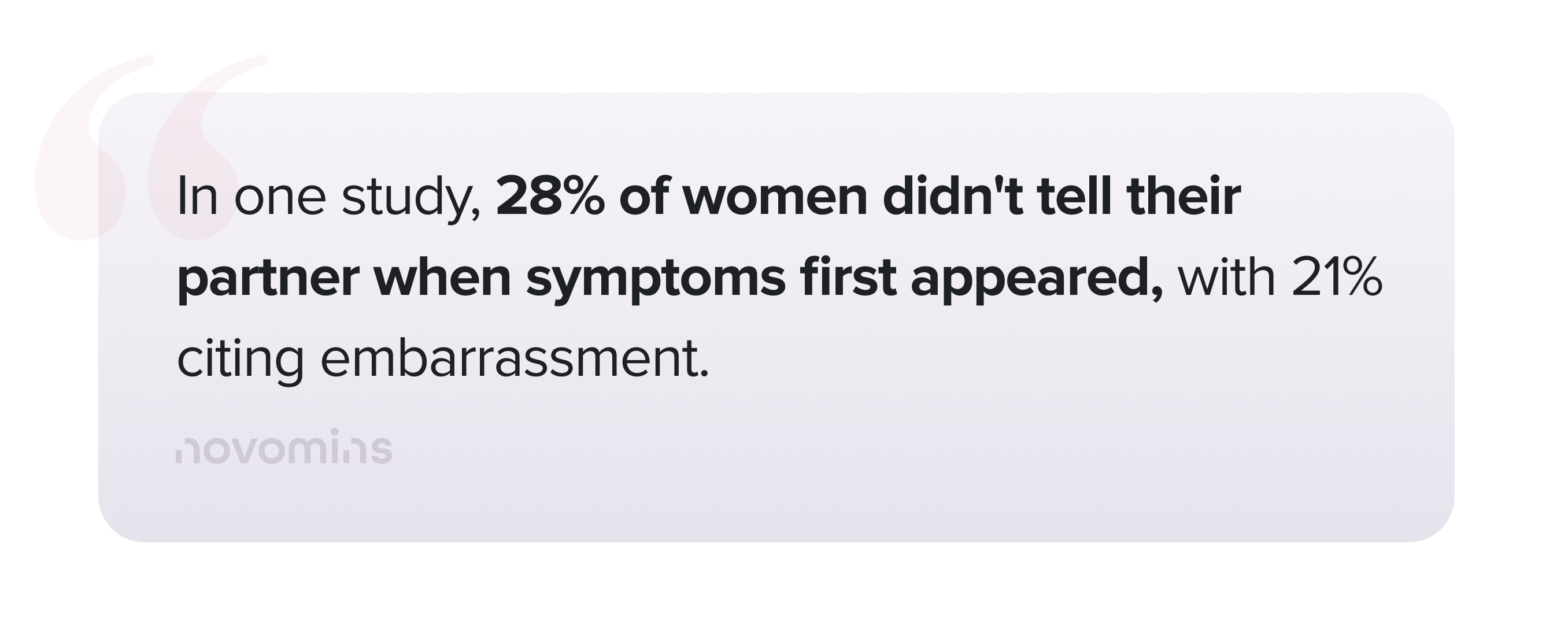
And that silence matters.
Because dryness can affect comfort, intimacy, confidence, and everyday wellbeing.
Common doesn't mean you have to quietly put up with it.
What Is the Best Lubricant for Vaginal Dryness?
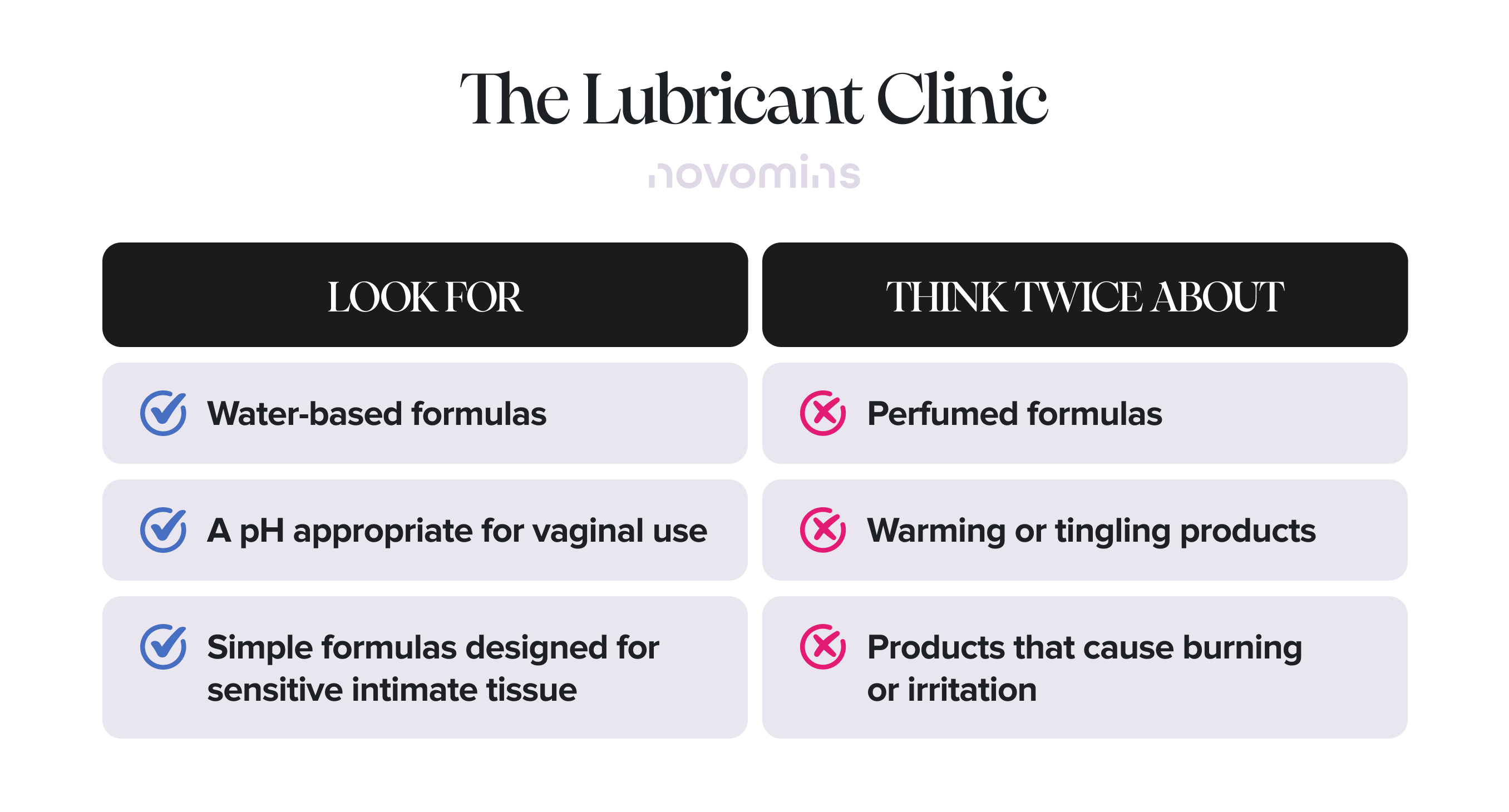
A water-based, pH-appropriate lubricant without unnecessary fragrance or warming ingredients is a sensible place to start for reducing friction during sex.
Not all lubricants are formulated equally.
Oil-based lubricants can also weaken latex condoms, so check compatibility if you're using barrier contraception.
And remember what lubricant actually does.
Lubricant helps with friction in the moment. It doesn't address every possible reason vaginal dryness is happening.
What Helps Vaginal Dryness?
What helps vaginal dryness depends on the cause, and some women may benefit from more than one approach.
For Right-Now Relief
A suitable lubricant can temporarily reduce friction and make sex more comfortable.
For Ongoing Dryness
Vaginal moisturisers are designed to be used regularly rather than only during sex and may help with ongoing day-to-day comfort.
For Everyday Intimate Care
Stay adequately hydrated, avoid douching and harsh fragranced intimate products, and consider whether medication, contraception, breastfeeding, stress or hormonal changes could be contributing.
For Perimenopause and Menopause
Speak to your GP about treatment options if dryness is persistent or affecting your quality of life.
For some women, local vaginal oestrogen may be appropriate and can directly address vaginal tissue changes associated with low oestrogen.
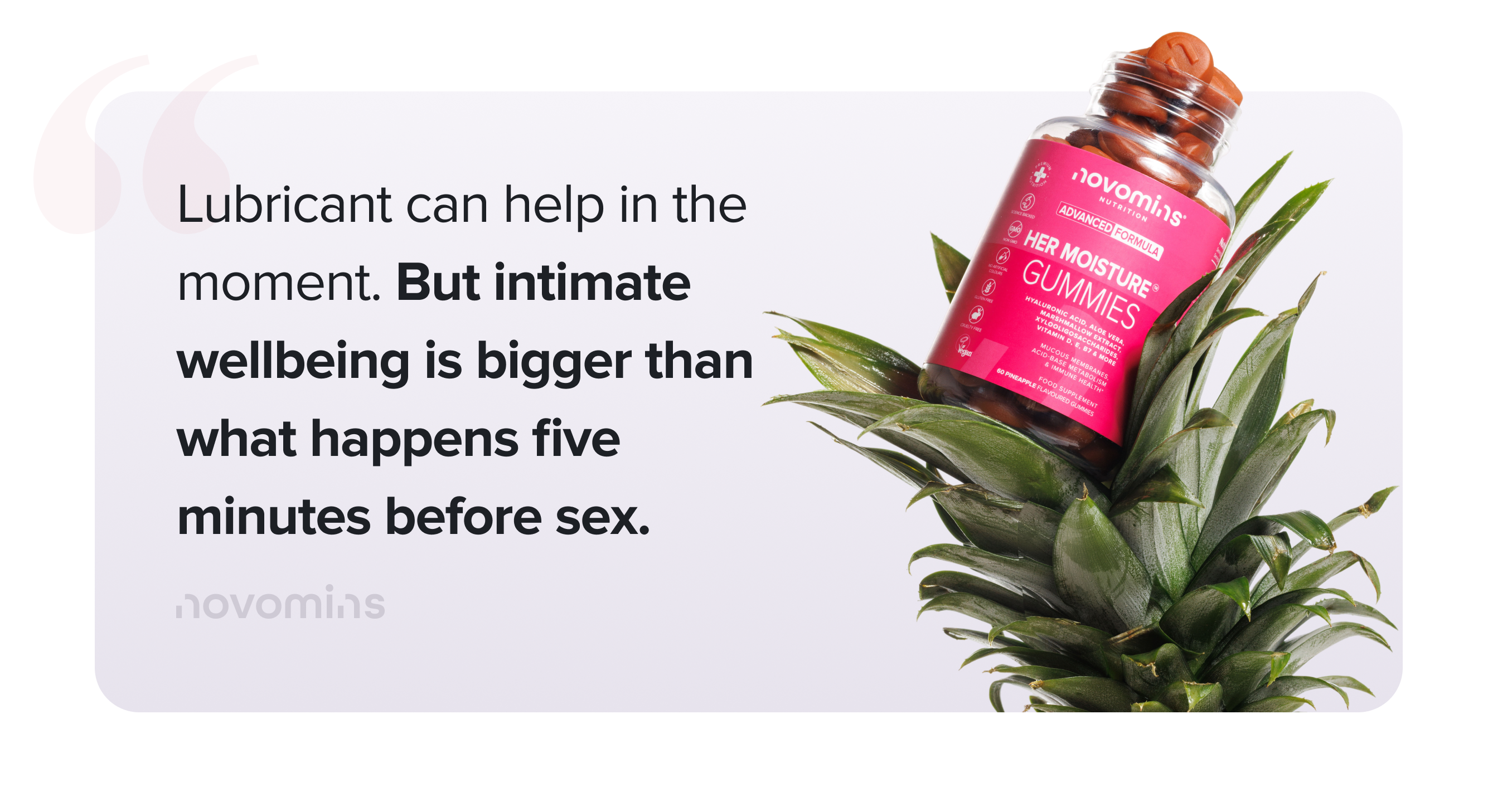
What Are Her Moisture Gummies?
Novomins Her Moisture Gummies are a daily women's supplement combining biotin for normal mucous membranes with hyaluronic acid, botanicals, prebiotic XOS, and two probiotic strains studied in women's intimate health.
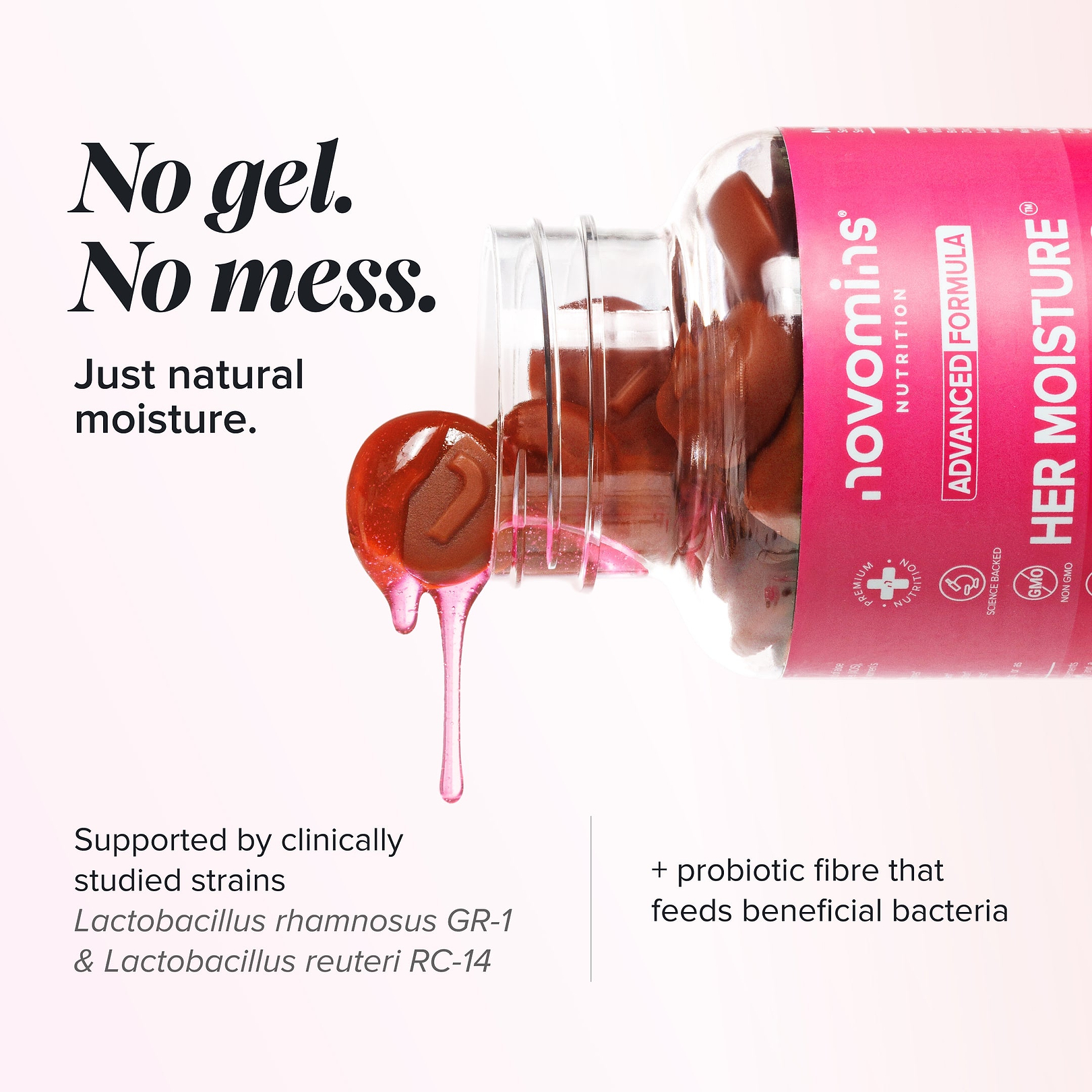
Two pineapple-flavoured gummies bring together three areas of daily nutritional support:
💧 The Moisture Crew
Hyaluronic acid is known for its ability to bind water, alongside aloe vera and marshmallow root, botanical ingredients known for their soothing properties.
🌸 The Tissue Crew
Biotin contributes to the maintenance of normal mucous membranes.
The formula also includes zinc, vitamin D, and vitamin E, with authorised nutritional roles including normal acid-base metabolism, immune function, and protection of cells from oxidative stress.
🦠 The Flora Crew
Meet Lactobacillus rhamnosus GR-1 and Lactobacillus reuteri RC-14, a specific probiotic pairing that has been studied in women's intimate health research.
They're joined by XOS, a prebiotic fibre aka food for your healthy flora.
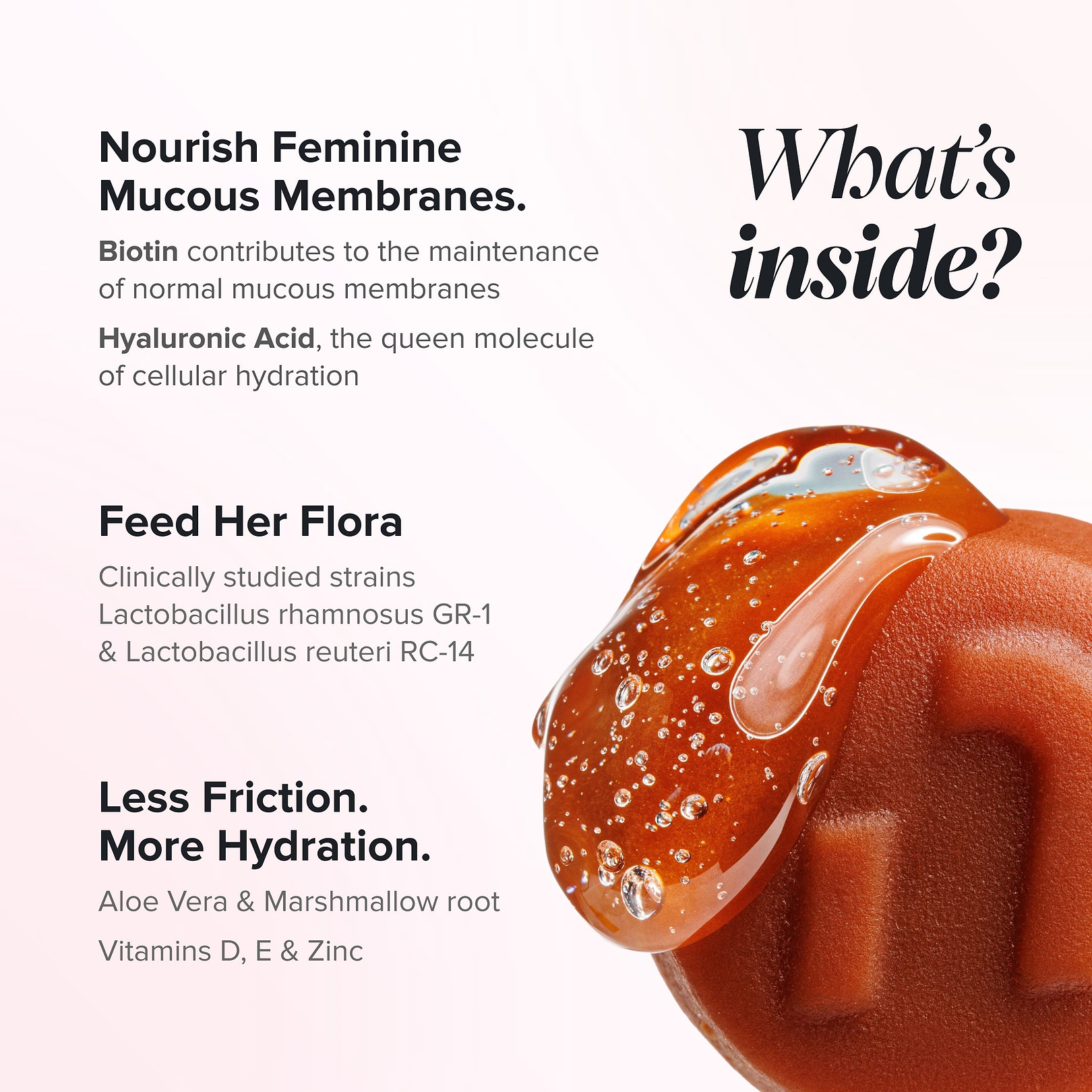
Mucous membranes. Microbiome. Daily nutritional support. Three parts of the intimate conversation, finally in one daily gummy.
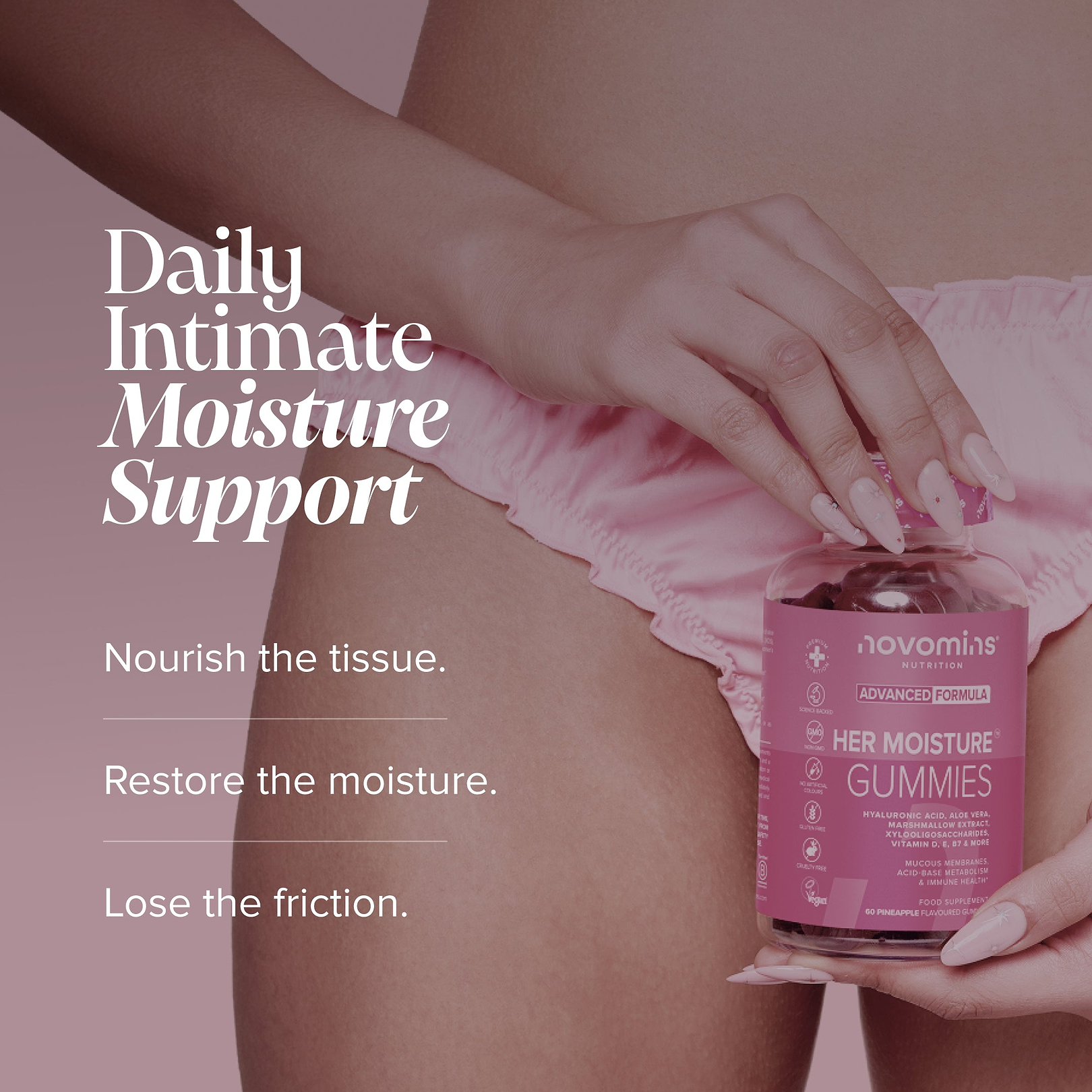
How Do You Take Her Moisture Gummies?
Take two Her Moisture Gummies every day, with or without food.
Morning coffee, afternoon snack, evening skincare, choose whatever makes them easiest to remember.
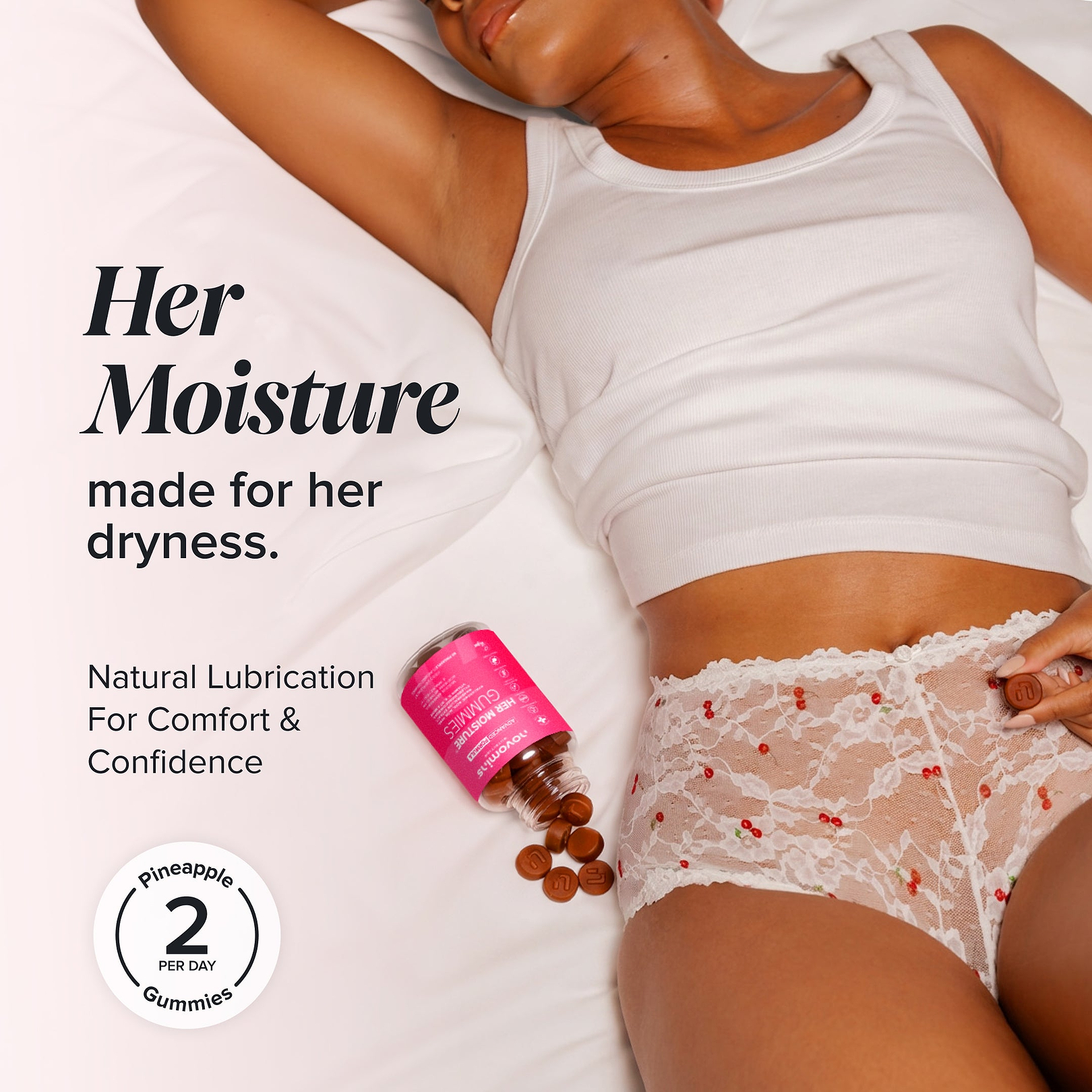
Consistency matters more than finding the perfect time of day, so think of them as daily nutritional support rather than an SOS gummy you reach for only when things feel dry.
They're also vegan, Halal, gluten-free, dairy-free, gelatine-free, and non-GMO, with no artificial colours or preservatives.
Two pineapple gummies. No cream. No mess. No awkward routine.
Want the Full Down-There Duo?
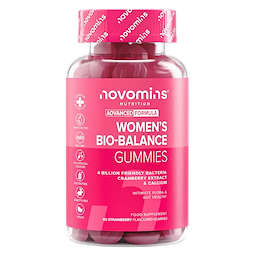
The Her V Confidence Bundle combines Her Moisture Gummies and Women's Bio-Balance Gummies for two complementary approaches to everyday intimate wellbeing.
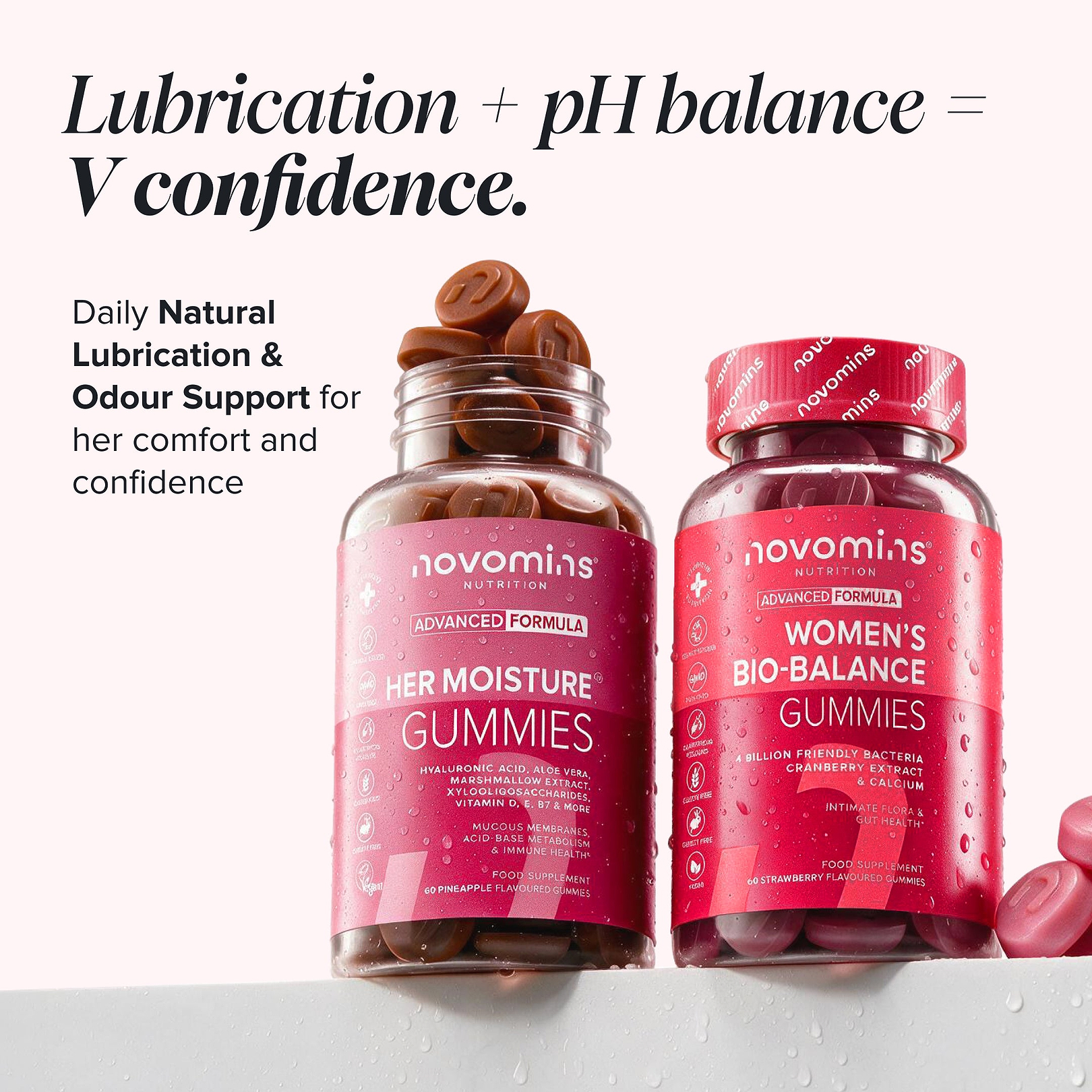
Sticky undies? Questionable odours? Weird discharge consistency?
Sometimes what's happening down there makes you suddenly very aware of what's happening down there.
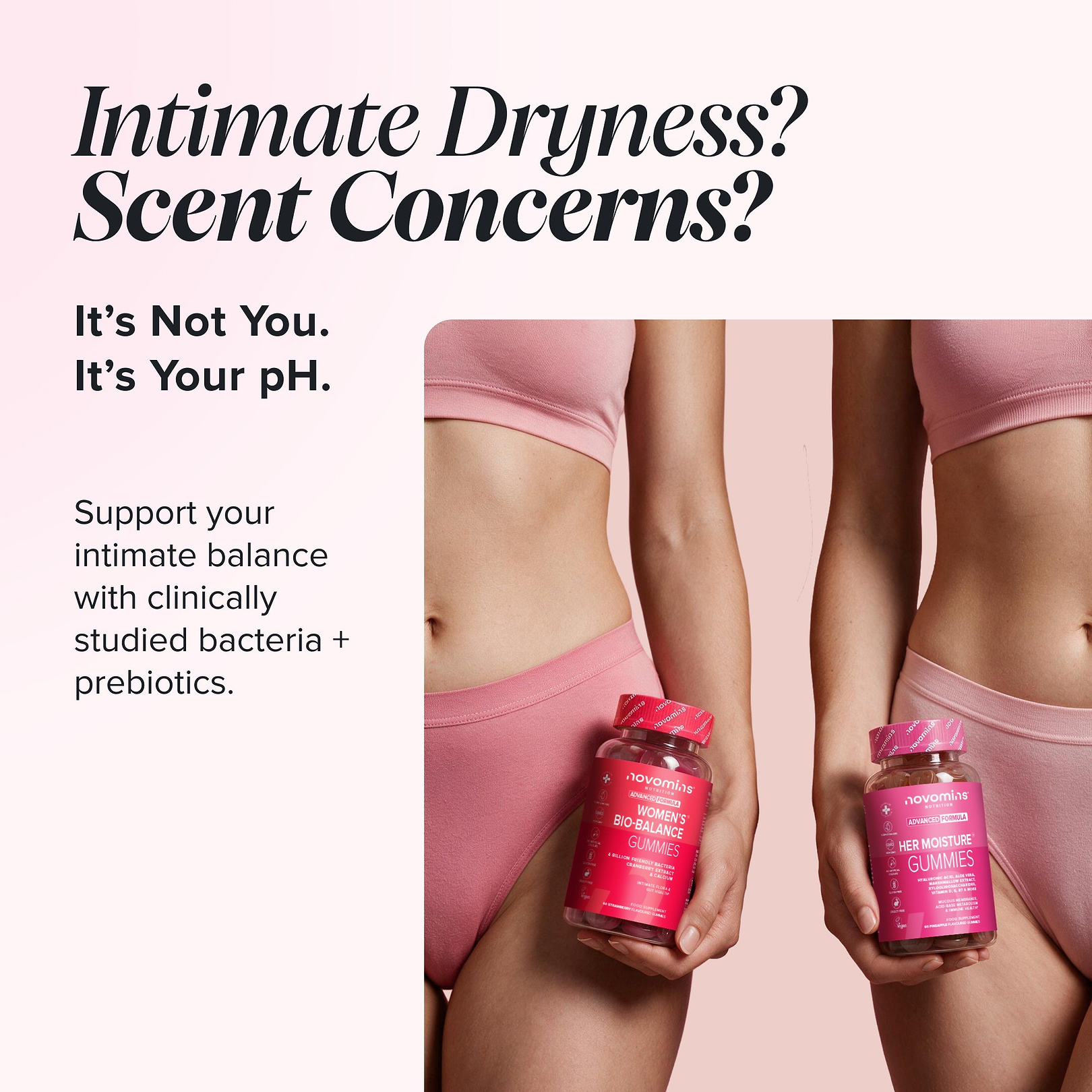
Her Moisture Gummies bring biotin for normal mucous membranes alongside hyaluronic acid, botanicals, XOS, and the GR-1 + RC-14 probiotic pairing.
Women's Bio-Balance Gummies deliver 4 billion clinically studied live bacteria per serving, alongside cranberry extract, for daily microbiome support.
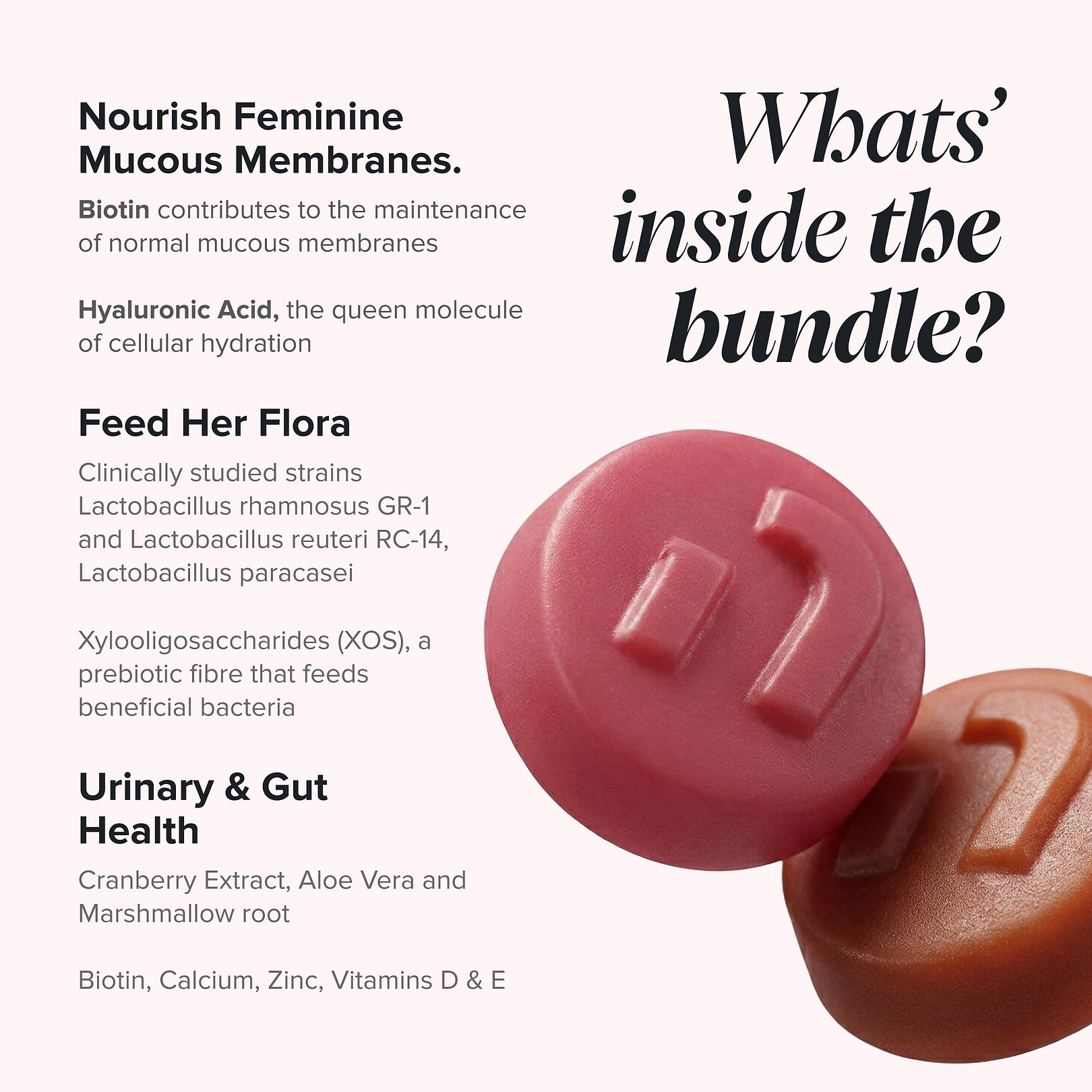
Freshness. Comfort. Moisture. Confidence. Consider your down-there routine upgraded.
SHOP THE HER V CONFIDENCE BUNDLE
TL;DR
Vaginal dryness doesn't have an age limit, and it isn't simply a menopause or sex problem.
It can happen with contraception. During stressful weeks. After having a baby. While breastfeeding. During perimenopause and menopause.
It can affect delicate vaginal tissue, comfort, intimacy and pleasure, while the wider vaginal environment involves an interconnected relationship between hormones, mucous membranes, pH, and the microbiome.
Sometimes dryness is temporary. Sometimes a lubricant or moisturiser helps. Sometimes it needs ongoing support. And sometimes it deserves a conversation with your GP.
What it doesn't deserve is embarrassment.
Because your V deserves a wellness routine too.
We have a gummy for it.
Frequently Asked Questions
Why am I suddenly dry down there?
Sudden vaginal dryness can have several causes, including hormonal changes, contraception, breastfeeding, certain medications, stress, and changes in arousal. If dryness appears suddenly, persists, or is accompanied by other symptoms, speak to a healthcare professional.
Is vaginal dryness only caused by menopause?
No. Vaginal dryness can occur at many stages of life. Hormonal contraception, pregnancy, breastfeeding, certain medications, stress, and hormonal changes during perimenopause and menopause can all play a role.
Can you experience vaginal dryness in your 20s or 30s?
Yes. Younger women can experience vaginal dryness too. Hormonal contraception, breastfeeding, medications, stress, and changes in arousal can all influence natural lubrication.
Can breastfeeding cause vaginal dryness?
Yes. Breastfeeding is associated with lower oestrogen levels, which can affect vaginal tissue and natural moisture. A systematic review of 65 studies reported vaginal dryness in 53.6% of breastfeeding women.
Can perimenopause cause vaginal dryness?
Yes. Oestrogen can begin fluctuating during perimenopause, affecting the thickness, elasticity, and natural moisture of vaginal tissues. This means vaginal changes can appear before menopause.
Can dehydration make you feel dry down there?
Overall hydration can influence how dry body tissues feel, but persistent vaginal dryness can have many causes. Drinking more water shouldn't be treated as the sole solution if symptoms continue.
What's the difference between arousal and lubrication?
Arousal describes your physical and psychological sexual response, while lubrication is one physical response that can accompany arousal. You can feel sexually aroused without producing as much natural lubrication as you expected.
Can vaginal dryness make it harder to orgasm?
Vaginal dryness can increase friction and discomfort, which may make it harder to relax and experience pleasure. However, delayed or absent orgasm can have many causes, including hormonal changes, medications, psychological factors, and sexual function more broadly.
Does vaginal dryness increase the risk of infection?
Dry or fragile vaginal tissue may be more susceptible to irritation and tiny abrasions, while hormonal changes can also affect vaginal pH and the microbiome. However, recurring vaginal or urinary infections should always be assessed by a healthcare professional rather than assumed to be caused by dryness.
What's the difference between lubricant and vaginal moisturiser?
Lubricants provide temporary moisture and reduce friction, particularly during sex. Vaginal moisturisers are designed for regular use to support ongoing comfort.
What probiotics are in Her Moisture Gummies?
Her Moisture Gummies contain Lactobacillus GR-1 + RC-14. This specific pairing has been investigated in women's intimate health research.
What does biotin do in Her Moisture Gummies?
Biotin contributes to the maintenance of normal mucous membranes, making it particularly relevant to a formula designed around everyday intimate wellbeing.
How many Her Moisture Gummies should I take?
Take two gummies daily, with or without food. Choose a time that makes them easy to remember and follow the serving directions on the product label.
Disclaimer
This blog is for general educational purposes only and should not be considered medical advice. Always speak to a qualified healthcare professional if you have concerns about your health, symptoms, medications or supplements.


